The Melbourne Cinémathèque & ACMI present
Life on Hold: Jocelyne Saab, A Voice for the Displaced
When
Wed 18 Nov 2026
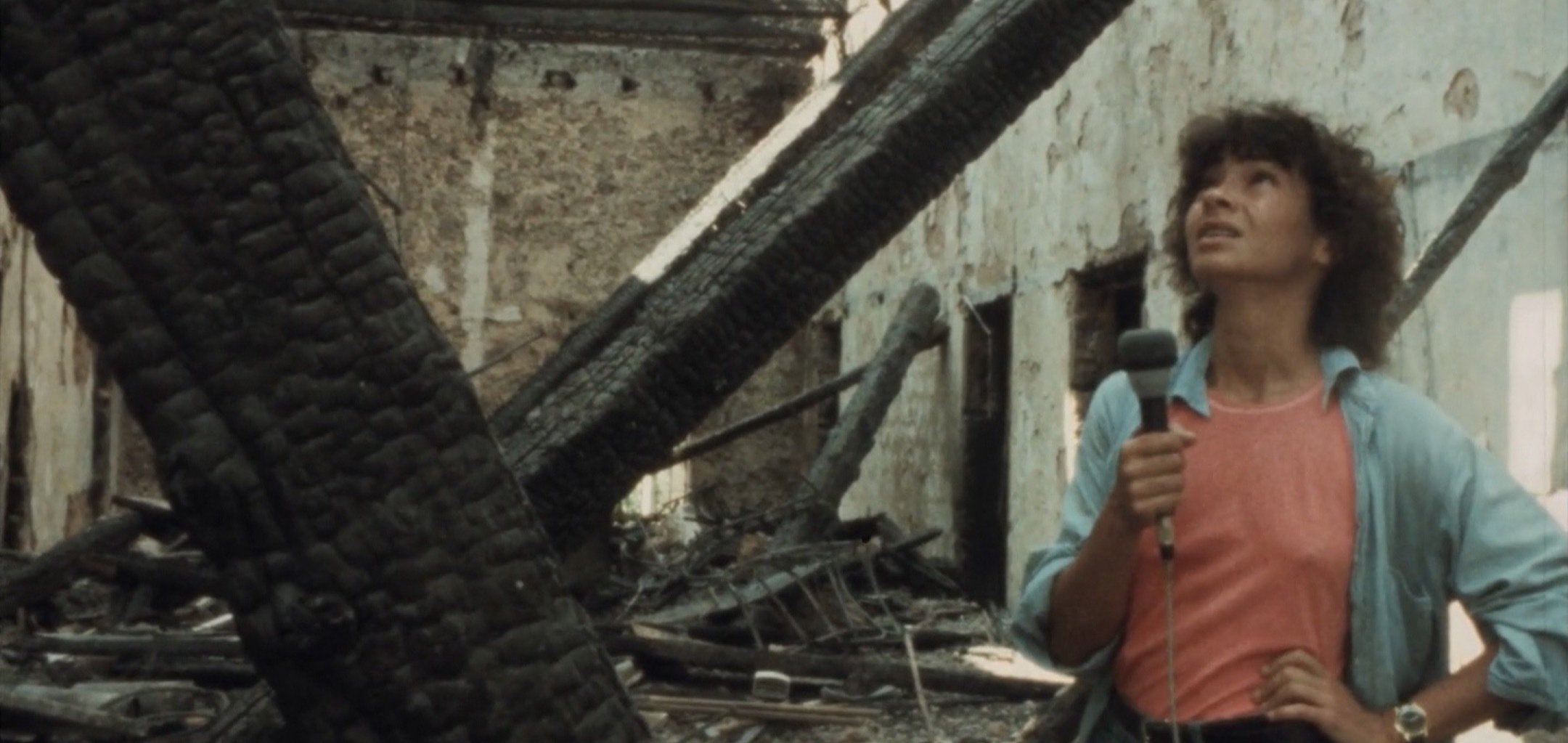
Across documentaries, fictions and experimental films, pioneering Lebanese filmmaker Jocelyne Saab (1948–2019) built a singular exploration of how war suspends everyday life and upends communities, all while displaying an intense solidarity with those most affected by conflict.
Born in Beirut to a bourgeois Christian family, Saab’s early interest in moving images was discouraged by her elders, as it was not “a job for girls”. Studying political economy in Lebanon and then France, she was hired by French public broadcaster Antenne 2 (known today as France 2) as a war reporter in 1973, largely owing to her abilities as an Arabic, French and English speaker. Though her dispatches from Libya, Iraq, Egypt and Syria were characterised by a rigorous scrutiny that approached subjects from multiple angles, they are also sympathetic towards Arab society’s most marginalised people. In Saab’s purview, this frequently involved Palestinians displaced by Israel.
Leaving French television to document the Lebanese Civil War and free herself from the strictures of news reportage, she developed a very personal essayistic approach – echoing Martin Scorsese’s Italianamerican (1974), Chantal Akerman’s News from Home (1976) and the films of Chris Marker – through the trilogy Beirut, Never Again (1976), A Letter from Beirut (1978) and Beirut, My City (1982).
Exiled by the destruction of her house, Saab reimagined her experiences as narrative cinema, eventually moving into installation and video art. Across various forms she held her unwavering commitment to those fighting against oppression right up until her final film, My Name is Mei Shigenobu (2018), a delicate portrait of the Japanese-Palestinian journalist and activist. With the films long and difficult to see, this program presents recent restorations of Saab’s work. It focuses on a cross-section of her documentaries chronicling Palestinian experience and Zionist aggression in Lebanon, and includes her debut fiction film, The Razor’s Edge (1985).
Films in this program
There are no upcoming related events at this time.
About Melbourne Cinémathèque
Australia's longest-running film society, Melbourne Cinémathèque screens significant works of international cinema in the medium they were created, the way they would have originally screened.
Melbourne Cinémathèque is self-administered, volunteer-run, not-for-profit and membership-driven.

Join our newsletter
Be the first to hear about upcoming exhibitions, films, events and special offers.