Blueback classroom resource
This learning resource includes before and after viewing questions to build students' understanding of film language, narrative and themes.
Levels 5, 6, 7 & 8 English and Media Arts
Cross-curriculum priority: Sustainability
Curriculum links
About Blueback
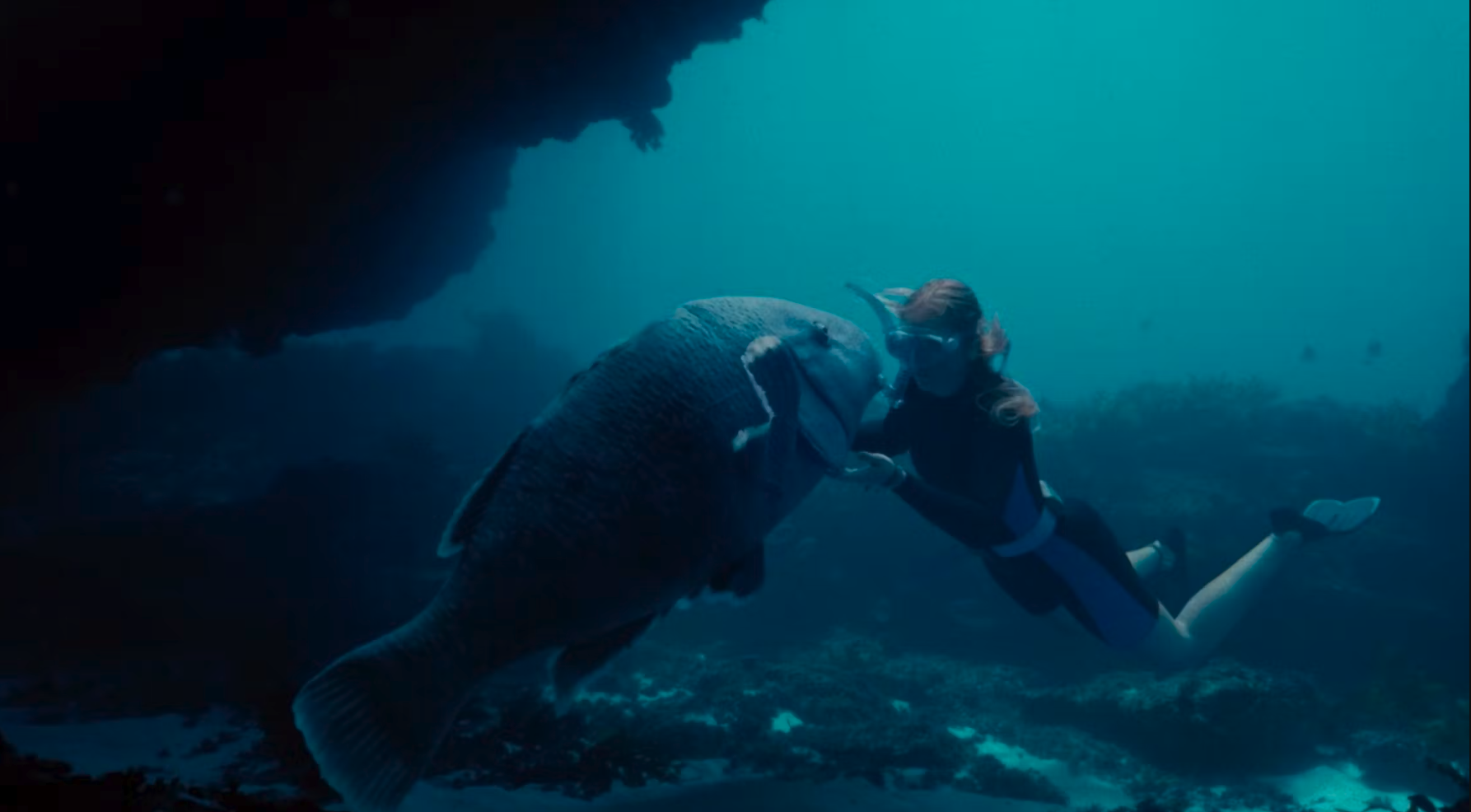
Blueback is set in a small seaside community in Western Australia, where the ocean shapes daily life. When a young girl forms a bond with a wild blue groper, she draws strength from her environmentally conscious mother to protect it from the threat of poachers. The story also explores the girl’s deepening connection to the natural world and her growing awareness of the need to preserve it for future generations.
Before viewing
Brainstorm
- As a class brainstorm words that come to mind when you think about the ocean.
Group discussion
- In groups, discuss: (a) the role the ocean plays in sustaining life on Earth, (b) threats facing the ocean, and (c) positive action to support ocean health. Share as a class.
View and respond
After watching the trailer (below), jot down your first reactions to these questions:
- What stood out to you most?
- What part of the story does the trailer focus on?
- What questions do you now have?
- Does the trailer make you want to see the movie? Why or why not?
In pairs, compare responses - what is similar and what is different? Choose a standout reaction/question/idea to share with the class.
Dig deeper – discuss in small groups:
- What can a fictional story help us feel or understand about the ocean that a documentary or article might not?
- What kinds of emotions or images might filmmakers use to make us care about sustainability?
- Can you think of a fictional film that made you think differently about an issue? Why did it work?
- Share your key points with the rest of the class.
After viewing
Initial response to the film
- Make a list of adjectives that describe the film. Share with the rest of the class.
- How did the film make you feel? Did you go through a range of emotions? Describe them.
- Which scene was the most memorable? Share with someone else in your class and share reasons why you found your chosen scene so impactful.
Opening scene
- Describe what happens in the opening moments of the film.
- Why does the film open with this scene?
- Explain how the opening scene links up with the rest of the story.
Final scene
- Describe the final scene. Why is it an effective conclusion to the story? Explain.
- At the beginning of the film we are submerged in the blue of the ocean alongside Abby and this is how the film ends. Create a storyboard or sketch showing the opening and closing moments of the film. Include notes on how colour, sound, and camera angles help communicate the story’s themes.
- Write a short paragraph explaining how the visual repetition of beginning and ending underwater connects to Abby’s personal journey and the film’s message about people's relationship with the ocean.
Setting
The ocean
The sea dominates Blueback. The characters are nearly always above, below or beside the sea.
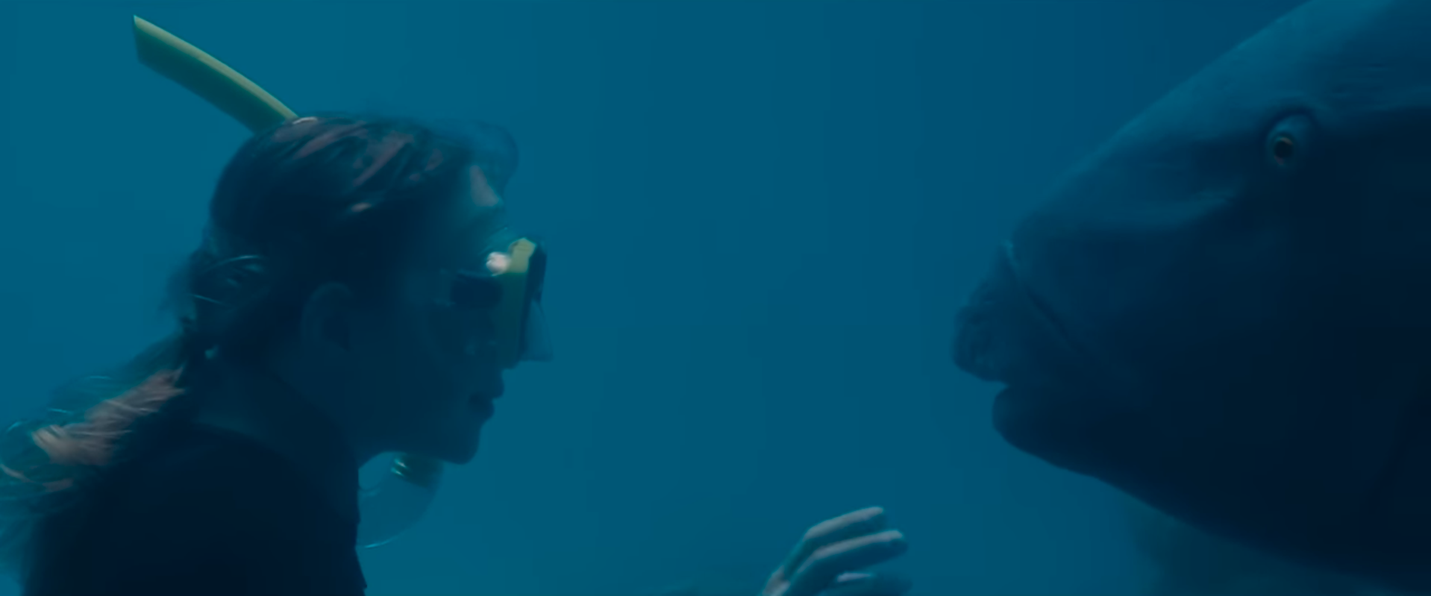
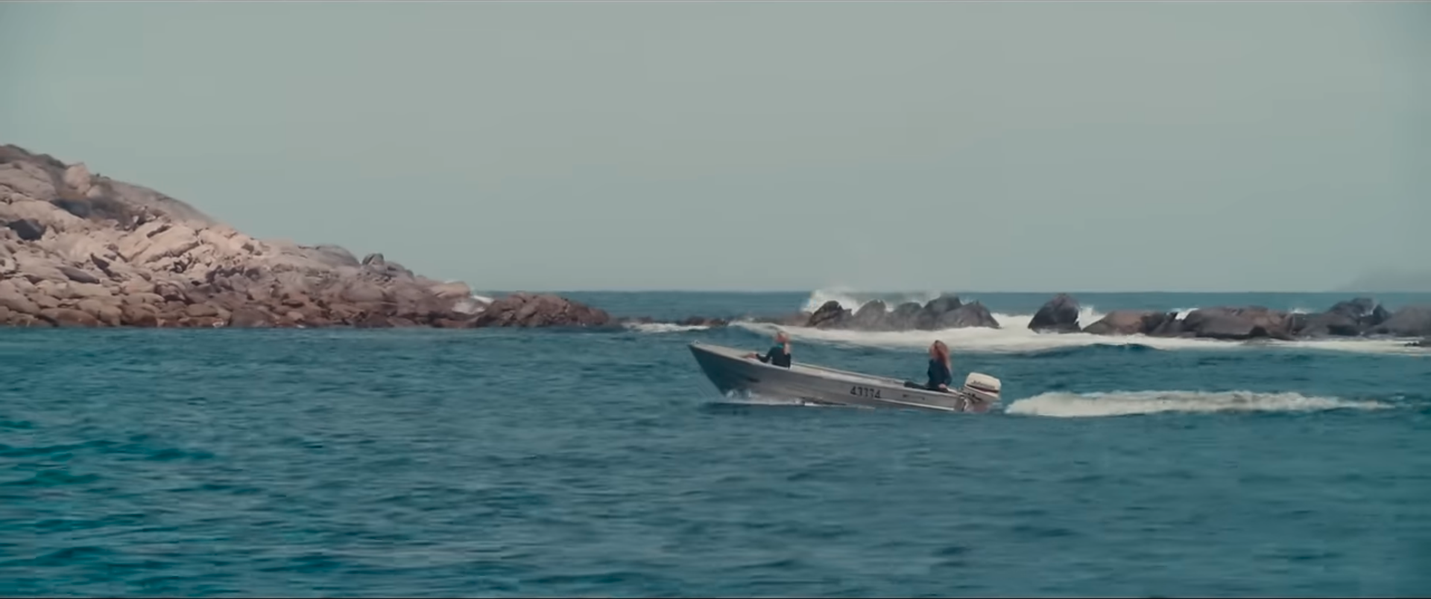
- In what ways does the sea shape the lives of the characters? What does it mean to Abby and her mother? How is their connection to the sea shown visually?
- How is colour used to represent the world above and below the ocean surface?
- Describe the way that the underwater world is filmed. Think about camera movement, how the actors are framed, the shots of marine life.
- What mood or feeling does the underwater cinematography create for the audience?
- How do these film techniques help us understand Abby’s relationship with the sea?
The house
Abby and Dora's house was built especially for the movie, as it is such an important part of the narrative.
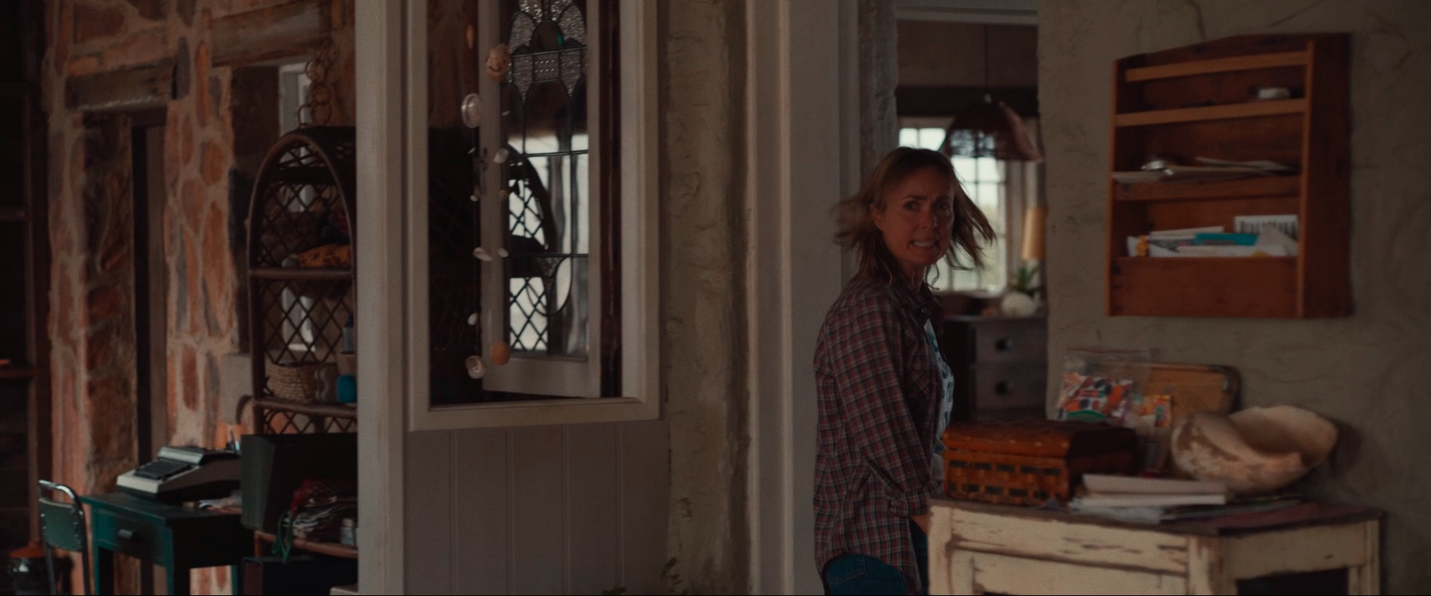
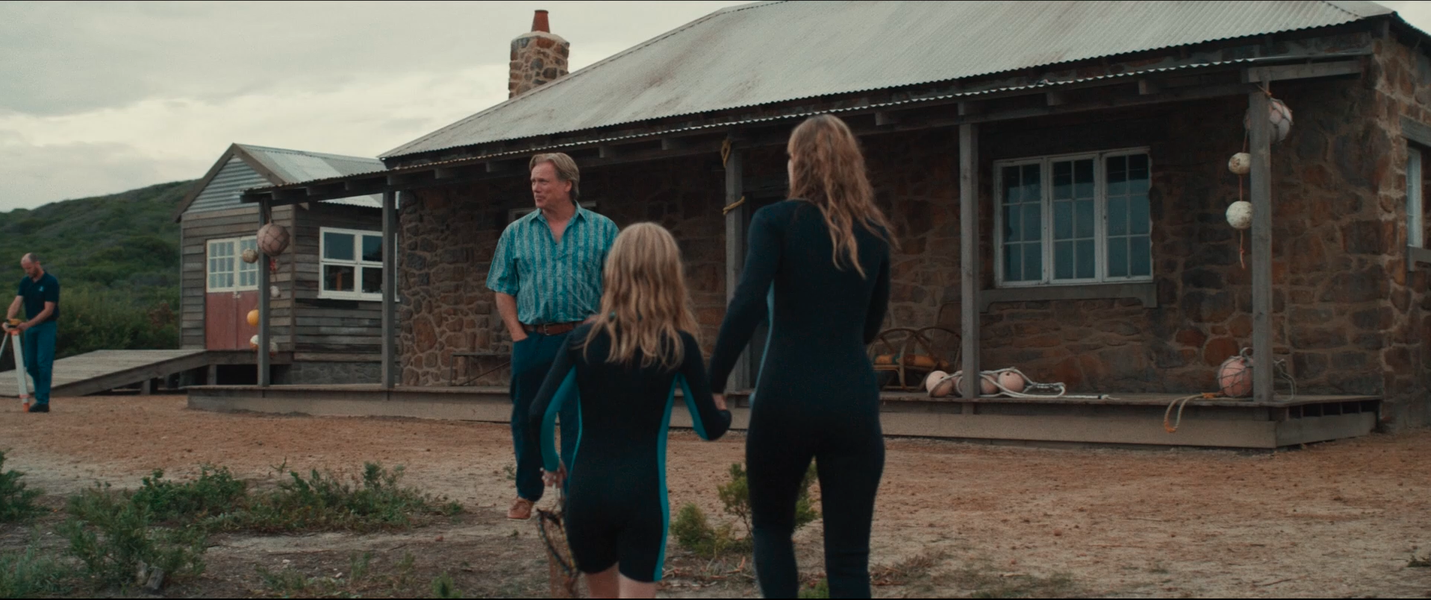
- Explain the significance of the house in the narrative, including its location, design and decor.
- What does the house reveal about Dora? How does it represent her as a character?
The town hall
The Longboat Bay Town Hall is one of the few locations in Blueback that is not connected visually with the sea.
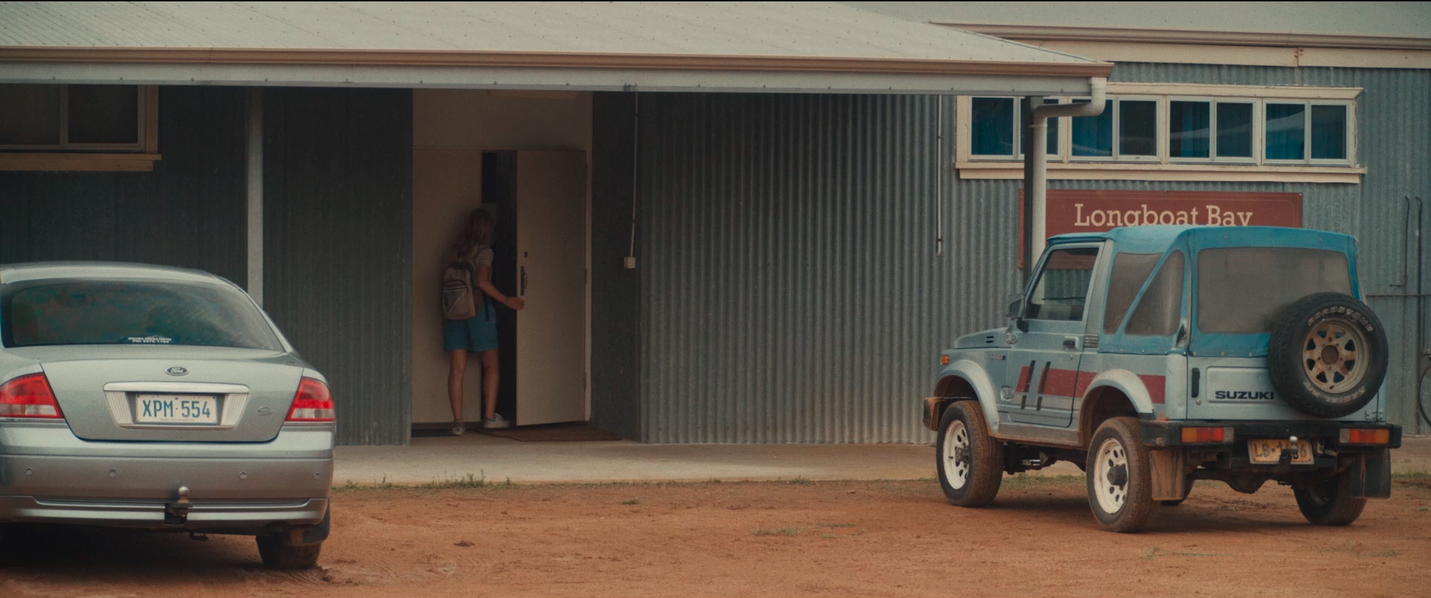
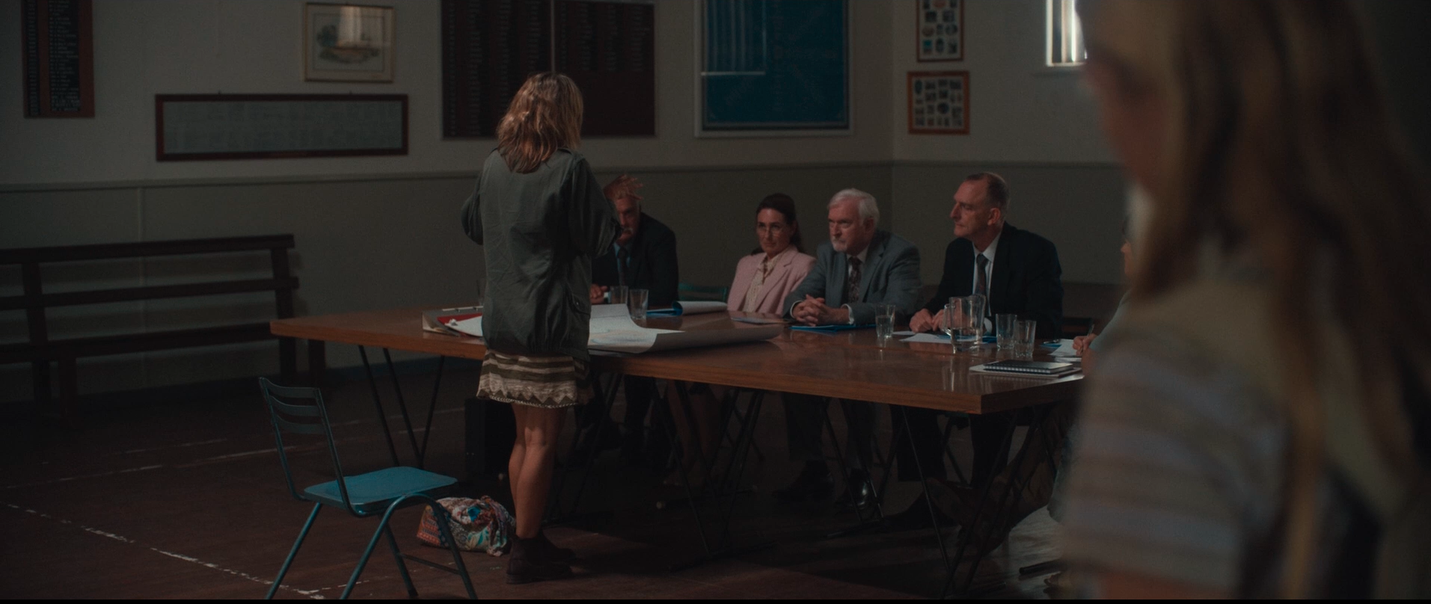
- Watch this scene again. What visual elements do you notice? How do they help tell the story?
- When you look at visual language, you are analysing mise en scene which includes colour, setting, lighting, props, costume, actors and composition. Composition means the positioning and movement of actors, the placement of objects and how actors and objects are placed within the frame of the shot. Look at the shot below and explain what is communicated through the composition of that shot.
Character
Characterisation – Abby
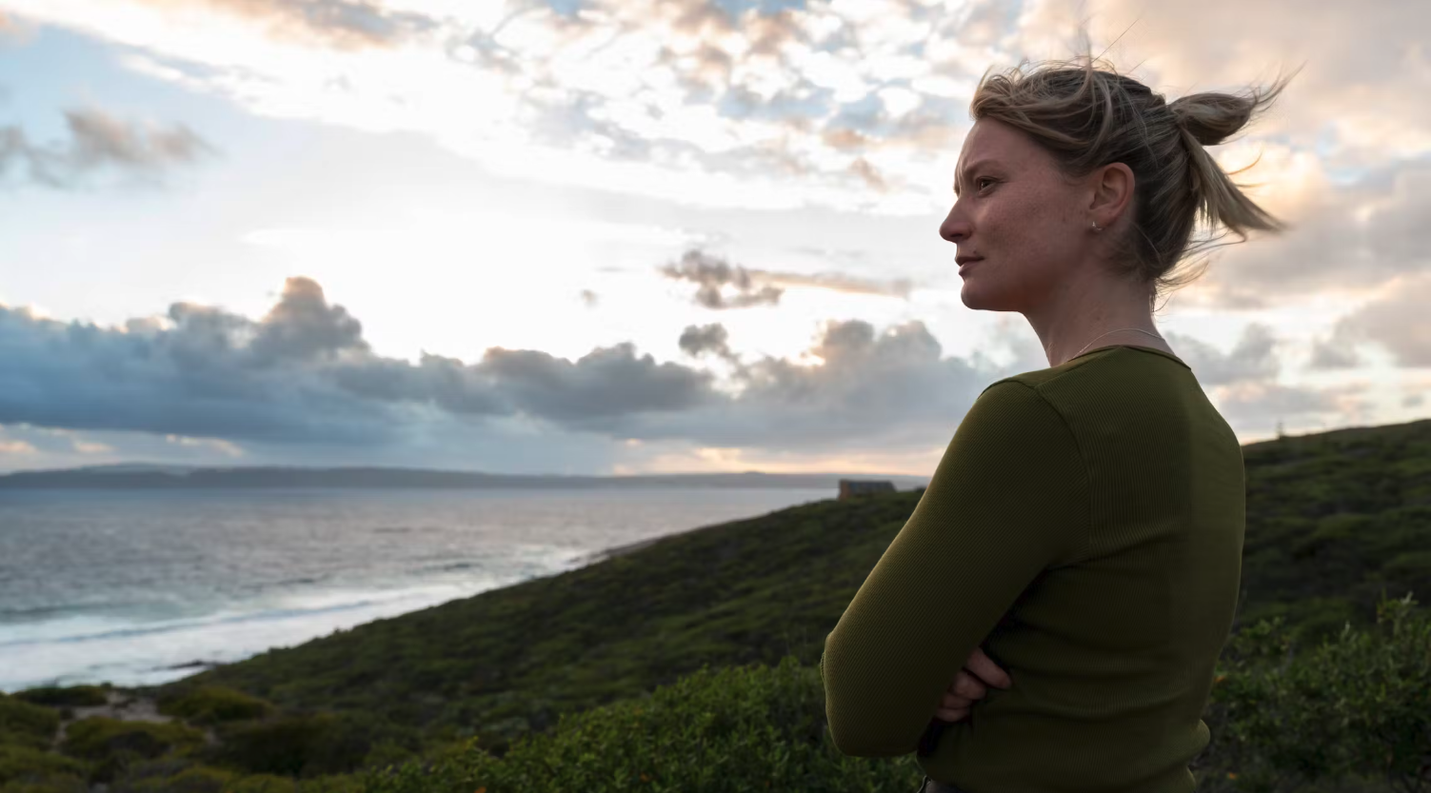
In Blueback, the protagonist Abby is depicted through three different life stages: as a child, a teenager and an adult.
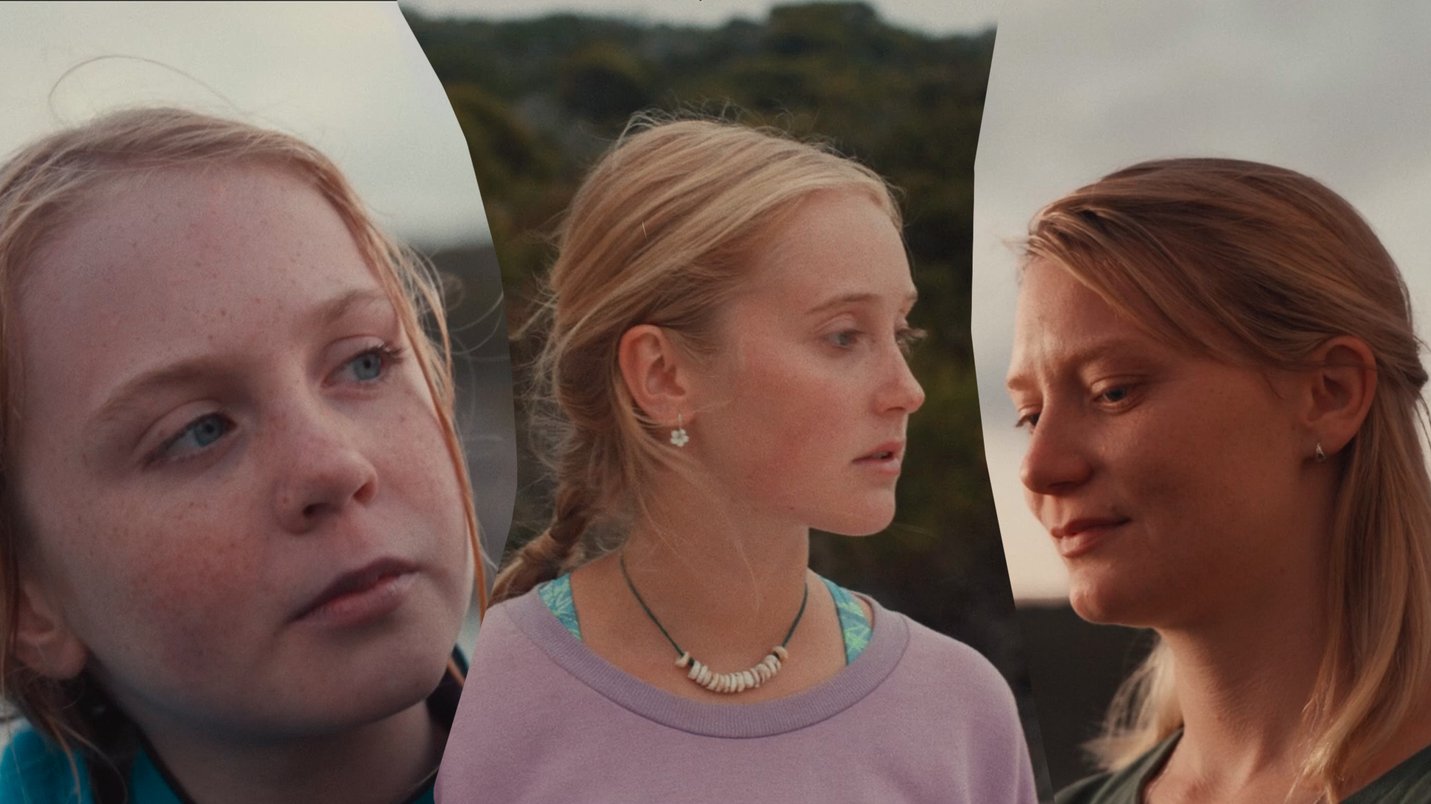
- Rather than seeing Abby change over time, the film begins in the present with the adult Abby looking back at her past life in Longboat Bay. What do you know about Abby at the beginning of the film? What are your initial impressions of the adult Abby? How is this impression created?
- Explain what the audience gradually learns about Abby, as the narrative shifts between the past and the present.
- How does Abby’s relationship with her mother shape who she becomes?
- What does the ocean mean to Abby? How is that shown visually?
- What does the bond with Blueback reveal about Abby's character and view of the world?
- How important is the musical score in communicating Abby’s connection to the ocean and to Blueback?
- Work in groups to dig deep into Abby's characterisation. Use the worksheet below to help you organise your thoughts.
Characterisation – Dora
Tim Winton describes Dora as the centre of his novel. How would you describe Dora's role in the film version?
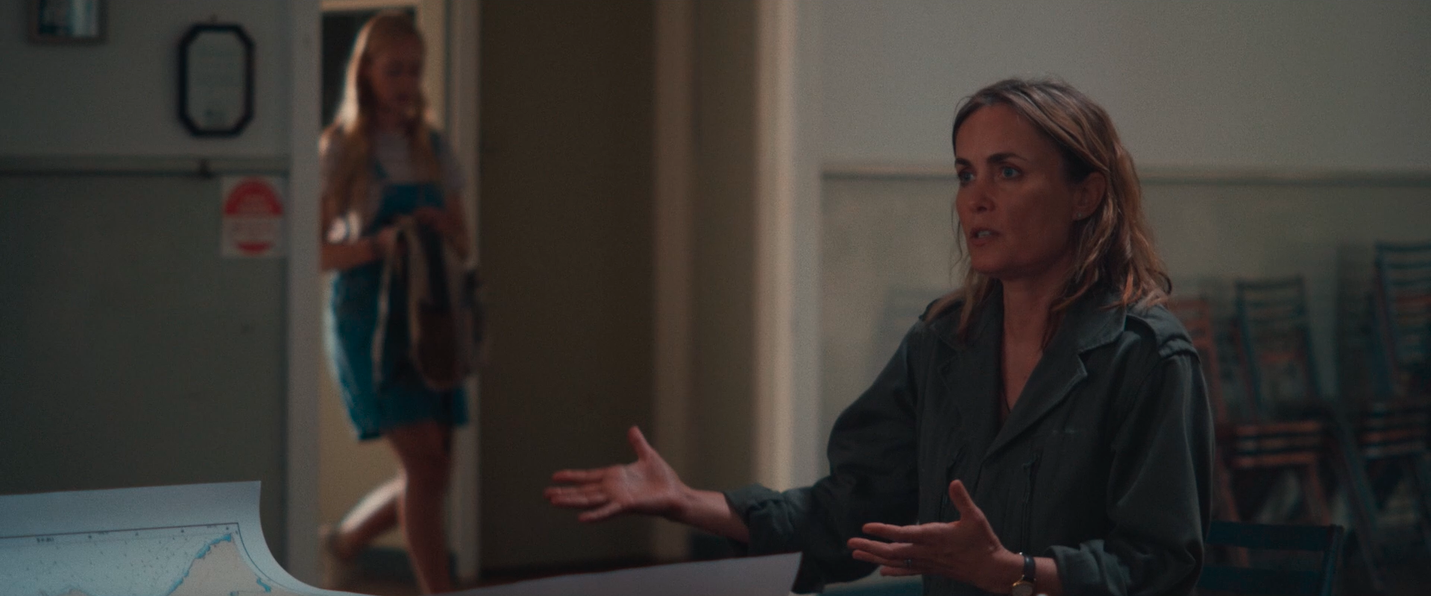
- What are Dora’s values, and how do we see them in her actions?
- How does Dora teach Abby her values, and how do we know that Abby has learned them?
- Dora and Abby's relationship isn’t always easy. What scenes show the tensions between them, and what do these moments tell us about each character?
- How does Dora’s connection to the sea shape her decisions throughout the film?
- How do Dora’s clothes (costume) and surroundings (setting) help us understand her personality and values?
- Dora appears in each of the time frames in Blueback. In the film's present, she has changed physically, but do you think she has changed in any other way?
- Work in groups to dig deep into Dora's characterisation. Use the worksheet below to help you organise your thoughts.
Characterisation – supporting characters
Each character included in Blueback is there for a reason. It may be to propel the story, add to the themes explored, reveal character, or all of these things.
- Select a supporting character and complete the character worksheet to get to the heart of their role in the narrative.
- As a class, you may like to allocate particular characters to a group, so you can take a wide-ranging look at the role of character in Blueback.
Characterisation – Blueback
In creating the character of Blueback, Robert Connolly and his team worked with a practical effects studio to create a lifelike groper puppet. The goal was to give Blueback a sense of personality, inspired by the real behaviour of blue gropers, who are known as the labradors or puppy dogs of the sea because of their gentle, curious, and friendly nature.
- Watch the behind-the-scenes video below to find out more.
Think, pair, share:
- Blueback doesn’t speak or act like a human character, but he’s central to the story. What role does he play?
- Blueback represents something worth protecting. What qualities make him feel special or important, and how do these stand out against the harm shown in the marine environment?
- How do Abby and Dora respond to Blueback and what does this reveal about them? How does their response to Blueback help us understand their connection to the sea?
- How do the design and movement of the puppet help audiences connect emotionally with Blueback?
Visual map:
- As a class or in groups, draw a visual organiser with Blueback at the centre. Around him, add: characters; feelings and responses he evokes; themes and values he represents. Use arrows or colour-coding to show how characters’ responses to Blueback reflect their values.
Write:
- Write a short internal monologue from Abby's perspective following her first encounter with Blueback. What stood out for her in this first meeting and how has this affected her?
Narrative
I have this feeling that cinema is a great form to show how the past and present are “hand in glove” in our lives.... Cinema is an amazing artform in that I can blend those timeframes together in a poetic, lyrical way. It’s a credit to my editor that it’s so seamless and easy for an audience to follow.
Narrative – structuring of time
- Blueback shows Abby at three different ages. What are the three main stages of her life we see?
- Robert Connolly wrote the screenplay of Blueback with Tim Winton (who wrote the novel). Unlike the novel, the film narrative doesn't go in order from beginning to end, but weaves together the three different stages of Abby's life. Why do you think Connolly and Winton chose to tell the story as a non-linear narrative?
- How does seeing Abby as a child, a teenager, and an adult help you understand what kind of person she is? What do we learn about her values and identity?
- How do you feel when the film moves from the present to a memory from the past? What do the flashbacks help you understand about people, events, and issues?
- Some ideas in the story are shown more clearly because we see different times in Abby’s life. What ideas or messages do you notice? (These might be about: family, memory, protecting nature etc.)
- Choose one moment from the past and one from the present that are linked. Why are they placed together? What does this reveal or communicate?
- Create a simple graphic that explains the difference between linear and non-linear narratives. You might to like to watch this simple explainer to develop your ideas.
Themes
They're stealing from our future.
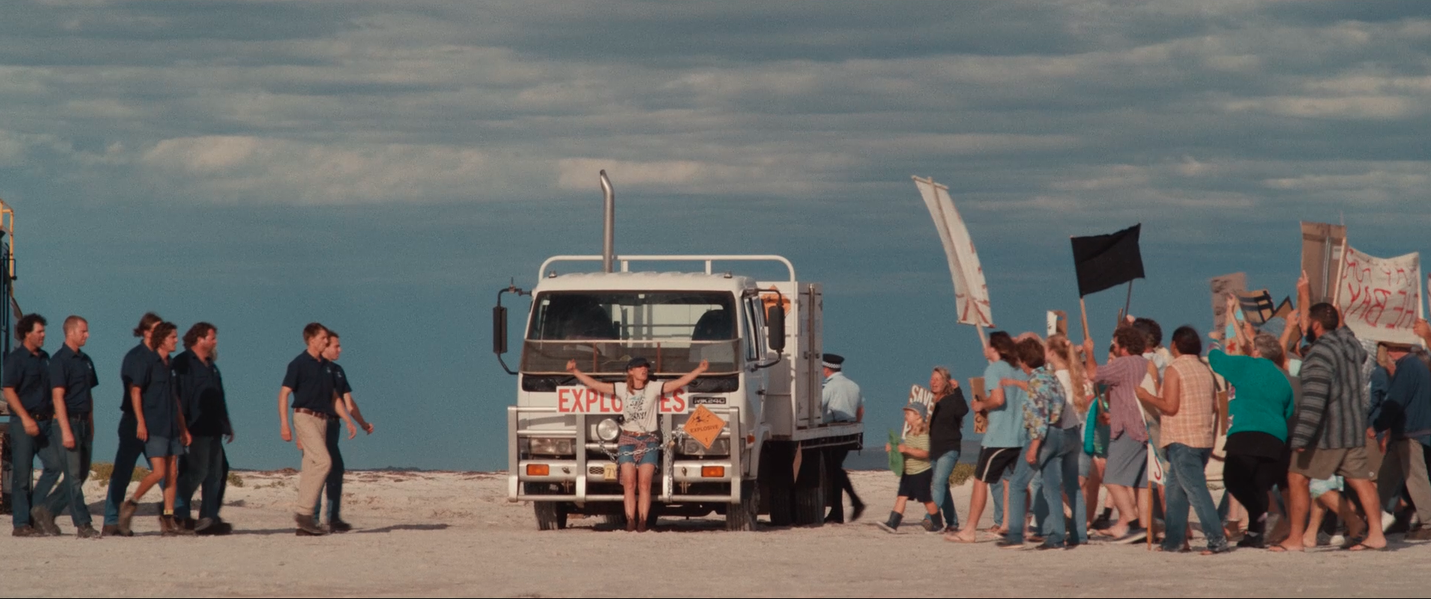
Sustainability – caring for the ocean
- As a class, use sticky notes to brainstorm: What threats to the ocean are shown in Blueback? What helps protect it?
- Sort responses under these 2 headings: threats and solutions
- Which threat stands out most for you and how might it be solved?
Family and Relationships
- How would you describe Abby and Dora’s relationship? What makes it strong? What makes it difficult?
- Think/Pair/Share: THINK: Write one word to describe their relationship; PAIR: With a partner, compare your words; SHARE: Find examples in the film to support your ideas, then share with the class.
- How has the death of Abby's father impacted Dora and Abby?
- What other family relationships appear in Blueback? How do they add to this theme?
Taking Action
- How does Dora encourage Abby to take action, even when it’s hard?
- How does Abby follow in her mum’s footsteps? What actions does she take as a child and as an adult?
- What is one thing you’ve seen or learned in the film that inspires you to care about something in the real world? How will you follow this up with action? How might you inspire others to take up your cause?
Greed vs Responsibility
- What happens when people put profit ahead of the common good and the future of the planet?
- Stage a mini debate between the characters in Blueback on the topic: Environmentalists are annoying troublemakers
- Assign roles: 15-year-old Abby, marine scientist Abby, Dora, Macka, a spear fisherman, Costello the developer, Briggs
Belonging and Community
Dora and Abby are both part of and apart from the Longboat Bay community.
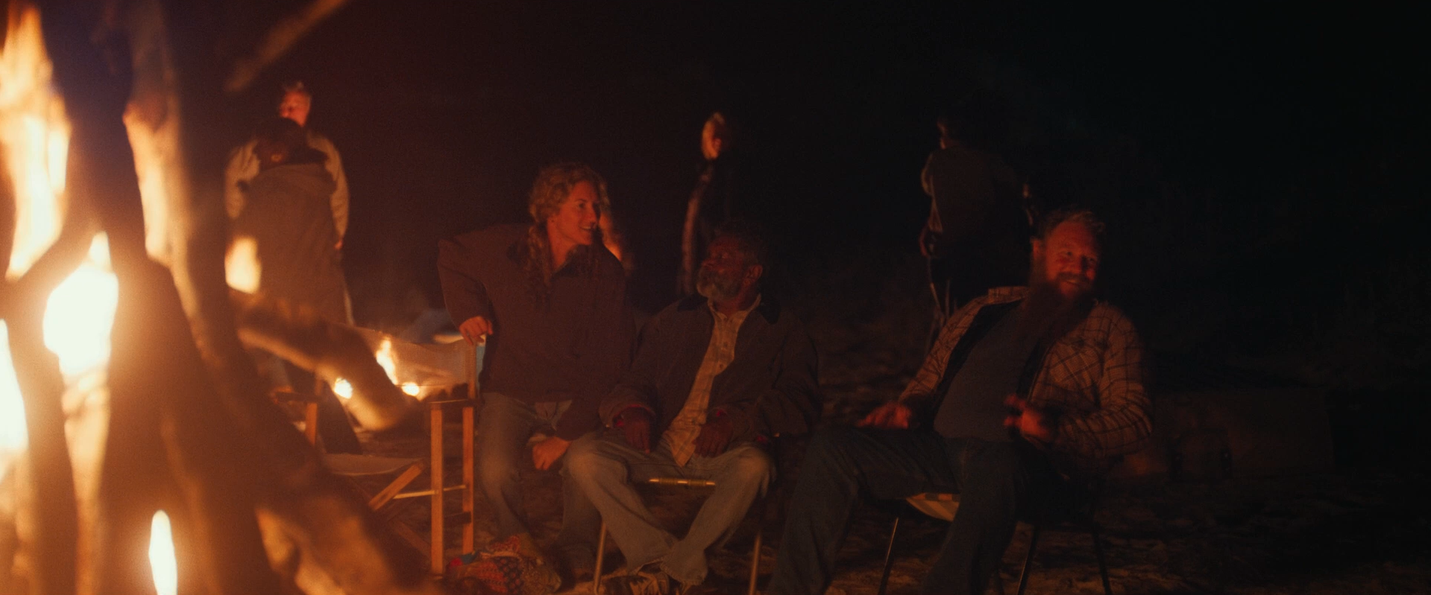
In small groups, discuss:
- How does the community work together in the film?
- What are signs of kindness or connection in the film?
- What challenges does the community face?
- Who helps Abby feel at home?
- Would you agree that Dora and Abby are both part of and apart from their community?
Final Reflection
- What theme stands out the most to you, and why?
- Grab something to write on -- you now have 3 minutes to write your answer.
- Select a meaningful sentence, phrase or word from your answer and write it on a sticky note.
- As a class compile your notes and put them under relevant theme headings.
Book to screen
Winton’s original story has a male lead, but a few years ago, when we were getting serious about making the film, my then 15-year-old said, “Great, Dad, you’ve got two daughters and you’re making a film with another male protagonist.” It did trouble me. When Winton rang and asked for an update, I said I was thinking of changing the lead to female and he was all for it. It unlocked the film.
Blueback is an adaptation of Tim Winton's celebrated 1997 short novel for young people (9–13 years).
As a class discuss
- What are some of the obvious challenges in telling a story in the form of a novel and then trying to tell the same story in the form of a film? What needs to be done differently?
- What are some great examples of books you have read that have become great films? What are some film adaptations that have disappointed you?
Compare the book and the film
If you have read the book and also have seen the film, complete the narrative map (below)
Book to Screen: exploring character
Abel/Abby
An obvious difference between the novel and the film is that the protagonist in the book is male and the protagonist in the film is female - a decision made by director Robert Connolly after a request from his daughters.
- Why do you think it mattered to Connolly's daughters that the protagonist should be female?
- While this is changing, books and films are more likely to feature male protagonists, with the story being told from their point of view. Why do you think this is or has been the case? When we ask questions like this about a text, we are looking at representation.
- One reason representation is important is that "If you can't see it, you can't be it." As a class think about what this statement means. Share examples that explain what is meant by this statement.
- What difference does it make to the narrative that Robert Connolly has decided to change the gender of the protagonist from male to female? Do you think changing the gender has had a significant impact on how the protagonist is portrayed in the book and the film?
Dora
- Tim Winton considers Dora Jackson to be at the centre of his story. Does this surprise you, or do you agree? Explain your answer.
- How does the film reflect Winton’s interpretation of Dora Jackson? How does it reduce Dora’s role in the book in favour of building Abby's character?
Near the bottom, in the mist left from their abalone gathering, a huge blue shadow twitched and quivered. There it was, not a shark, but the biggest fish he had ever seen. It was gigantic. It had fins like ping-pong paddles. Its tail was a blue-green rudder. It looked as big as a horse.
Read, view and compare
Books and films each offer rich opportunities for storytelling and draw us into the world of the story in different ways.
- Compare the introduction of Blueback in the novel (above) to the film's introduction of this character.
- How does Tim Winton create a visual impression of Blueback through words?
- What film techniques are used to help viewers experience the same wonder as Abby at the sight of Blueback? Rewatch this scene. In pairs, refer to the scene analysis sheet (below) to describe the different elements that combine to make this such a powerful scene. Share your discoveries with the rest of the class to build an even richer understanding of the magic of film language.
- You might also like to reread the final paragraph of the novel and compare that to the final scene in Blueback the film. The texts conclude quite differently. As a class discuss why Robert Connolly has concluded the film in the way he has.
Acknowledgement
Thank you to pre-service teacher Jessica Rijs who assisted with this resource as part of her Master of Education at the Melbourne Graduate School of Education.