
Imperfect learning resource
Indonesian Film Festival 2026: For Schools
Our classroom resource offers introductory and post-viewing activities for exploring the Indonesian film Imperfect in the classroom.
Learning area: Indonesian
Year levels: 7–10
Introduction
Imperfect: Karier, Cinta & Timbangan (Ernest Prakasa, Indonesia, 2019) is a comedy-drama that explores identity, self-worth, and the pressure to conform in a society shaped by harmful beauty standards and social media. The story follows Rara, a smart and capable woman who faces disrespect at home and in the workplace because she does not fit society’s narrow definition of beauty. When she changes herself to gain acceptance, Rara begins to lose sight of who she truly is, revealing the cost of trying to fit in and meet others’ expectations.
Note to teachers: The film addresses themes of body shaming and social discrimination, which may prompt meaningful classroom discussion but could be sensitive for some students.

Before viewing
The book
Imperfect is inspired by Imperfect: A Journey to Self-Acceptance, a self-help book written by Meira Anastasia. She co-wrote the film’s screenplay with her husband, Ernest Prakasa, who also directed the movie. Anastasia wrote the book after being hurt by an insulting comment about her appearance on her husband’s Instagram feed. The book centres on themes of self-love, body positivity, and overcoming insecurity, chronicling Anastasia’s personal journey toward self-acceptance.
Explore
As a class, find out more about the book that inspired Imperfect:
Of her book, Anastasia writes:
BUKU INI BUKANLAH BUKU MOTIVASI, melainkan kumpulan cerita seorang perempuan, istri, sekaligus ibu yang sedang berjuang agar bisa mengatakan kepada diri sendiri: Aku tidak sempurna, tapi tidak apa-apa.
(THIS BOOK IS NOT A MOTIVATIONAL BOOK, but rather a collection of stories from a woman, wife, and mother who is struggling to say to herself: I am not perfect, but that's okay.)
While the film does not directly adapt specific content from the book or reference Anastasia’s own experiences, it shares the book’s focus on the psychological harm caused by restrictive beauty standards.
- Browse Anastasia’s book here to get an idea of her approach to this topic.
- What stands out for you about Anastasia’s approach to her topic?
- Why do you think she has decided to explore this topic through her personal experience?
- What message is she trying to communicate with the phrase: “Aku tidak sempurna, tapi tidak apa-apa”?
- Look at the chapter titles. How do they make the book feel personal or relatable?
- Consider the illustrations in the book. How do they help you understand Anastasia’s ideas or feelings?
- The book uses some English words and phrases. Why do you think Anastasia includes them? What effect do they have on the reader?
- How do these elements (titles, illustrations, English phrases) work together to make the book engaging?
- In this video, Anastasia is interviewed about her book – depending on the level of your Indonesian comprehension, watch the interview to better understand Anastasia’s ideas, or to see what vocabulary you recognise.
Social Media in Indonesia
Indonesia is seeing a rapid growth in social media use, and is facing a number of the same issues that we are grappling with in Australia.
- Find out as much as you can about the use of social media in Indonesia including:
- the percentage of the population that uses social media
- the most popular platforms for young people
- the perceived impact of social media messaging
- Did you know that Indonesia, like many countries around the world, is contemplating a similar social media ban to the one introduced in Australia? You can find out more in this article.
- Find examples of Indonesian social media campaigns that influenced public opinion or social issues.
The trailer
Watch the trailer (which is in Indonesian without subtitles).
- Imperfect is set in Jakarta. What aspects of urban Indonesian life (shops, street food, transport, offices, schools) did you notice? What surprised you, or would you like to know more about?
- What symbols of status, beauty, or success (fashion, makeup, technology, cars) did you see?
- What did you notice that offered a different perspective on life in Jakarta?
After viewing
Respond and discuss
Imperfect: Karier, Cinta & Timbangan is primarily a comedy, but it explores a serious issue that has a significant social impact in Indonesia and the rest of the world.
In pairs or groups:
- Share what stood out for you when you watched the film. Which scene/s did you find the most memorable?
- Compare the responses of your group members. Which aspects of the film do you agree on? How do your responses and opinions differ?
- In your group, make a list of Indonesian adjectives that describe the film. Share your list with the rest of the class.
- What message do you think the film is communicating? What do you think about this?
- What did you learn about Indonesian society that you had not previously known?
- Were there elements or references in the film that confused you, or that you would like to know more about?
- Share what you have discussed with the rest of the class.
Reviewing the film
Read this review of Imperfect.
- Identify one point in the review that you agree with.
- Identify one point you disagree with.
- Explain how persuasive you found the review, giving reasons for your opinion.
Now write your own review of the film in Indonesian. In your review, you should:
- Give a brief overview of the film (without retelling the whole story)
- Express your opinion clearly
- Support your opinion with reasons and examples
- Give an overall evaluation or recommendation
- Extension challenge: Comment on at least one film element (e.g. acting, themes, message, humour, cinematography)
You may like to use these sentence starters:
Exploring themes
Social pressure and expectations
- What physical traits are portrayed as ‘ideal’ in the film?
- How are these ideals influenced by media, advertising, and global trends?
- How do family, friends, and the workplace influence Rara’s attitude to her appearance?
- What role does social media play in shaping ideas about beauty and success?
- How does Imperfect show the connection between beauty standards and wealth, success, and happiness?
- Why is appearance linked to professional success in the film?
- Does Imperfect challenge or reinforce social attitudes towards body image?
- How do the beauty standards explored in Imperfect compare with those you see in Australia? What similarities and differences did you notice?
Identity and acceptance
- How do the characters and situations in the film show the emotional impact of beauty standards?
- How does Rara’s perception of herself change over the course of the film?
- In what ways does the film show the importance of staying true to oneself in the face of social pressure?
- Is the ending realistic? Why or why not?
Gender and representation
- Are the pressures shown in the film mostly directed at women?
- How are male characters affected (or not affected) by beauty standards?
- How does Rara’s relationship with Dika challenge typical romantic stereotypes?
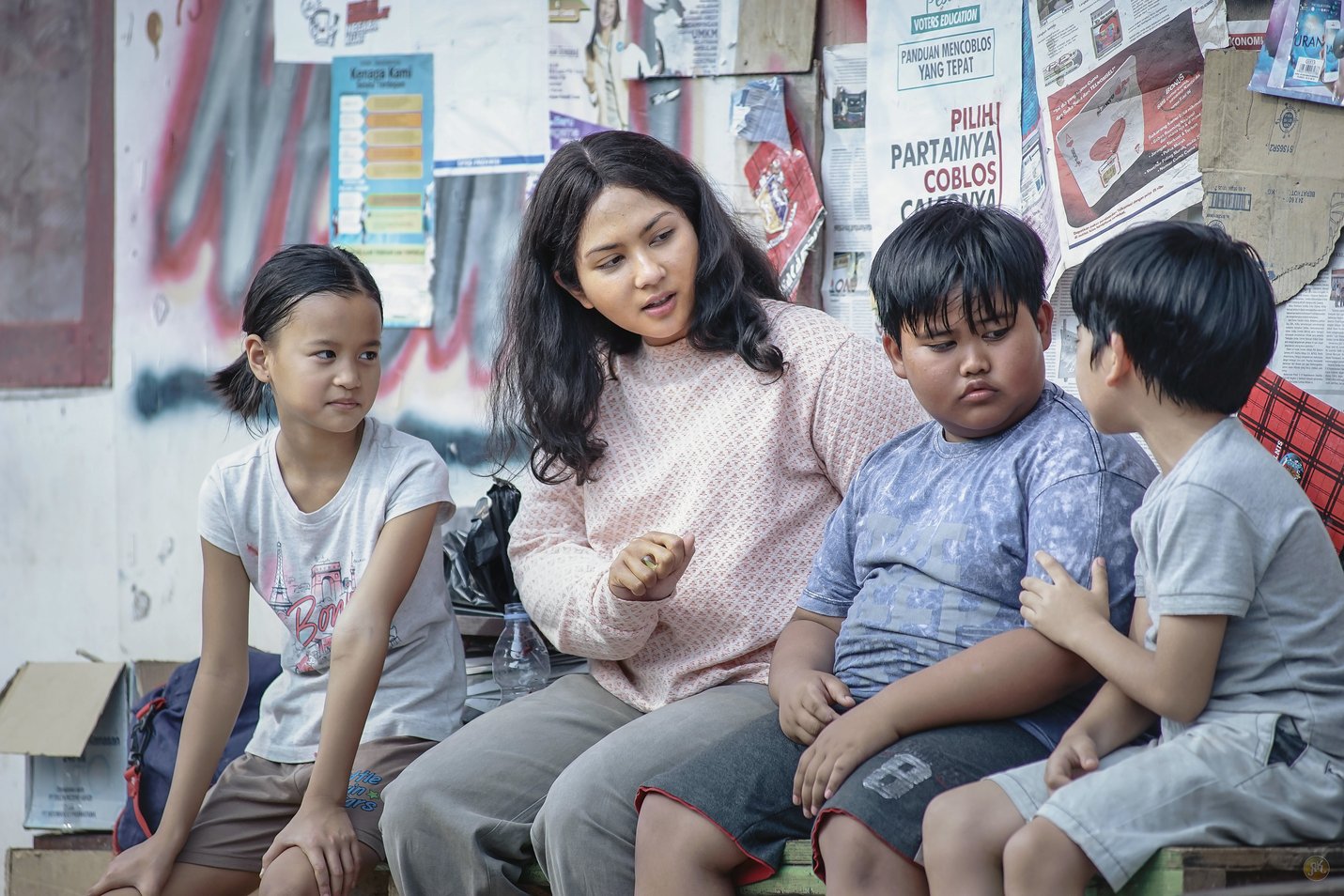
Class, inequality and rubbish-heap scenes
- What do the rubbish-heap teaching scenes suggest about economic inequality in Jakarta?
- Why does the film show that even children in poverty are affected by ideas about appearance?
- Why do you think the director contrasts corporate office life with the rubbish heaps of Jakarta? What message is created by placing these two worlds side by side? How does this contrast deepen the film’s message about ‘imperfection’?
Vocabulary building
Make a list of Indonesian words or phrases related to emotions, especially those connected to body image, identity, and self-acceptance. Here are some examples:
Emotions/feelings
- tidak percaya diri – insecure
- sedih – sad
- terluka – hurt
- malu – embarrassed / ashamed
- frustrasi – frustrated
- bahagia – happy
- bangga – proud
- percaya diri – confident
- menerima diri sendiri – self-acceptance / self-love
- tertekan – stressed / pressured
- tersentuh – touched / moved
Verbs / Phrases to express feelings
- merasa tidak cukup baik – feel not good enough
- merasa dihargai – feel appreciated
- belajar mencintai diri sendiri – learning to love oneself
- terpengaruh oleh tekanan sosial – influenced by social pressure
- menemukan keberanian – find courage
Create
Use your vocabulary list to complete one of the following activities:
- Choose a scene where a character is made to feel insecure about their identity.
- Show thoughts, emotions, and reactions using your vocabulary.
- Include speech bubbles, captions, or sound effects in Indonesian.
- Write a short diary entry in Indonesian from one of the characters.
- Use at least 5–6 emotion words or phrases from your list.
- Reflect on how the character feels about themselves, others’ opinions, or a challenging situation.
- Design a poster for Imperfect.
- Include the title of the film, a tagline, and key visual elements.
- The tagline should reflect self-acceptance, body positivity, or integrity.