Recently restored in 4K by Piccolo Films, a company run by Argall and his partner Lucinda Clutterbuck, Return Home screens at ACMI this Sunday 15 February. Ahead of the event, the curators of the screening series Unknown Pleasures (Zac Tomé, Grace Boschetti, Digby Houghton and Maudie Osborne) spoke with Argall and Walker.
Note: the following interview has been edited for length and clarity.
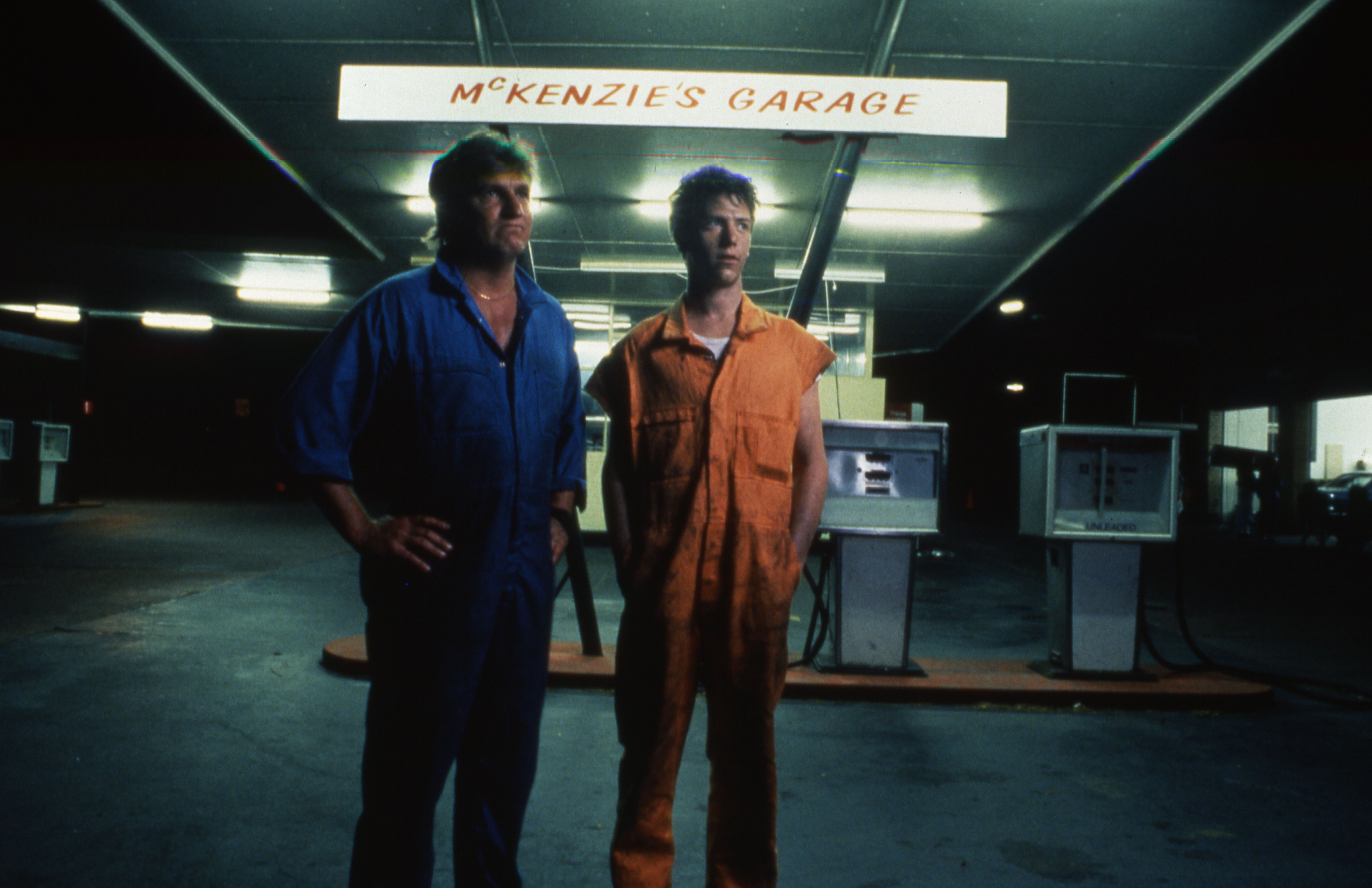
Unknown Pleasures: Return Home uses its suburban Adelaide setting so beautifully. Could you reflect on the choice to situate the story there? The garage run by Steve (Frankie J. Holden) is an important location throughout the film - was there any particular reason you chose the garage as a setting for the story?
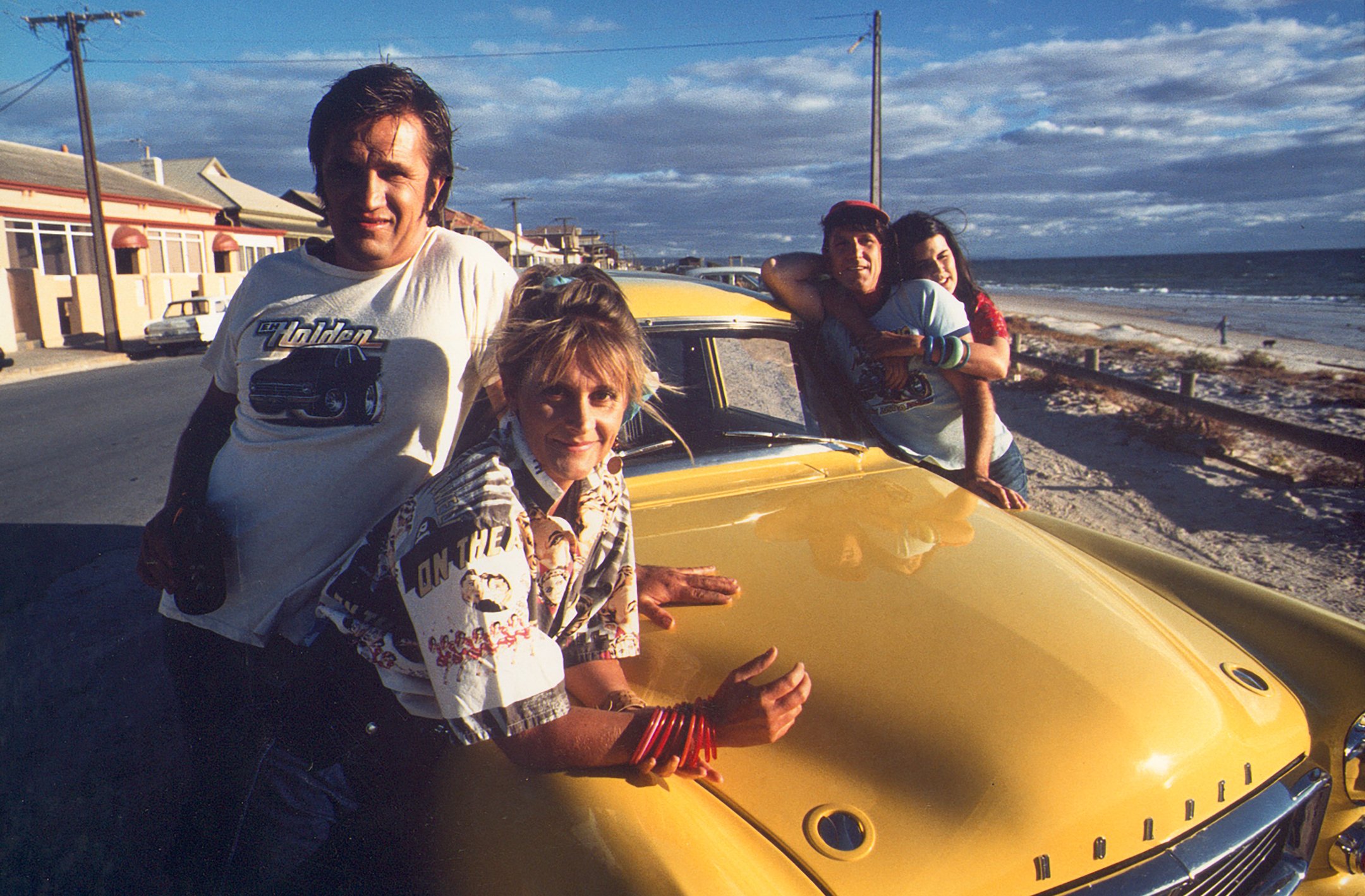
Ray Argall: I lived in Adelaide for a year or two in my teens, I got my first car and licence there and worked in factories, so I knew the place pretty well. It personified the smaller Australian city perfectly, and perhaps I just had a connection to the place.
That garage was a crucial part of the story setup - it had to have that geographical relationship to the surrounding shops and the other shopkeepers. It is a story about a family business, and as I was familiar with cars and mechanics plus some advice from family friends who ran a garage in Tasmania, the garage was a space I felt comfortable portraying.
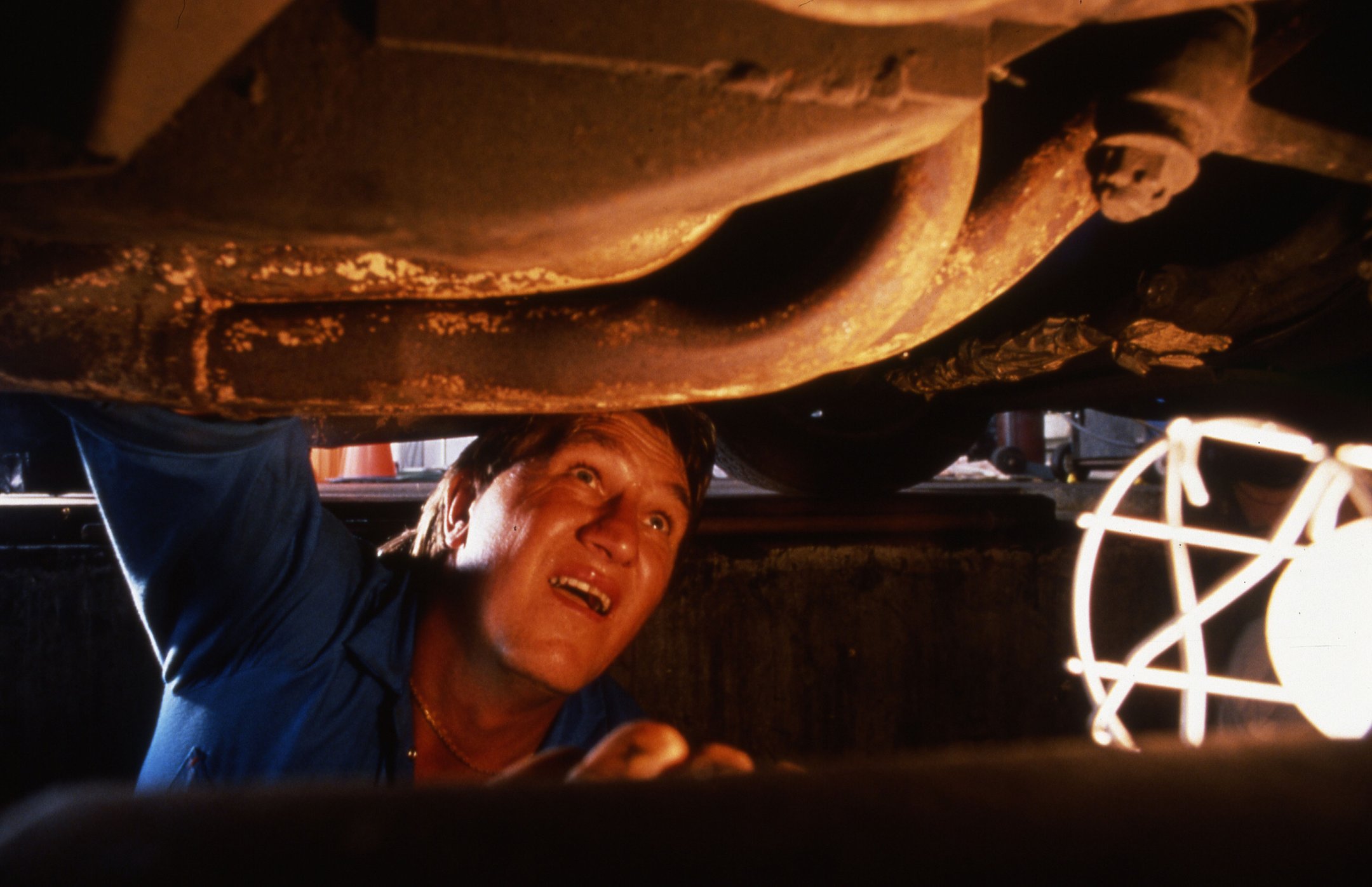
UP: There are visual and auditory motifs throughout the film that communicate the differences between the two leads (Holden and Dennis Coard) and the lives they have chosen to lead. What was your approach to conveying this through the visual language of the camera?
Mandy Walker: Ray is an amazing director of actors and their performances; he understands how the camera can enhance the emotional impact visually. Since we had worked together for years, I had seen how he did this as a cinematographer and our shorthand in prep and on set made figuring out this visual language seamless and quick.
Also, to always be aware that sometimes on set an actor can bring a special moment that you have to capture without thinking too much about the technical aspects, you have to feel the right thing to do in your gut.
UP: Ray, could you share a bit about what you learned as a first-time director on this film?
RA: The value of rehearsals with the cast. I'd always liked rehearsal periods, and on Return Home we had four weeks. It's time for the actors to play around and find their characters, try out ideas and have time with the script and director without the pressure of a crew.
In the final day of pre-production, we brought the crew in to see the cast read through. It really helped us hit the ground running on day one of the shoot. And it was a fun way to get everyone to see what we were about to go and do. Then on set you learn how to let people do their job.
I'd worked on crews in many roles, and as a director the worst thing you can do is try and "help" people with the technical demands of their work. I'd seen other directors get caught up in it, and it's an instinct you have to fight a bit. It was a revelation that I could let the First AD Euan Keddie oversee all that - they aren't called the First Assistant Director for nothing!
We'd do a block through with cast and crew, go through the coverage, and the Heads of Department would set that up. It meant that bridge from our rehearsals to the shoot was really effective and the cast loved that. It allowed me to take a breath and think about the whole picture and what was coming next.
UP: Mandy, how did you first get involved with Return Home, and what about the project appealed to you?
MW: I had been working with the director Ray Argall, who had been my cinematography mentor, as his assistant and slowly moved up to operating for him and then shooting some music videos he was directing.
When he asked me to shoot Return Home, I was extremely excited but also scared at the same time as it was my first feature. However, I did feel confident that I could do it and that I was ready. He was the person who encouraged me to jump into the deep end and accept challenges, and I have always worked like that since.
UP: You’ve spoken about being one of the only women working in cinematography in Australia when you started your career. How did that experience influence the way you approached your craft?
MW: Traditionally some people were not used to seeing a woman in my role, a woman managing a big crew and being a responsible head of department. I ignored that. I knew in my heart I was as capable as any of the men.
I was extremely lucky to have people like Ray Argall, Cristina Pozzan, Jan Chapman, Baz Luhrmann, Catherine Knapman, and others believe in me and give me opportunities. I'm sorry to say that the percentage of women in my role has not advanced much since I started. I personally try to help out with mentoring, educating, and encouraging more women to realize this job is an option and an amazing career.
UP: Since Return Home, your first feature as a cinematographer, you’ve gone on to have a distinguished career both in Australia and internationally. Do you think the possible trajectories for emerging cinematographers have changed from when you started?
MW: It's hard for many because there is still a general lack of support for diverse crews on sets all over the world. You have to be tenacious, hardworking, thick skinned, and passionate to keep going. As well as that, you have to be a good communicator, collaborator, a kind person to everyone you work with, and take opportunities when they arise! There IS a juggle of family and career, that is an important thing to be cognizant of.
UP: Ray, how did your experience as a cinematographer and a director of music videos inform your approach to Return Home?
RA: As a cinematographer shooting film, you're always looking through the camera, thinking about the movement within a frame and how the camera responds to that, you're looking at the natural light and how to enhance it, and you're seeing the most intimate work of the actors through the lens from when the camera rolls to when it cuts.
You're also learning about coverage and what works best – from the construction of camera shots to what works best to capture the actors work and keep them relaxed and engaged. Most importantly it's in the editing room that you see what works and what doesn't. The opportunity to edit what you've shot has been really important in my work. That applies to music video as well.
Music videos were a fantastic way to work on visual storytelling in a short time frame. We got to utilise all sorts of camera techniques and play with creative ideas. We got to work with so many artists in so many exotic locations, all offering different challenges. And you're working with musicians, who aren't actors, so you need to keep that in mind, so they're relaxed, comfortable and natural on screen.
UP: Ray, as a pioneering cinematographer, director and now involved in bespoke restorations (among many other hyphenates), what is it about Australian stories that makes you continue to return to them?
RA: I've been involved in many of the films - as a cinematographer, editor, helper or as a film colleague. And I know a lot of the filmmakers involved and the crews and actors they've worked with. Being able to meet with the filmmakers, bring their films back to life and to see the films reconnect with audiences new and old is really rewarding.
When we screen the finished restorations for the first time to the filmmakers it's often a revelation - not just because the films can look and sound so much better, but because the filmmakers are reconnecting with their creative works, often after a few decades. There is a sense of pride and humility in what they achieved - there can be tears, laughter and many reflections on the creative work they did and the stories they told.
It's so important that our screen stories are there to share with people, and it captures an era of Australian filmmaking that was prolific and creative, mostly driven by independent filmmakers and the screen agencies that supported them. I've been encouraging them all to write down their memories and stories about making the films we've restored while it's fresh!
It's been a real honour to work on all the films I've restored. I've covered short dramas, Animation, documentary, experimental films and features. From the films made by the Waterside Workers Federation Film Unit in B&W on a 16mm Bolex in the 1950s, to films made at the end of the film era using a myriad of film techniques and aspect ratios.
As a footnote about the future, I've also been scanning quite a bit of 16 and 35mm film that a new generation of filmmakers have been shooting. It's been wonderful to exchange ideas and techniques about shooting on film and seeing the end results.