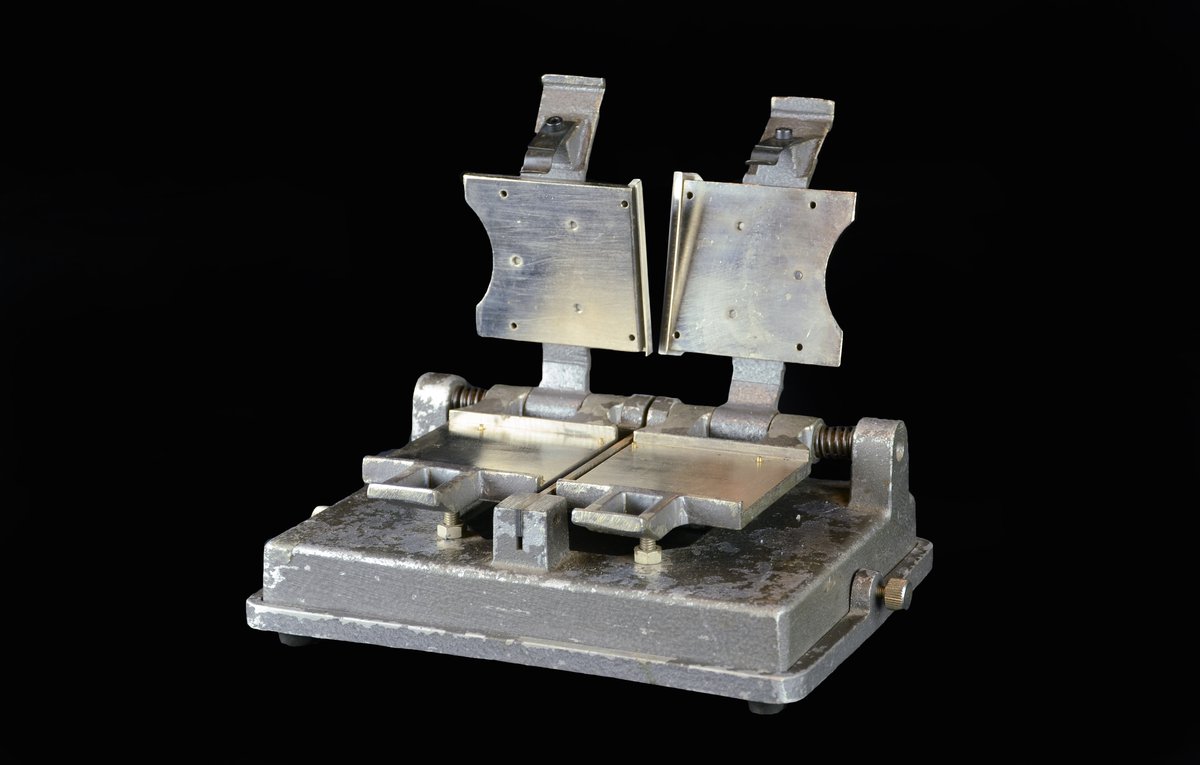
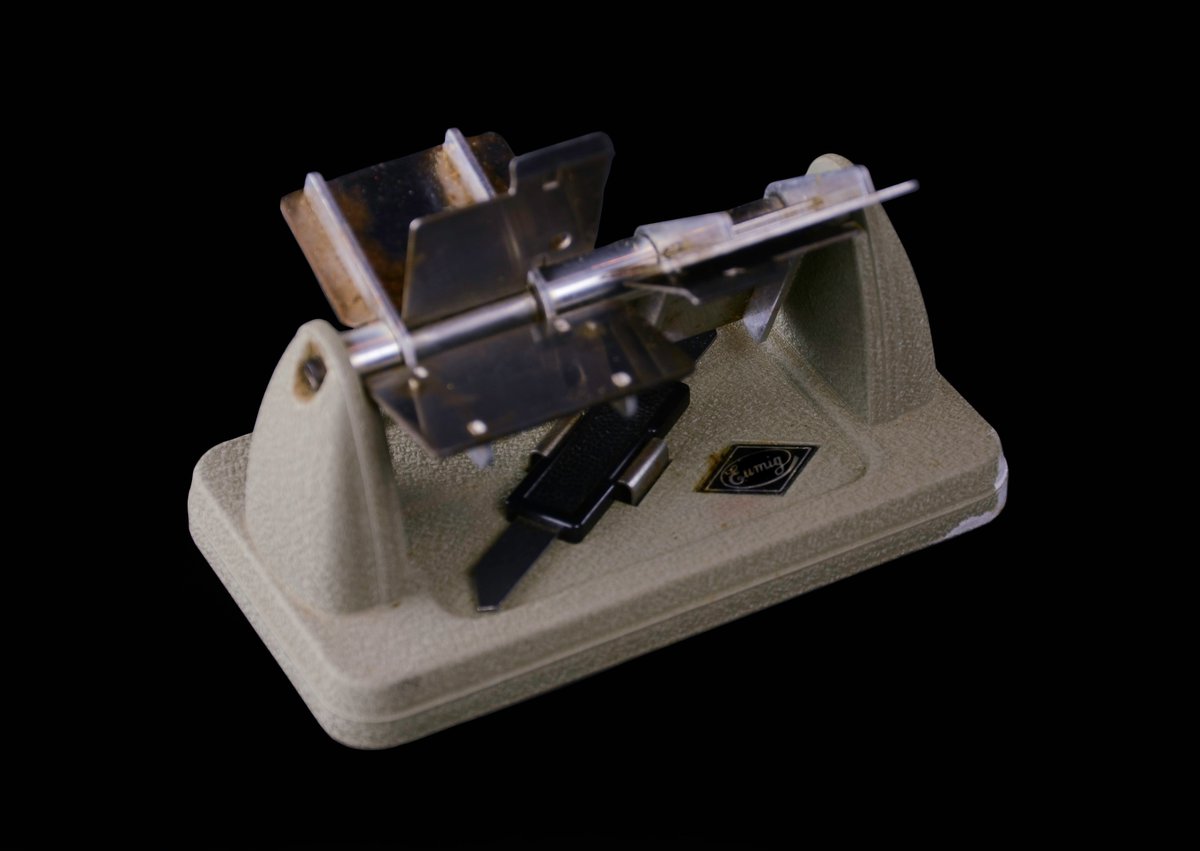
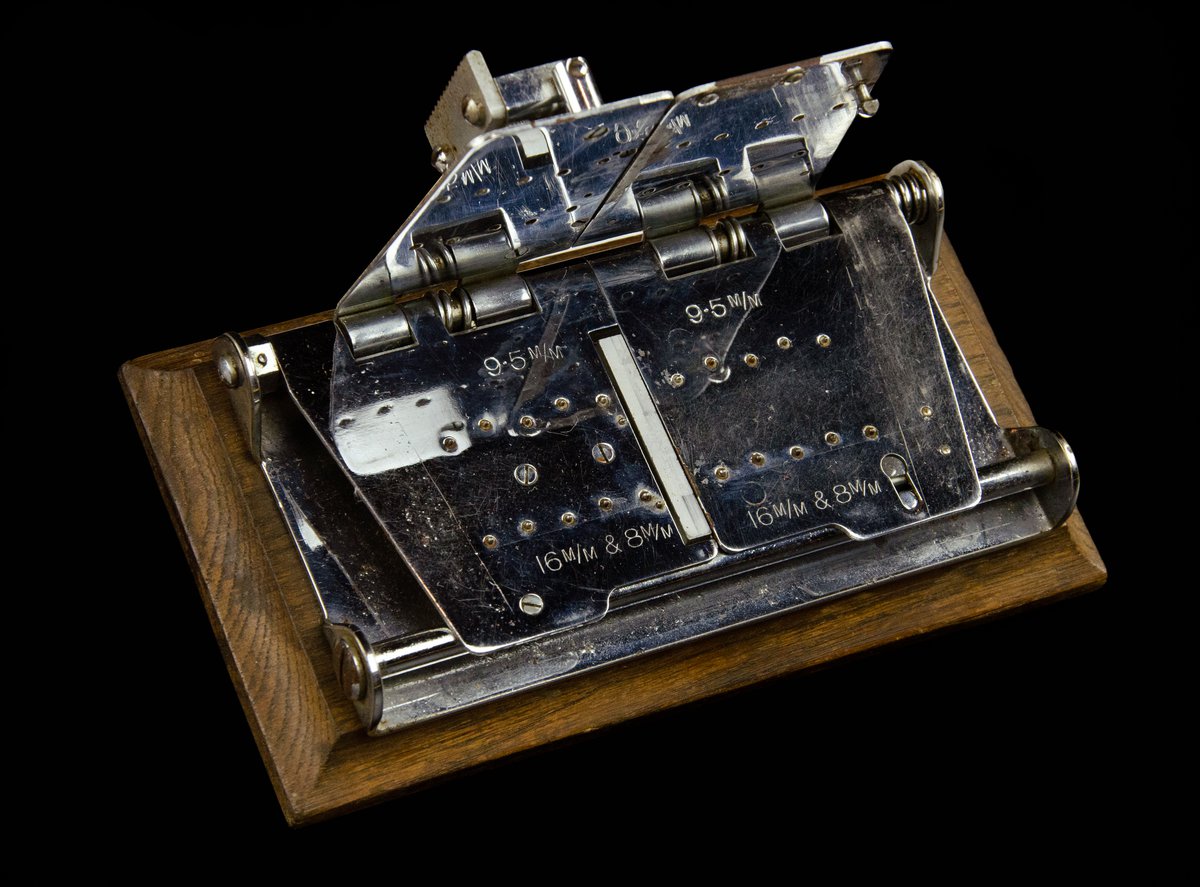
Before advancements in digital technology made the editing process easier, editors spliced and arranged film strips and frames to tell cohesive stories and represent the director’s vision. Splicers aren’t only used to join lengths of photographic film though, they’re also used to create cuts and transitions, or repair damaged films. They come in a variety of shapes depending on the film stock used, whether that’s Super 8 or 70mm. Tape splicers can be used on most film types and are commonly found in cinemas, where they’re used to join polyester prints. Cement splicers can only be used with acetate, triacetate and nitrate films are they need the film’s emulsion to help bind two lengths with a chemical called film cement.
Related works
Collection
Not in ACMI's collection
On display until
16 February 2031
ACMI: Gallery 1
Collection metadata
ACMI Identifier
Curatorial section
The Story of the Moving Image → Moving Pictures → MI-04. Materiality → MI-04-C01