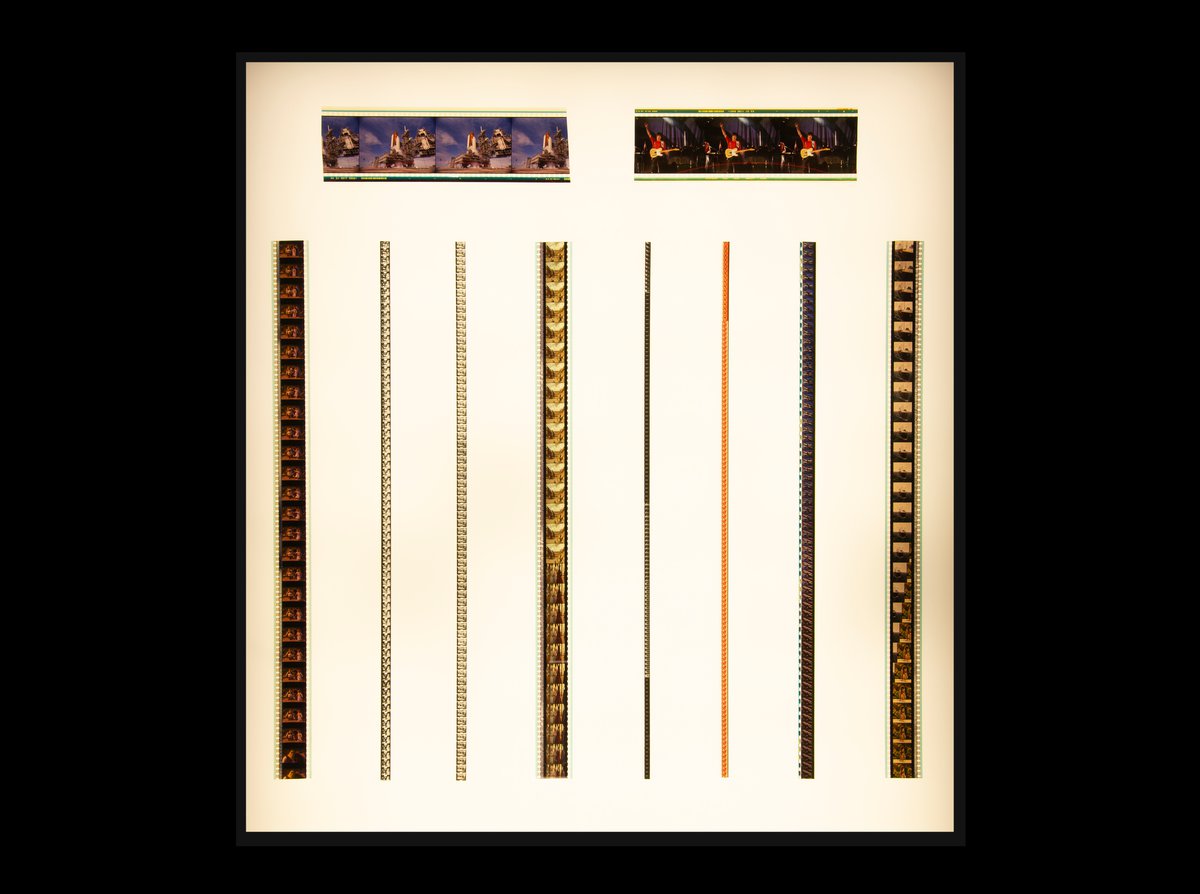
What explodes like gunpowder and made movies possible? Celluloid.
British American photographer John Carbutt developed celluloid sheets for photographic plates around 1888. They were used in cylindrical Kinetographs, but they were too stiff for motion-picture cameras. Enter Hannibal Goodwin and Kodak founder George Eastman, two New Yorkers who independently created flexible film from highly combustible nitrocellulose, which could sometimes explode in projectors! The two inventors raced each other to patent their technology, but Eastman received his patent first and began mass-producing film for Thomas Edison.
These strips are the most commonly used film gauges: 35mm is the standard; 16mm and 8mm are favoured by amateur filmmakers; and the wide, high-resolution 70mm is most commonly used for epics by Hollywood directors.
Works in this group
Related works
Collection
Not in ACMI's collection
On display until
16 February 2031
ACMI: Gallery 1
Collection metadata
ACMI Identifier
Curatorial section
The Story of the Moving Image → Moving Pictures → MI-04. Materiality → MI-04-C01