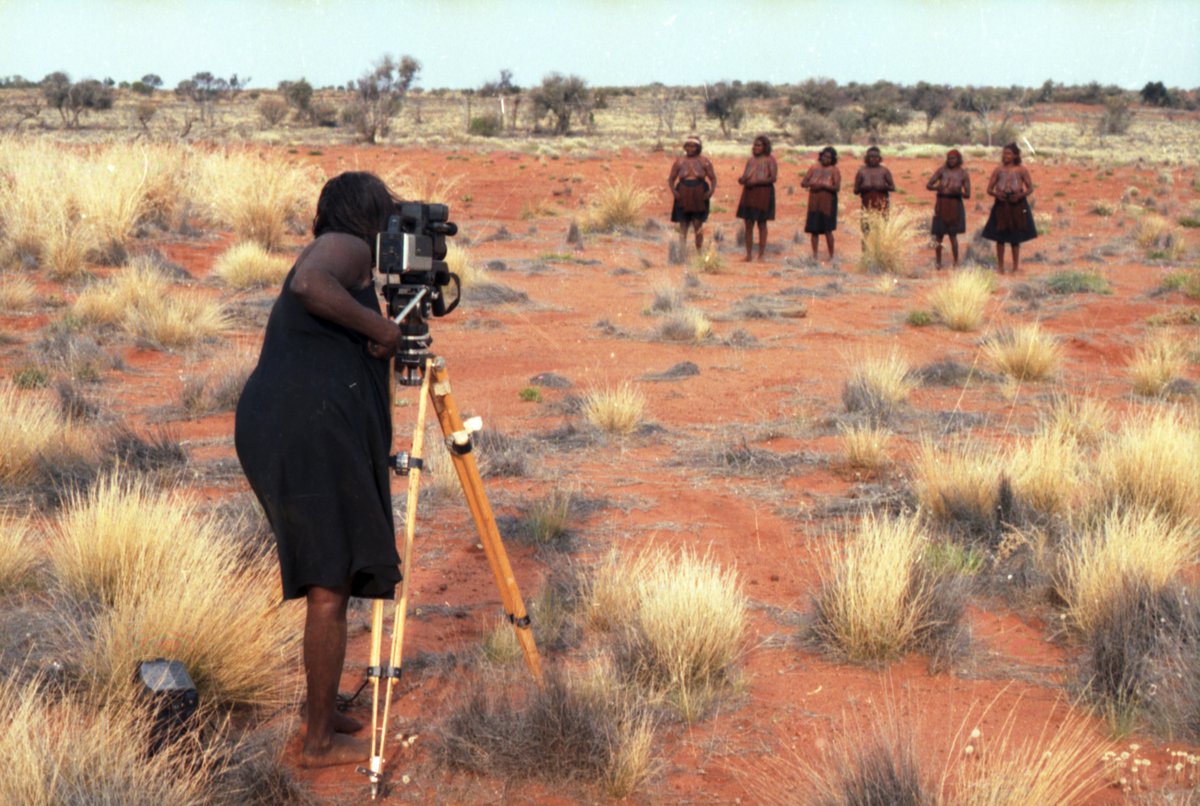
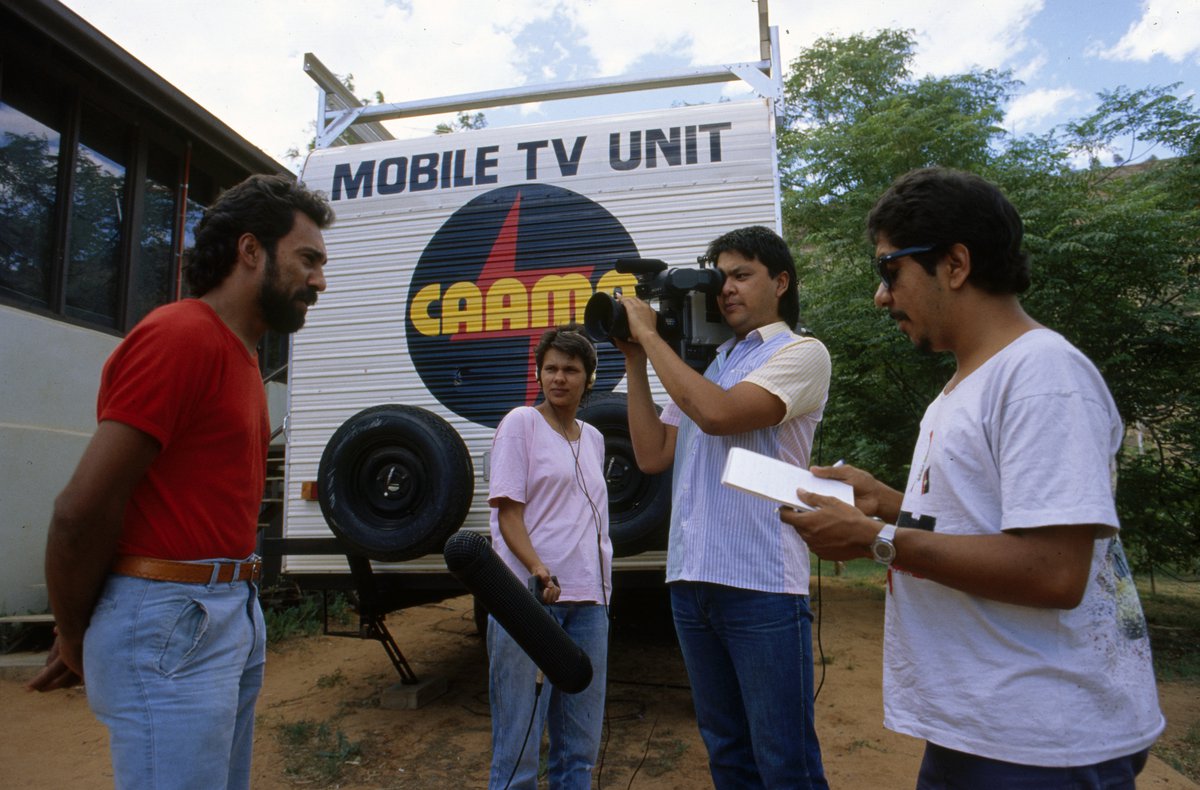
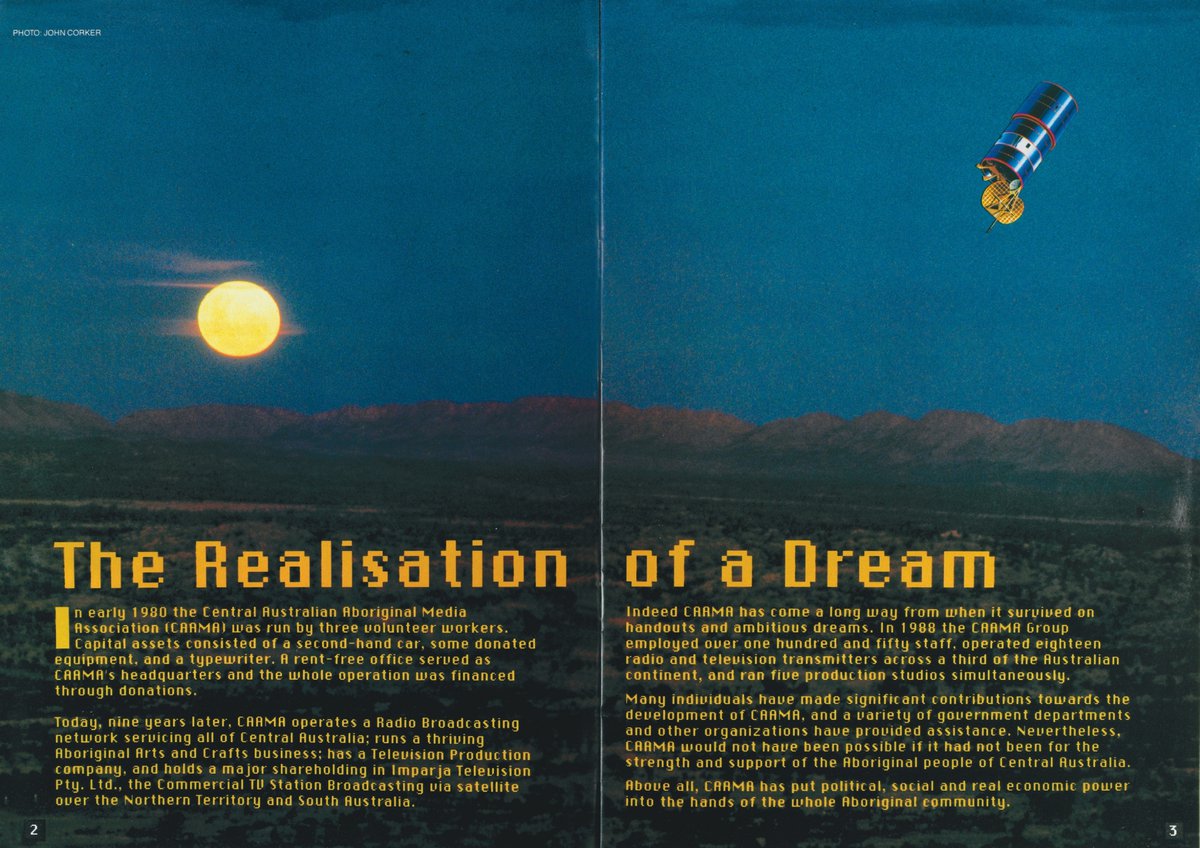
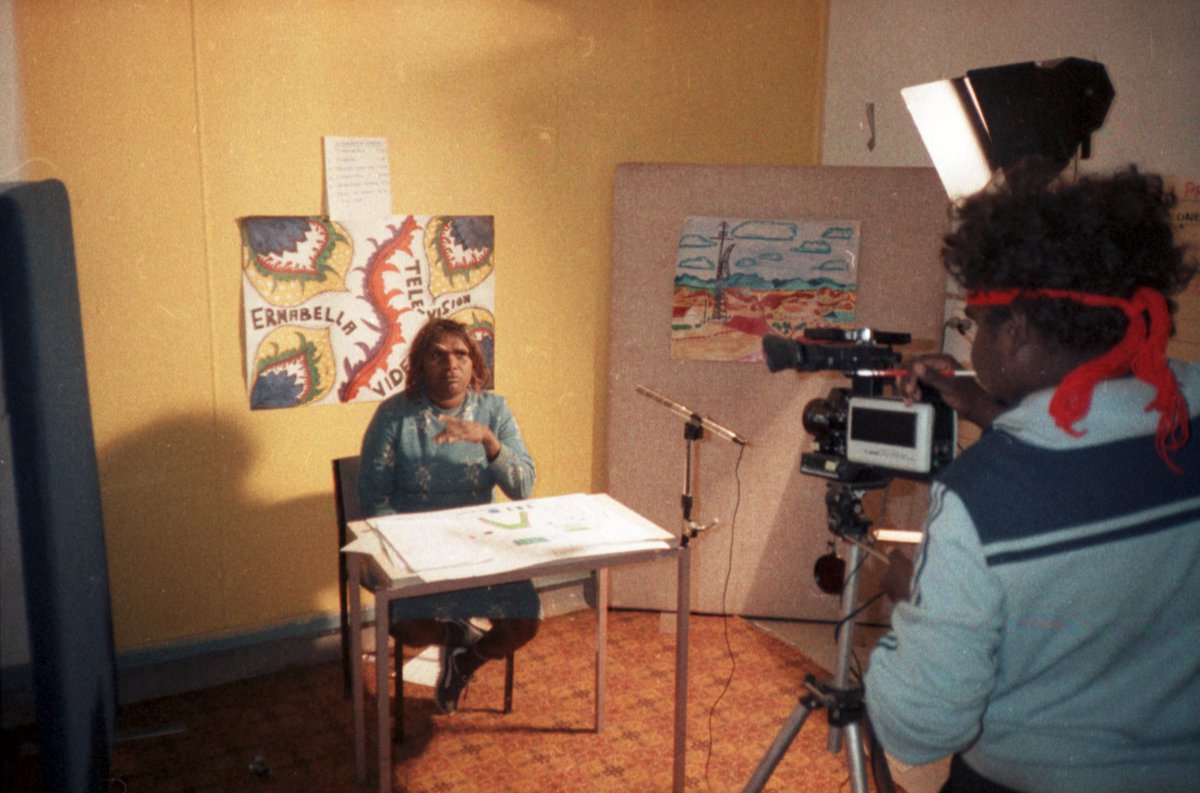
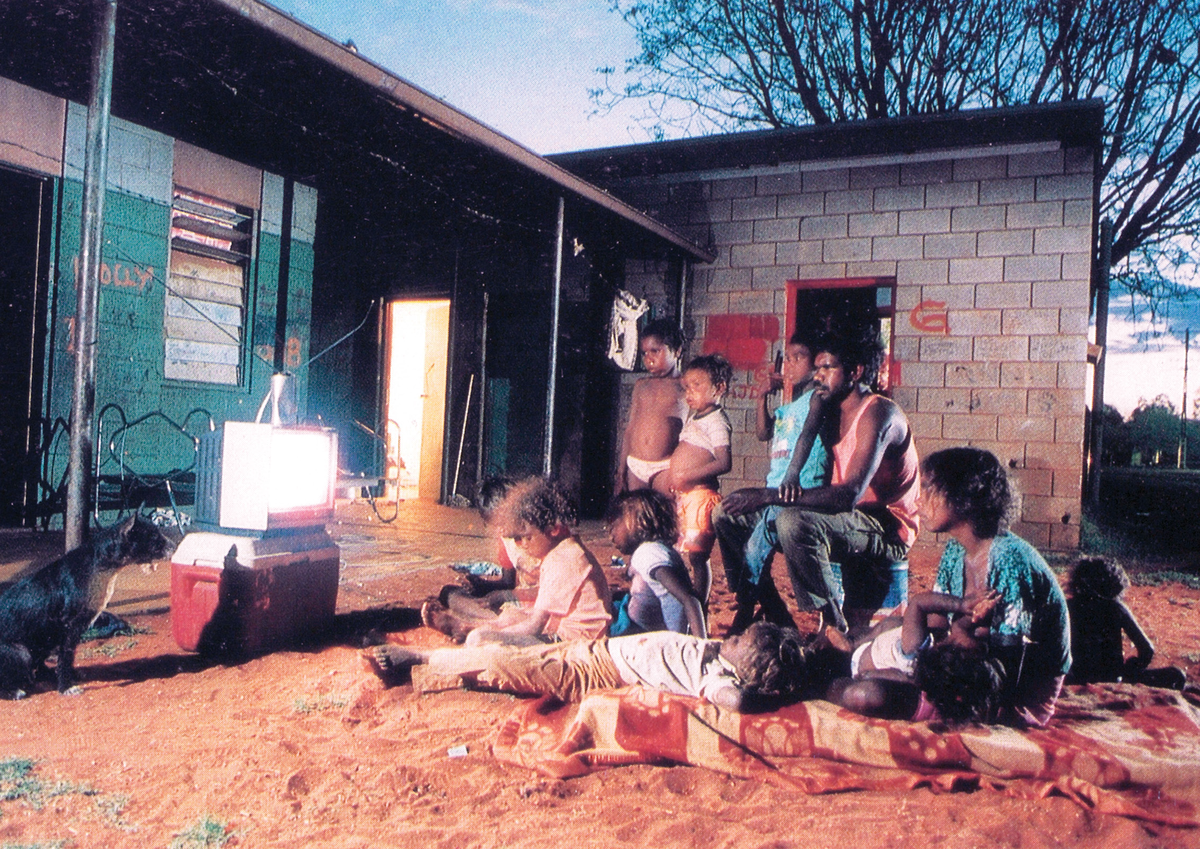
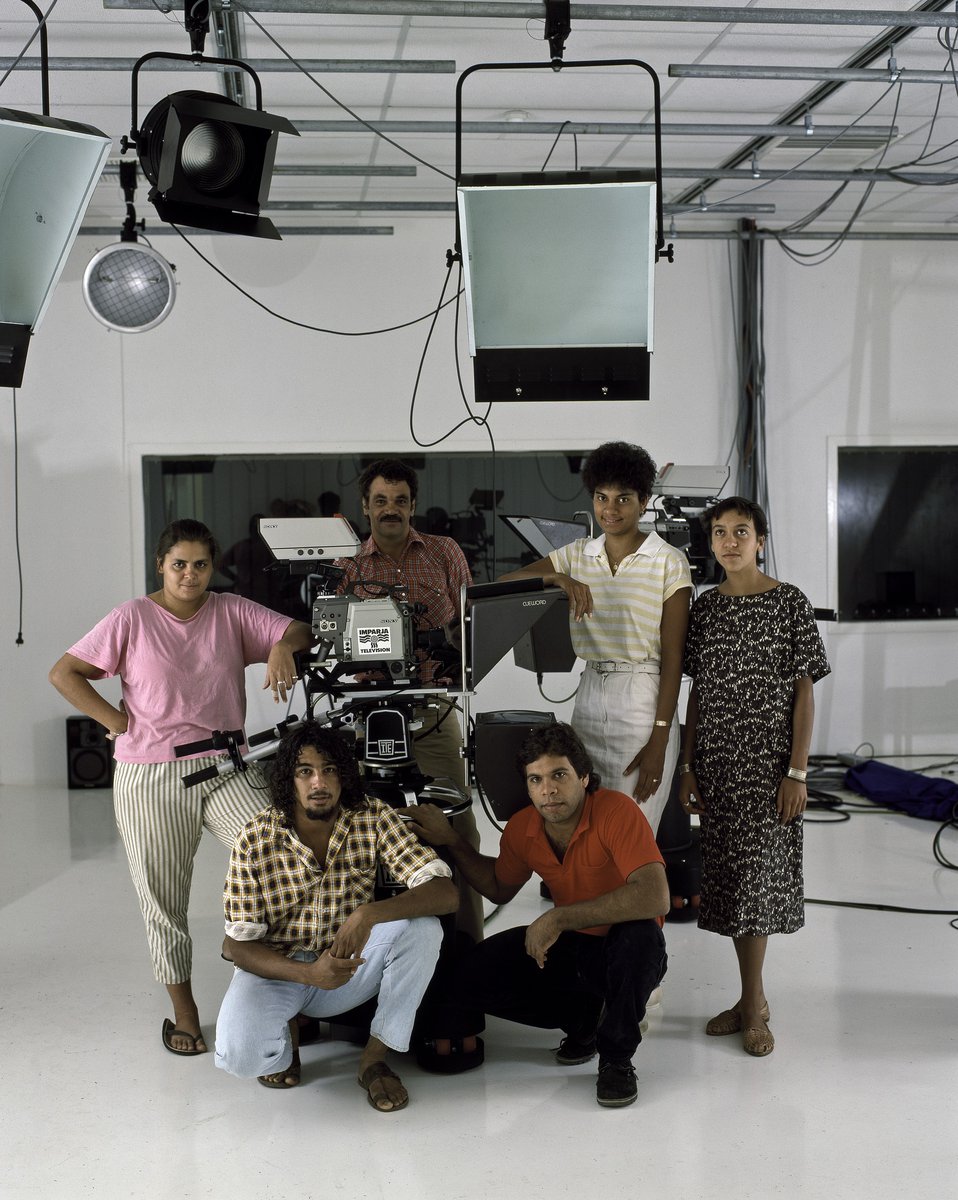
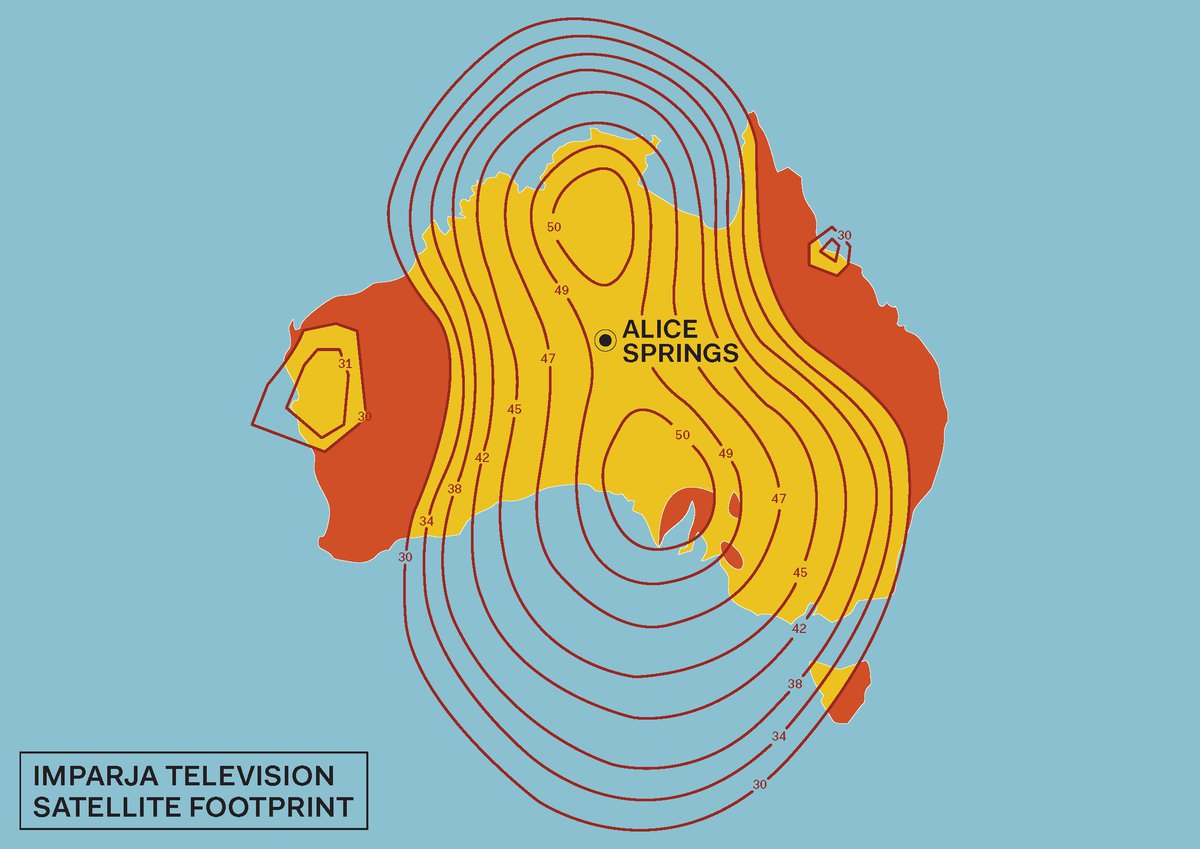
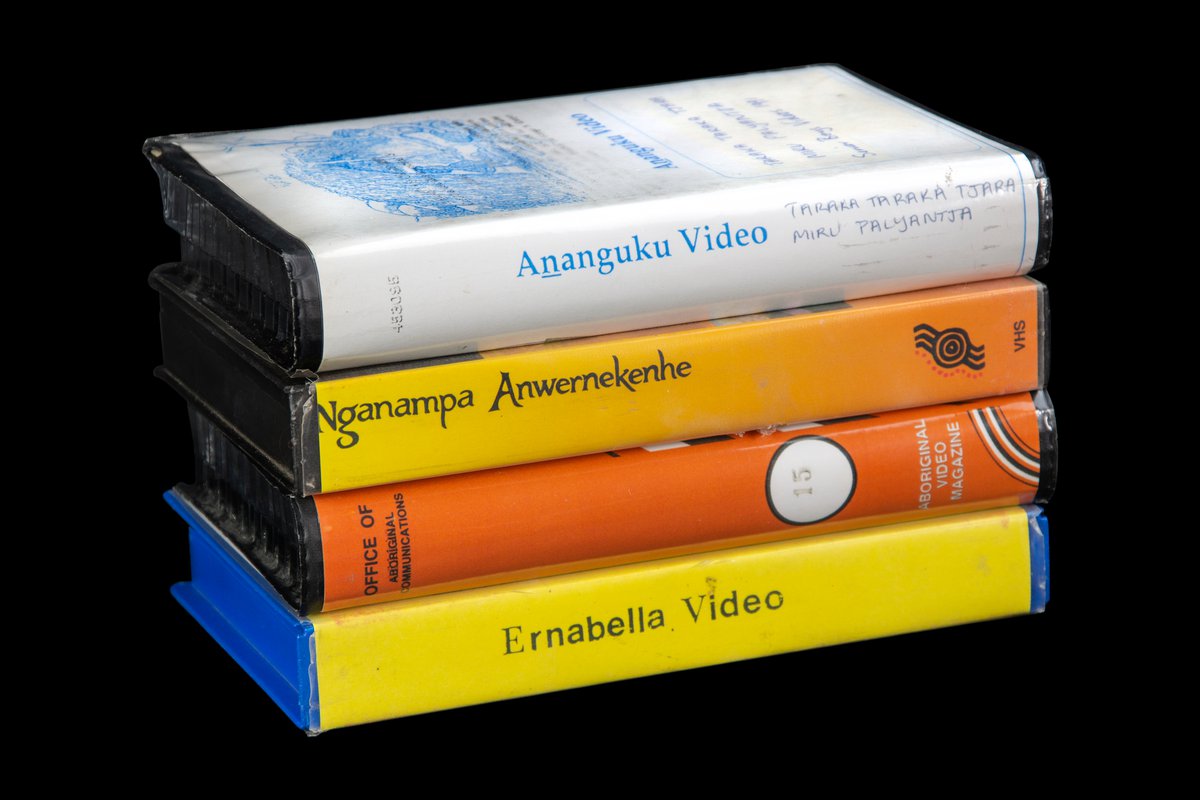
From the 1970s, Aboriginal Elders in Central Australia were concerned satellite TV potentially bringing non-Indigenous stories and storytelling to remote Aboriginal communities. In response, several Aboriginal media organisations, like Ernabella Video Television (EVTV) and the Warlpiri Media Association (WMA), broadcast local content via videotape and pirate TV in the early 1980s. Filmed in Aboriginal languages, these videos included community events, ceremonies, lore and culture. In 1998, the Central Australian Aboriginal Media Association (CAAMA) launched the world’s first Indigenous owned and operated TV network, Imparja Television. Along with the establishment of Indigenous Community Television (ICTV) in 2001, these early initiatives paved the way for other broadcasters, including Goolarri Media Enterprises and National Indigenous Television (NITV).
Works in this group
Related works
Collection
Not in ACMI's collection
On display until
16 February 2031
ACMI: Gallery 1
Collection metadata
ACMI Identifier
Curatorial section
The Story of the Moving Image → Moving Australia → MA-07. First Peoples: Our stories, our way → MA-07-04 Birth of Indigenous Broadcasting