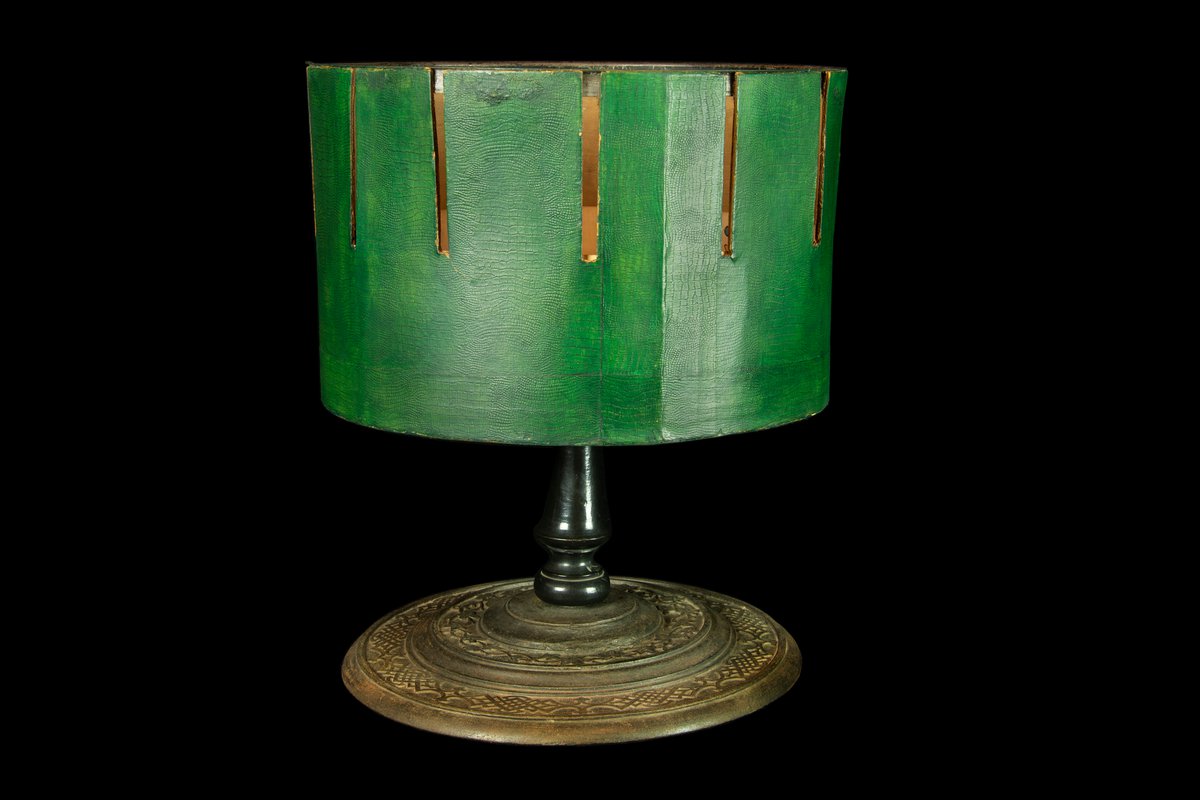
In 1834, two years after the phenakistoscope was invented in Europe, British mathematician William George Horner created his own version of the optical illusion. The Daedalum, or ‘wheel of the Devil’, used a cylindrical viewing drum containing a strip of sequenced pictures viewable through thin slits. When rotated it created the illusion of motion, and it became known as the zoetrope.
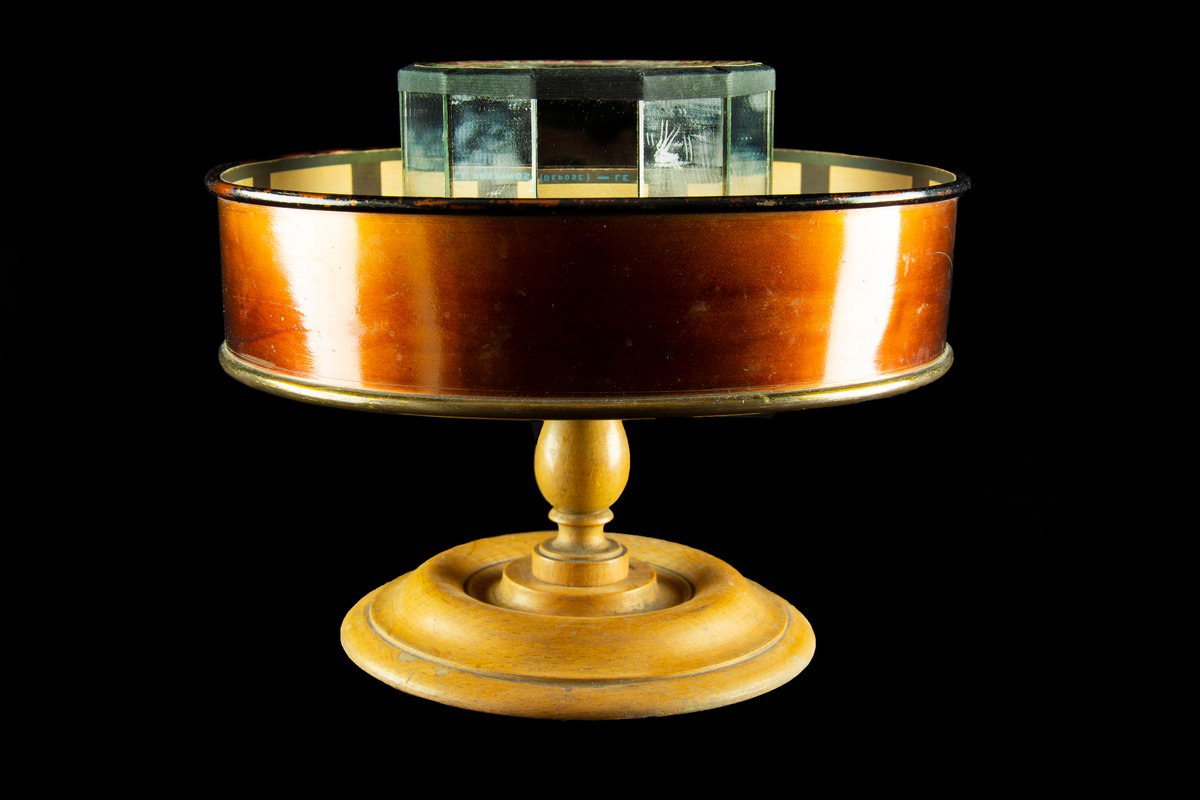
Over 40 years later, in 1877, French showman and lantern painter Charles-Émile Reynaud developed the praxinoscope, replacing the narrow viewing slots in Horner’s design with an inner circle of mirrors that more brightly reflected the pictures and let more than one person view the gliding images.
Content notification
Our collection comprises over 40,000 moving image works, acquired and catalogued between the 1940s and early 2000s. As a result, some items may reflect outdated, offensive and possibly harmful views and opinions. ACMI is working to identify and redress such usages.
Learn more about our collection and our collection policy here. If you come across harmful content on our website that you would like to report, let us know.
Collection
Not in ACMI's collection
On display until
16 February 2031
ACMI: Gallery 1
Collection metadata
ACMI Identifier
Curatorial section
The Story of the Moving Image → Moving Pictures → MI-02. Play and Illusion → MI-02-C02