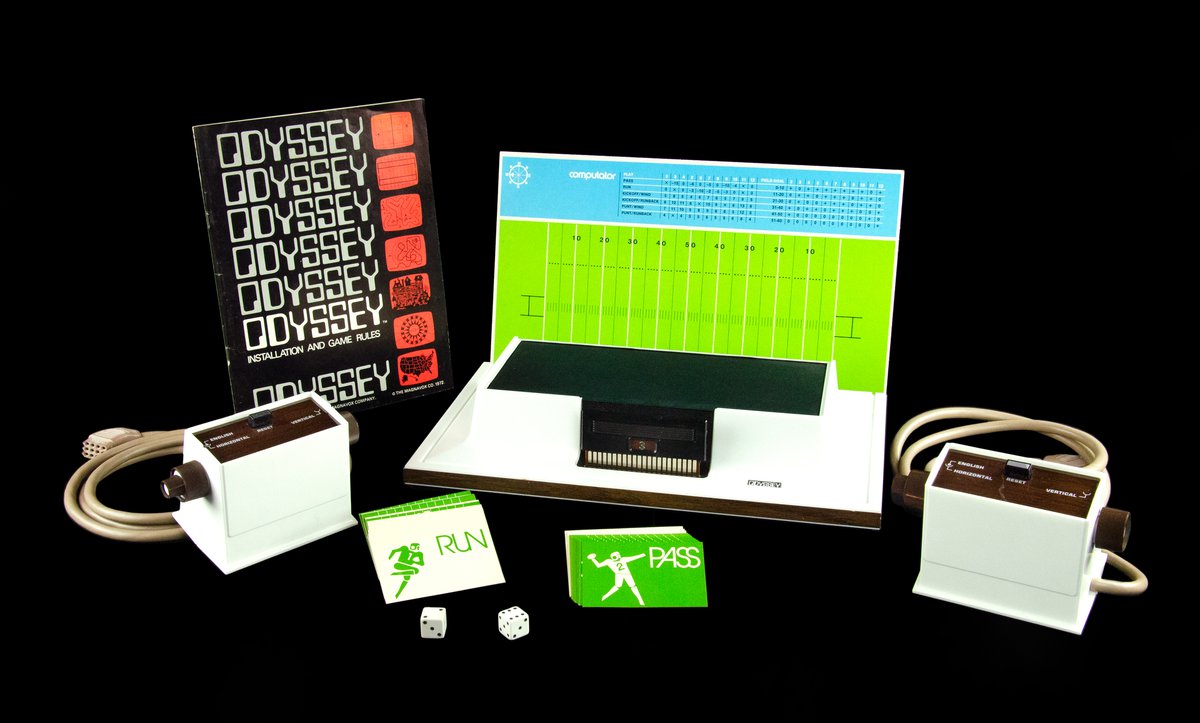
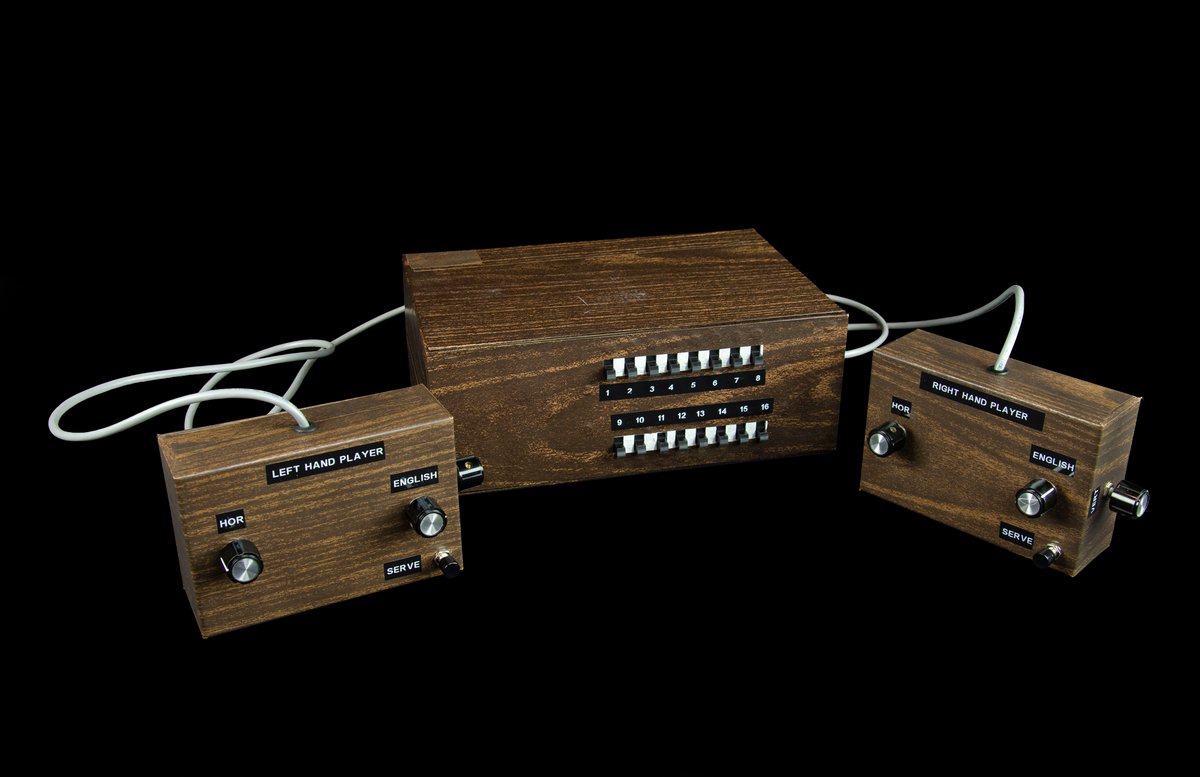
In 1966, the father of videogames, Ralph Baer, began developing the Brown Box prototype, the forerunner to the first home console ever released, the Magnavox Odyssey.
Originally called the ‘TV Game Unit #7’, Baer’s prototype became better known as the Brown Box because of its faux wood-grain vinyl. It ran multiple programs and games – including ping-pong, checkers and four different sports games – which were controlled by flipping the switches on the front of the unit.
The Magnavox Odyssey was released in 1972. Players controlled two dots while the console controlled another that darted around the screen and could be returned like the ball in pong. Though the basic gameplay was the same, people could put graphic overlays over their TV to create different game experiences, like skiing and football.
The story of Ralph Baer from the Smithsonian's YouTube channel
Related works
Collection
Not in ACMI's collection
Previously on display
10 February 2022
ACMI: Gallery 1
Collection metadata
ACMI Identifier
Curatorial section
The Story of the Moving Image → Games Lab → GL-04. Collector's Case → GL-04-C01