Beneath Roads is a response to a purposeful void in Australia’s collective knowledge. Long before horses and carts found their way across the country, the land was crisscrossed by Indigenous pathways that remain the foundation for countless highways and roadways today.
Knowledge of these routes, their features and cultural significance is depicted in songs, which are memorised and passed down through generations. These traditional forms of navigation and spiritual understanding of place are known as Songlines. Many of the roads you drive on today are the result of this practice. One of the most identifiable pathways in Victoria navigated for centuries is the Omeo highway connecting north-east Victoria to Gippsland through Ngarigo, Jaitmatang and Gunnai Kurnai Country.
This visual poem ruminates on the layering of bitumen over these ancient routes through the lens of Australian cinema. The portrayal of the outback on screen has become one of this nation’s most recognisable cultural exports and the road genre offers one way to unpack a constructed national identity.
ABOUT THE SOURCES
Beneath Roads is assembled from a range of different film sources.
Ivan Sen’s debut feature, the road film Beneath Clouds (2002), considers the unresolved tensions of settler Australia. As two Indigenous teenagers, Vaughn (Damien Pitt) and Lena (Dannielle Hall), hitchhike toward Sydney, their journey is defined more by racism than the freedom that the road often symbolises. Director of photography Allan Collins captures the landscape as one hemmed in by powerlines and overcast skies, the terrain patrolled by cops and trampled by industry. But despite these settler interventions, the beauty and grandeur of Country prospers, captured through wide vistas and intimate close-ups of the landscape. Both Sen and Collins won an AACTA award for Best Director and Best Cinematography respectively.
Beneath Clouds and other narrative titles are juxtaposed with archival historical films about Australian road building. These Government-made promotional films of the 1950s and 60s were used to build support for ‘nation building’ and were released during the same period First Peoples gained the right to vote in 1962. These are included in Beneath Roads to highlight the lack of awareness of centuries-old Indigenous navigation and travel routes upon which many modern roads were built.
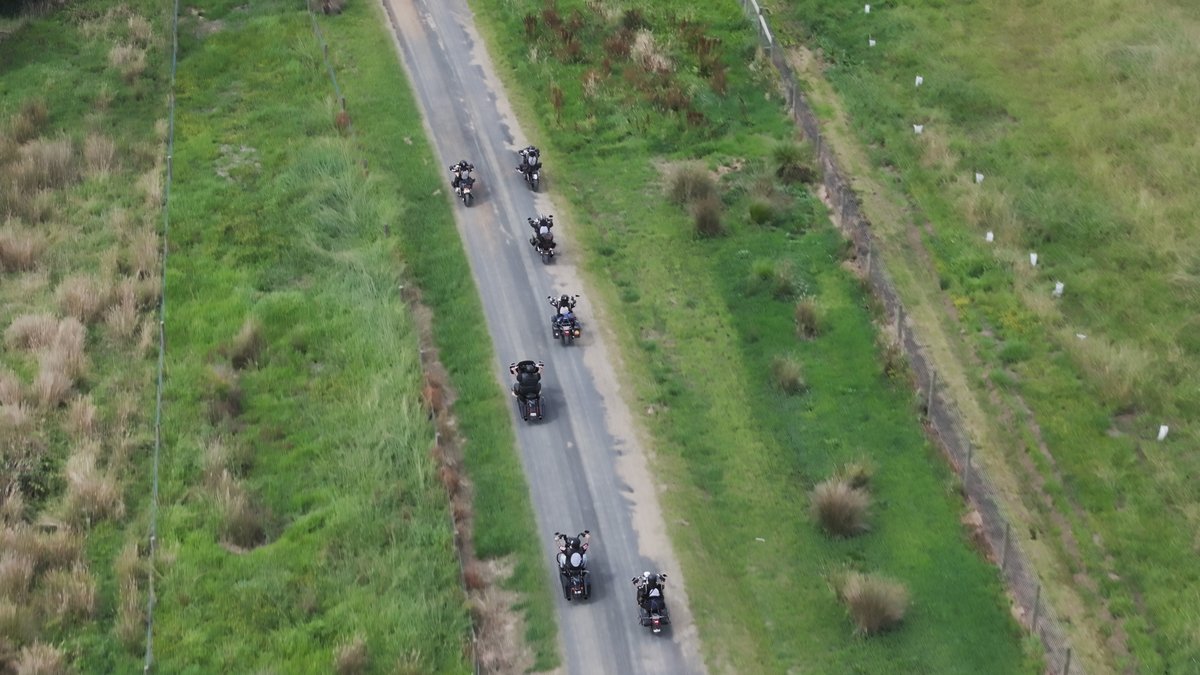
Beneath Roads further counters this lack of awareness by including footage of the Southern Warriors, a Victorian Aboriginal motorcycle club. On Survival Day in 2024, the Southern Warriors rode to Coranderrk mission to honour Wurundjeri activist William Barak’s historic protest walks from Coranderrk to Melbourne, during which Barak advocated for the mission and his people’s rights. Historically First Peoples’ ability to travel was restricted by systemic racism and discriminatory government policies that pervaded Australia until the 1970s. The Southern Warriors stand in stark contrast to this history, representing a sense of freedom, safety and pride for Indigenous communities. Impossible to ignore, the self-described ‘warriors’ travel the state Black, loud and proud.
Film credits
The Hume Highway
Produced by the Country Roads Board, 1952
Courtesy the National Film and Sound Archive of Australia
The Back of Beyond
John Heyer, 1956
Courtesy the John Heyer Estate
The Golden Jubilee of CRB: Victoria 1913-1963
Produced by the Country Roads Board, 1963
ACMI Collection
Highway Improvements
Produced by the Country Roads Board, 1965
ACMI Collection
Transport in Australia – “Roads at Work"
John Milson / The Commonwealth Film Unit, 1966
Courtesy the National Film and Sound Archive of Australia
Backlash
Bill Bennett, 1986
Courtesy Bill Bennet, b:j Films
Beneath Clouds
Ivan Sen, 2002
Courtesy Ivan Sen
Stone Bros.
Richard Frankland, 2006
Courtesy Richard J. Frankland and Media World Pictures
Jenna Rain Warwick was joined by AGNSW's curator of Film, Ruby Arrowsmith-Todd to discuss the Shell Film Unit and the nature of its travelogues, and the making of Beneath Roads, in a recorded conversation that took place at ACMI in July 2024.
Related works
Content notification
Our collection comprises over 40,000 moving image works, acquired and catalogued between the 1940s and early 2000s. As a result, some items may reflect outdated, offensive and possibly harmful views and opinions. ACMI is working to identify and redress such usages.
Learn more about our collection and our collection policy here. If you come across harmful content on our website that you would like to report, let us know.
Collection
In ACMI's collection
Previously on display
25 August 2024
ACMI: Gallery 3
Credits
Collection metadata
ACMI Identifier
Z000214
Sound/audio
Sound
Colour
Colour
Measurements
9 min 7 sec
Object Types
Digital
Materials
mutli-channel video with sound