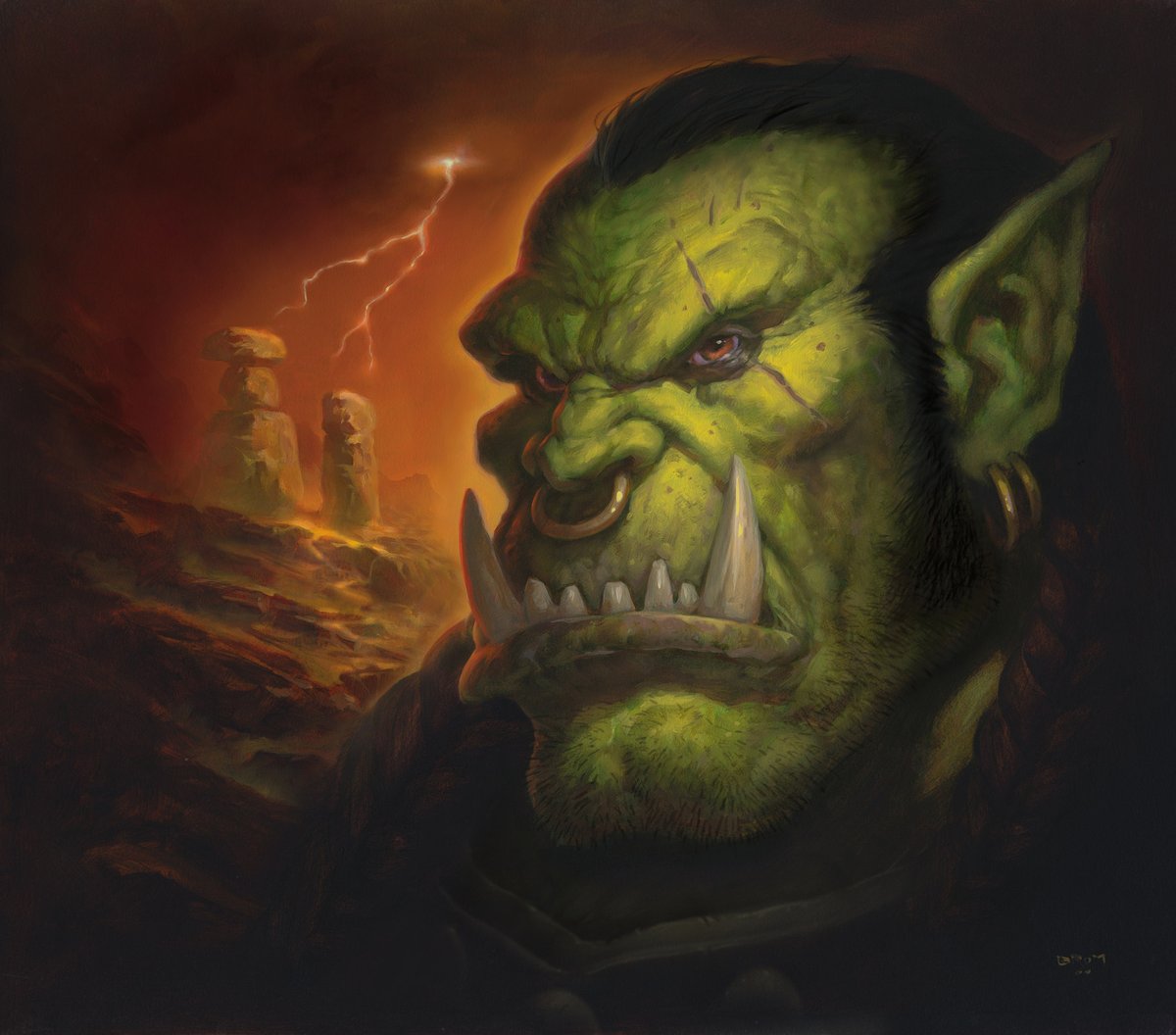
World of Warcraft (2004–) turned online play into a shared fantasy epic. Set in the world of Azeroth, it let millions of players create heroes, join guilds and take part in unfolding stories – from dungeon raids to world-shaking battles. Over time, expansions reshaped the map and the lore, making WoW not just a game, but a living world shaped by its players.
World of Warcraft (2004) was built for social play and has connected millions of players over two decades. At launch, online gaming was in its infancy – and WoW’s technical design made it stand out. Blizzard Entertainment spent a lot of effort developing a stable network model that could support very slow dial-up modems to fast cable connections. This meant the game responded instantly to player actions, making the world feel dynamic and alive – regardless of connection speed and long before fast internet was common.
Curator Notes
Thirty years of World of Warcraft
“The Warcraft universe was born during the humble beginnings of Blizzard Entertainment.
Blizzard sought to design a fantasy realm that was not only visually compelling but also deeply immersive for players from the outset – a living, breathing world rife with conflict, heroism, and a diverse array of fantastical elements.
The journey began with Warcraft: Orcs & Humans in 1994, evolved through its sequels and expansions, and broke through into mainstream culture with the release of the massively multiplayer online game, World of Warcraft, in 2004.
Unexpected encounters and villainous challenges across the realms brought our players closer, leading to new friendships – and even romances.
Without the longstanding lore of Warcraft, there would be no place for a loremaster. I surely would have not met the love of my life – and our incredible twin girls by extension. Without Warcraft, what I cherish most in this world would simply not exist.
Erarus thar no-darador. By blood and honour we serve.”
Sean Copeland, Warcraft Lore Historian (2006 – Present)
Expanding the World of Warcraft
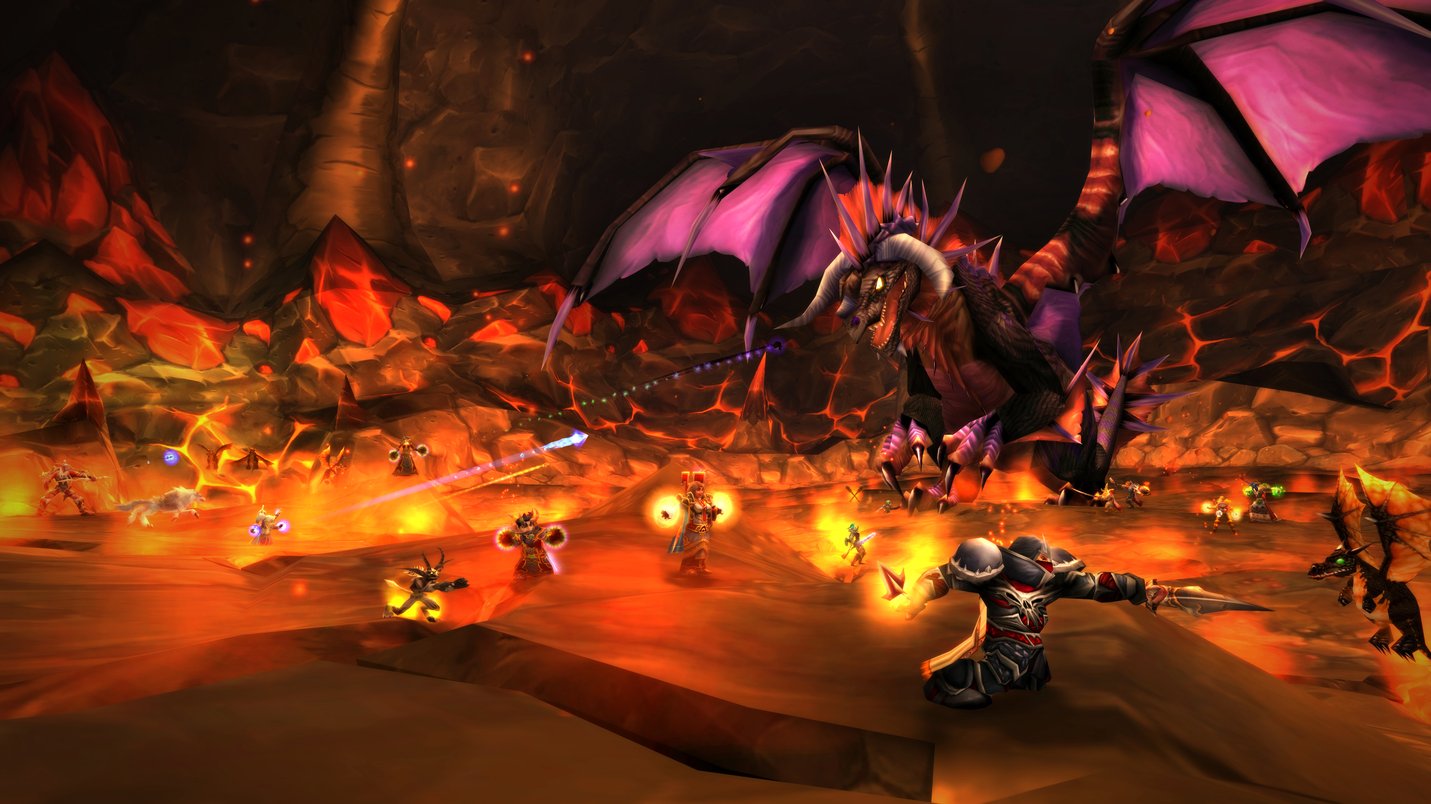
Since World of Warcraft was released, there have been 10 expansion packs, telling new stories, adding (and removing) content, and expanding the scope of the game and its world. In order to keep funding the development of these expansions, World of Warcraft popularised in-game currencies, subscription services, and game add-on purchases. In 2025, this model of subscription games and paid-for mods, is now a common practice.
During the development of the Legion expansion (2016), the engineering team were set the huge task of updating how combat works in the game – without changing any of the gameplay mechanics.This update changed World of Warcraft’s combat, with new animations and tech upgrades that made every move feel faster and more responsive.
The changes weren’t always popular. In 2019, Blizzard released World of Warcraft Classic, which stripped the game back to its original 2004 version.
Stormwind sketches
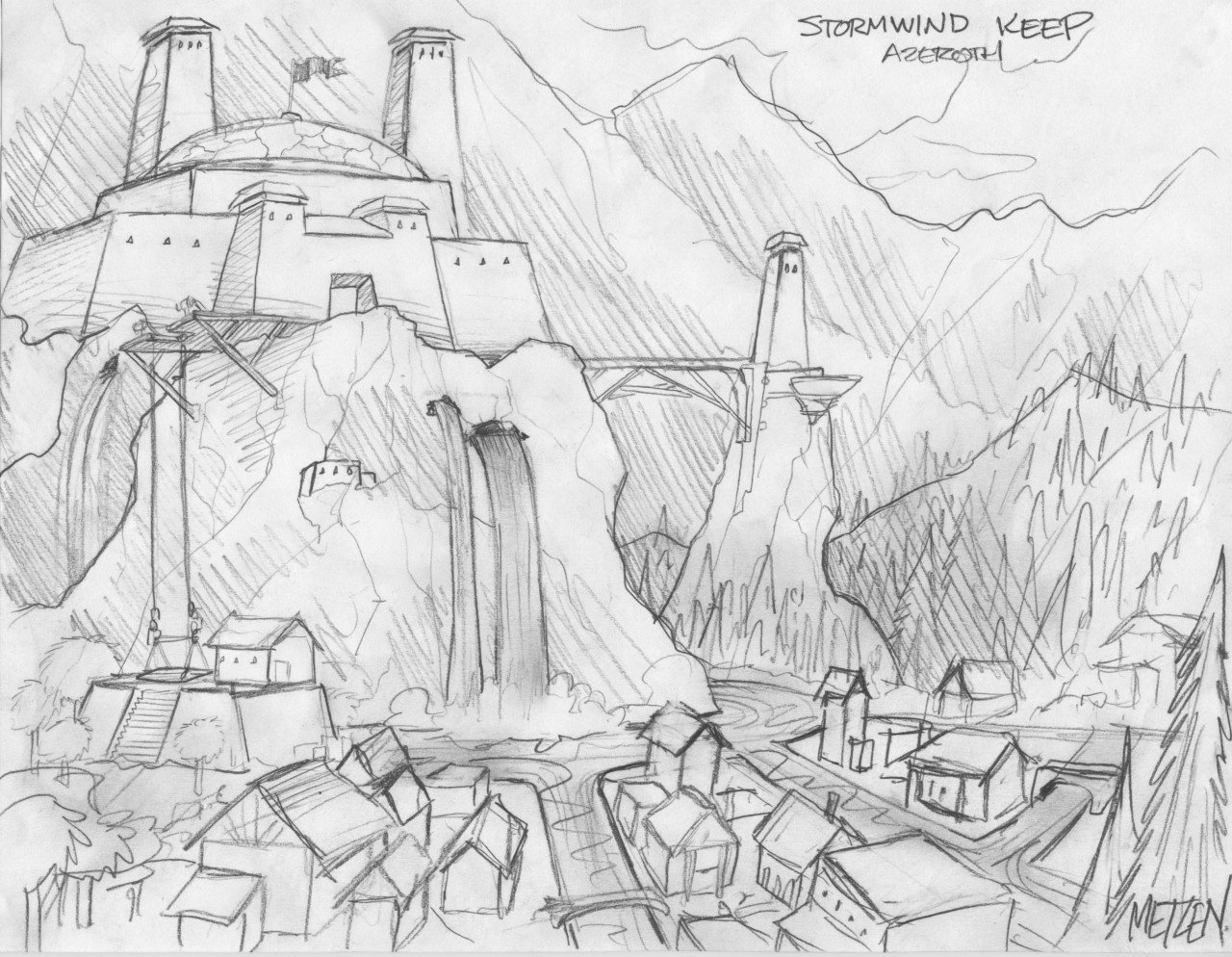
The sketches of Erlwynn forest and Stormwind in the exhibition were created during the development of World of Warcraft – the first time Stormwind Castle graduated from flat pixels, as it first appeared in Warcraft Orcs & Humans, to a 3d render.
Not every concept makes it into the final game – what would become the Valley of the Heroes was first imagined as a bridge adorned with lion statues. Ten years later, after the events of Cataclysm, Blizzard revisited the lion motif while designing of Lion’s Rest – a memorial to those lost in Deathwing’s attack.
The concept sketches in the exhibition demonstrate the care that is put into creating fully realised environments in World of Warcraft. Stormwind is surrounded by the Alliance-allied Elwynn forest – a lush expanse that stands in stark contrast to Duskwood, a neighbouring forest teeming with undead. If you look closely, you will see that both forests are populated with the same species of plant – but those in Duskwood have grow twisted and stunted by the land’s corruption.
The evolution of Stormwind Castle
When designing digital worlds, environmental design and technical engineering go hand-in-hand – and they have to evolve together, too.
Stormwind Castle, home of the Alliance, has been a familiar landmark since its dramatic role in Warcraft: Orcs & Humans (1994), when players defended it from an orcish invasion.
In the Cataclysm expansion (2010) for WoW, the dragon Deathwing attacked and devastated Stormwind City – a major plot twist that also masked a major design challenge. For the first time, players could fly over Azeroth on their own mounts, meaning every building could now be viewed from any angle. Many of Stormwind’s structures had only ever been modelled for one-sided viewing. Artists and engineers had to rebuild rooftops, back walls, and hidden areas so the city would hold up under full aerial exploration.
Across WoW’s 10 expansions, Stormwind Castle has been reworked again and again – always balancing loyalty to its history with the demands of a growing, changing world.
Cinematics
The destruction of Stormwind was designed to be shocking. One of the most recognisable areas in the game, the worldbuilding team knew that Stormwind would feel untouchable. The drama of this shocking twist is heightened by World of Warcraft’s impossibly detailed cinematic trailers.
Released in the leadup to each expansion, World of Warcraft’s cinematics use state of the art CGI to activate the viewers’ imagination. Like a map in the front of a fantasy novel, or Infocom’s feelies, these cinematics breathe life into the game’s world, letting players see past menus and icons to immerse themselves in the tragedy of Deathwing’s destruction, and the triumph of his defeat.
From quests to championships
World of Warcraft expanded the dream of shared online play, creating a vast fantasy world where millions could quest, raid and socialise together. StarCraft (1998), originally built on the Warcraft II engine, pushed play in a different direction – toward real-time strategy and competition. Its rise in South Korea sparked professional tournaments and global esports. Together, these games show how Blizzard shaped both cooperative and competitive online play, turning videogames into cultural and social arenas.
Related articles
Related works
Content notification
Our collection comprises over 40,000 moving image works, acquired and catalogued between the 1940s and early 2000s. As a result, some items may reflect outdated, offensive and possibly harmful views and opinions. ACMI is working to identify and redress such usages.
Learn more about our collection and our collection policy here. If you come across harmful content on our website that you would like to report, let us know.