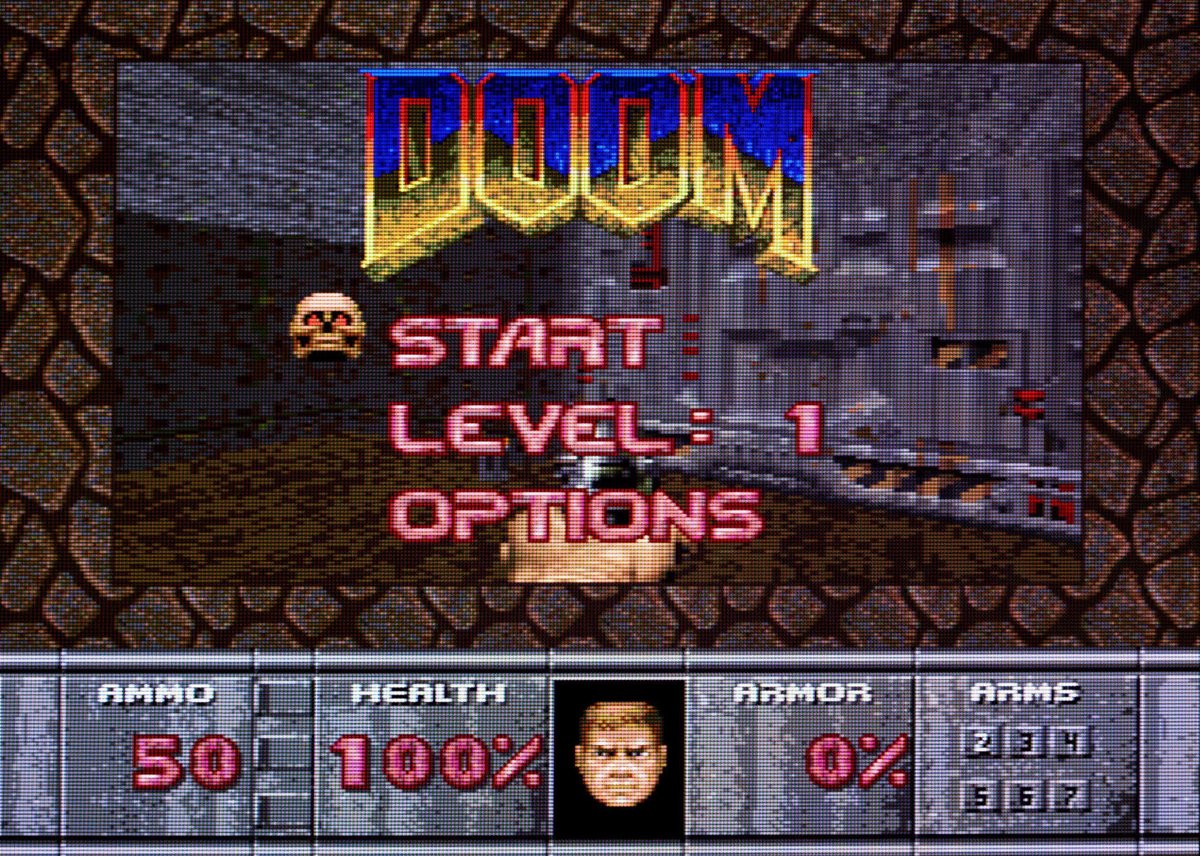
Doom (1993) is widely considered one of the most influential videogames of all time and is credited with inspiring the ‘first-person shooter’ (FPS) genre.
In 1996 the game’s developers, id Software, released the source code for Doom under a non-commercial license, to encourage porting, modding, and the creation of new games.
Before game engines were commercially available, most games were made with bespoke engines – the software framework used to create a game – or created as mods of existing engines.
The release of the source code not only extended the life of the game itself, but it also gave rise to an entirely new medium – the creative challenge of getting Doom running on anything. The blog It Runs Doom catalogues the unlikely devices that can run the game, from vintage videogame consoles to a digital camera to a tractor interface.
It Runs Doom
In 1997 id Software released the source code for their landmark game Doom (1993), making it free for use by anyone. The elegant simplicity and low hardware requirements of the code means that it runs on an extremely wide range of technology.
In this display you can see the work of Wētā Workshop graphics engineer James Brown, who got Doom running on a tiny 3D-printed toy block. Brown’s device is powered not by a battery, but by conductive bricks which were first designed for LEGO’s monorail set.
Why Doom Runs on EVERYTHING via XDeej's YouTube channel