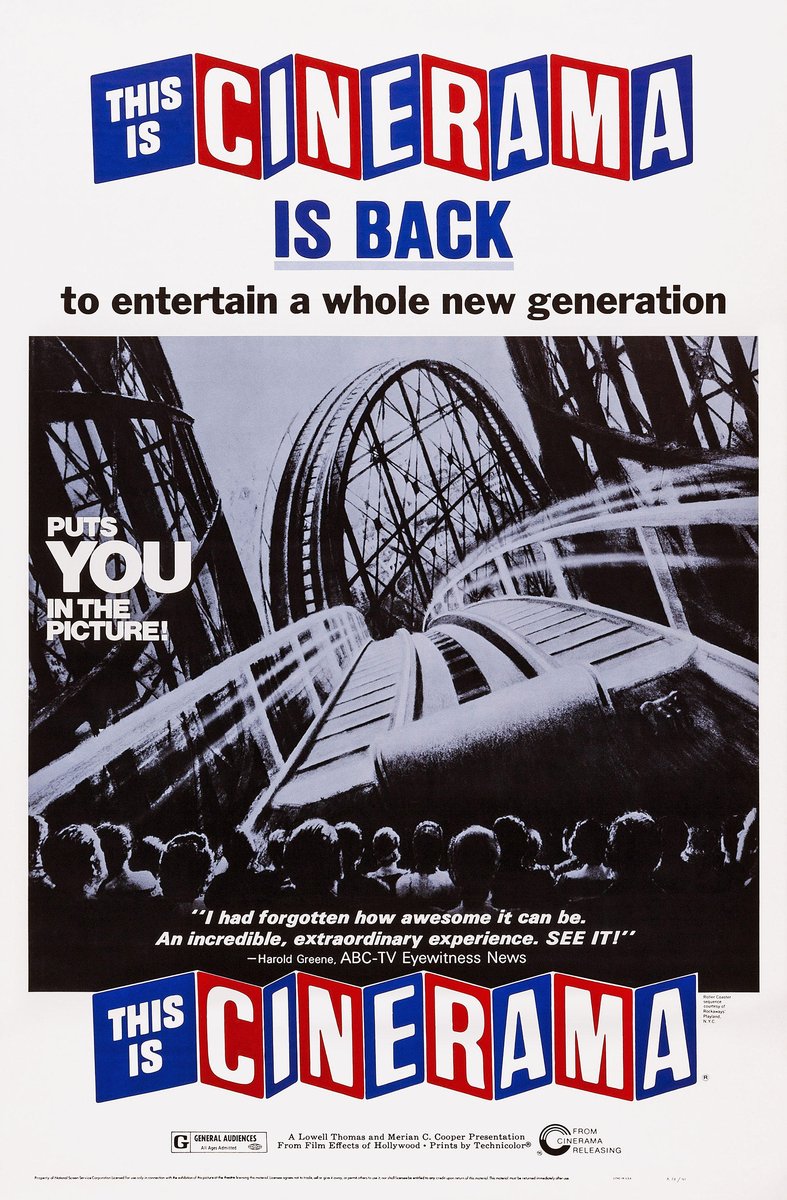
By the early 1950s, television was keeping people at home, and cinemas needed to offer something special. Sound became key to creating an experience that couldn’t be matched in the living room.
In 1952, This Is Cinerama wowed New York audiences with a huge curved screen and a new multi-channel sound system developed by Hazard E Reeves. Instead of a single speaker, Cinerama used seven – five behind the screen and two behind the audience – wrapping viewers in sound.
This early form of surround sound transformed movie-going, setting the stage for the immersive audio experiences we expect in cinemas today.
Works in this group
Content notification
Our collection comprises over 40,000 moving image works, acquired and catalogued between the 1940s and early 2000s. As a result, some items may reflect outdated, offensive and possibly harmful views and opinions. ACMI is working to identify and redress such usages.
Learn more about our collection and our collection policy here. If you come across harmful content on our website that you would like to report, let us know.
Collection
In ACMI's collection
On display until
22 December 2028
ACMI: Gallery 1
Collection metadata
ACMI Identifier
199100
Curatorial section
The Story of the Moving Image → Moving Pictures → MI-05. Sound and Colour → MI-05-C02