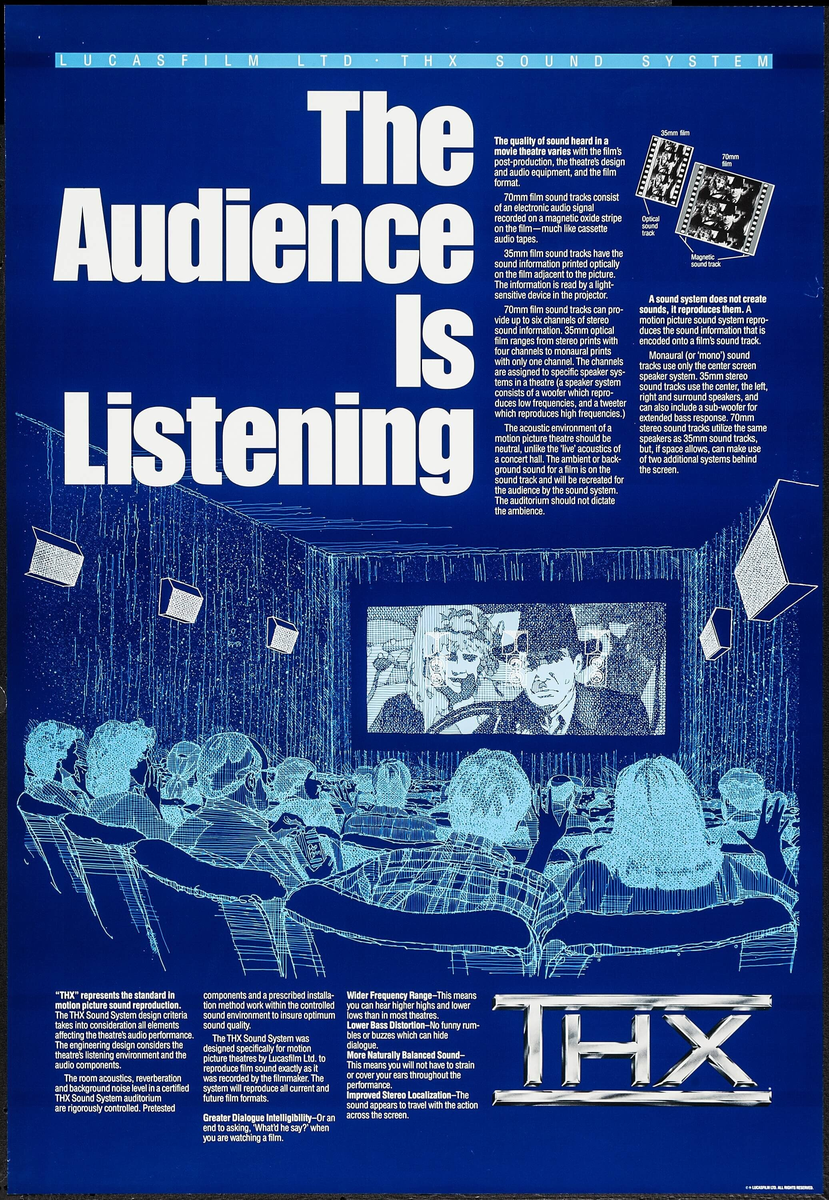
When Star Wars hit cinemas in the late 1970s and 80s, sound engineer Tomlinson Holman noticed a problem: the rich, detailed audio created during production wasn’t being heard properly in theatres. His solution was THX – a new sound standard that ensured films played exactly as filmmakers intended.
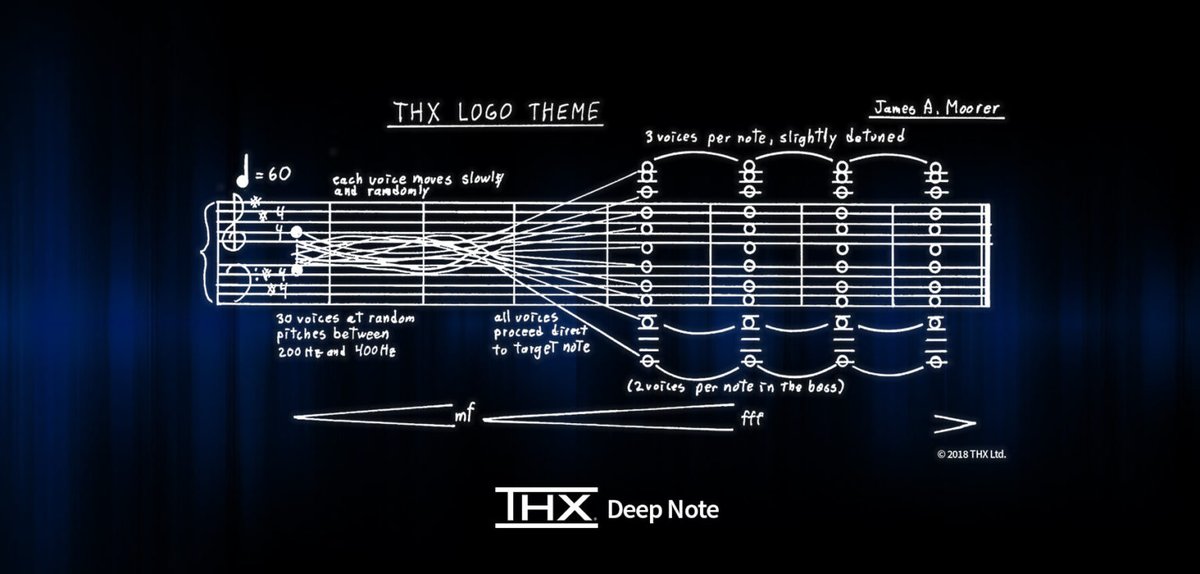
When Return of the Jedi (1983) premiered, only THX-certified cinemas could show it. Audiences were greeted by the now-iconic ‘Deep Note’ – a rising wave of tones swelling into a mighty D major chord. It shook the room and set the stage for the galaxy far, far away – as well as a new level of excellence in cinema sound.
Fun fact: THX was named after George Lucas’s first film, THX 1138 (1971).
Courtesy of THX Ltd. All rights reserved.
Content notification
Our collection comprises over 40,000 moving image works, acquired and catalogued between the 1940s and early 2000s. As a result, some items may reflect outdated, offensive and possibly harmful views and opinions. ACMI is working to identify and redress such usages.
Learn more about our collection and our collection policy here. If you come across harmful content on our website that you would like to report, let us know.
Collection
In ACMI's collection
Collection metadata
ACMI Identifier
199102
Curatorial section
The Story of the Moving Image → Moving Pictures → MI-05. Sound and Colour → MI-05-C02