Sweet As | Learning resource
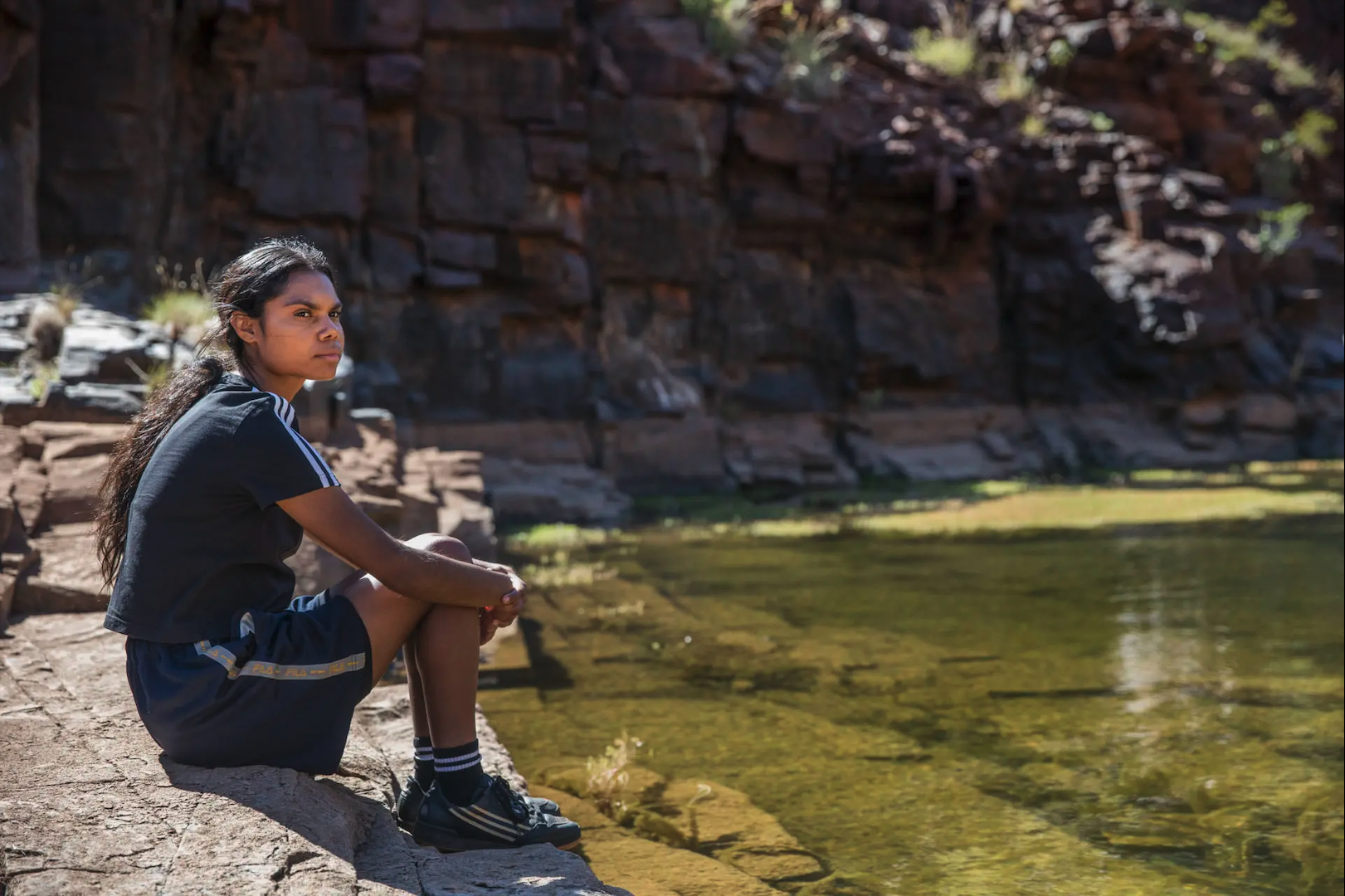
Sweet As (2022) is the debut feature film from Nyul Nyul/Yawuru woman and writer/director Jub Clerc. Drawing on Clerc’s own experience as a First Nations person, the film presents the story of Murra, a 15-year-old Indigenous girl from Port Hedland in Western Australia who embarks on a week-long photographic safari tour for ‘at risk’ teens.
This resource is designed for use in VCE Media Unit 1, Australian Stories AoS 3, but can be adapted for English 9-11 and Media Arts 9 & 10.
Recommended year levels: 11 (VCE), 9 & 10
Learning areas and disciplines: VCE Media Unit 1, VCE English and EAL Unit 1 or 2, English, Media Arts
Credits: this resource was written by Victoria Giummarra
Teachers: you can download a document outlining all curriculum links below:
Presenting a range of authentic characters who each face unique challenges, the film delivers an uplifting story about growth and the importance of connecting not only to ourselves but to one another and to Country.
This resource features questions and activities that focus on how the film constructs meaning for audiences through exploration of its narrative, including representations of people and places, and devices such as symbolism, intertextuality, codes and genre conventions. It also examines factors that impact the production and distribution of Australian-made media narratives and the ways that these stories contribute to our national identity. Throughout the resource, there is a focus on how perspectives of Aboriginal and Torres Strait Islander creators are shared through media productions.
Activities have been designed to cater to different year levels and subjects. Teachers and students are encouraged to review the film’s classification information and this resource closely and make use of those activities that best suit their desired learning outcomes.
You will find a glossary of key terms below.
Before watching
“It's a story about our resilience, our unconditional love, our courage, and it's also about trauma, and about how trauma is real, tangible, and colorblind. So, it's a universal story”.
Expectations, Genre and Intertextuality
Trailers often provide an audience’s first exposure to a film. Used for marketing, they promote a film and its story through images, titles and sound to both inform and engage a potential audience.
After watching the above trailer, either discuss or write down your early impressions of the film around the following prompts:
| 1. Consider and document the first impressions you have of the film from its trailer. These may be ideas about story, characters, production values or elements (i.e. technical or artistic qualities of the film). Discuss and compare these with the class. |
| 2. Genre is often used to categorise films for audiences and establish expectations, based on commonly used patterns, known as conventions. What genre/s do you anticipate this film falling into? |
| 3. For each of the genres you mentioned, list some typical conventions that would support your assumptions (e.g. for a horror genre, you would expect climactic moments and an isolated setting). |
Intertextuality
The film Sweet As has been described as “The Breakfast Club meets the outback”. Referencing another film like this is an example of intertextuality – and helps draw a link between the two films.
| 1. As a class, discuss & research what The Breakfast Club is about, including the context of its making and setting. How might Sweet As be similar? What differences might we expect? |
| 2. (Later) After you have watched the film, revisit your responses to see if your predictions were correct. |
Australian cinema and you
According to statistics from Screen Australia, only 86 of the 743 films shown in Australian cinemas in 2023 (the year Sweet As was released) were made in Australia.
Write a short reflection, or discuss as a class your past experiences of viewing Australian films, using the following prompts to read your writing or discussion:
- what did these films explore?
- did any of these films involve First Nations creators or perspectives?
- how did/didn’t they engage their audience, including yourself?
- what portrait of Australia or message about Australian culture did they present?
- what impression might international audiences have, or what might they learn, from these films?
Language Features
The title of the film Sweet As could be interpreted in different ways. Explore how at least three different types of audiences (such as those of different ages, cultures or from various contexts) might read and understand this.
A number of actors and their characters within the film (such as teens Murra and Elvis, and tour-leader Mitch) are Australian First Nations people and we often hear Indigenous language and terminology used within the dialogue of the film.
Work with others to develop definitions for the following terms heard in the film: (some helpful places to look to find accurate and informed definitions include here, here and here)
- Country
- Elders
- Mob
- Auntie / Uncle
- Brother / Cuz / Sis / Bub
- Ancestors
Consider the role and contribution of Indigenous language and terminology in the film and explain:
- what might it add to the story?
- how might it reflect who created the film and their intentions?
- why might it be important for audiences to hear, both across Australia and globally?
- would each of the words explored be more likely to be used in spoken language or written language? Why?
Representation & characterisation
Sweet As presents many carefully constructed portrayals of individuals, groups, places and ideas. Each of these representations has been shaped by deliberate choices made by its creator and various other collaborators during the writing and production of the film.
Characters and their relationships
A group photograph of the characters is captured at both the start and end of their week-long tour together.
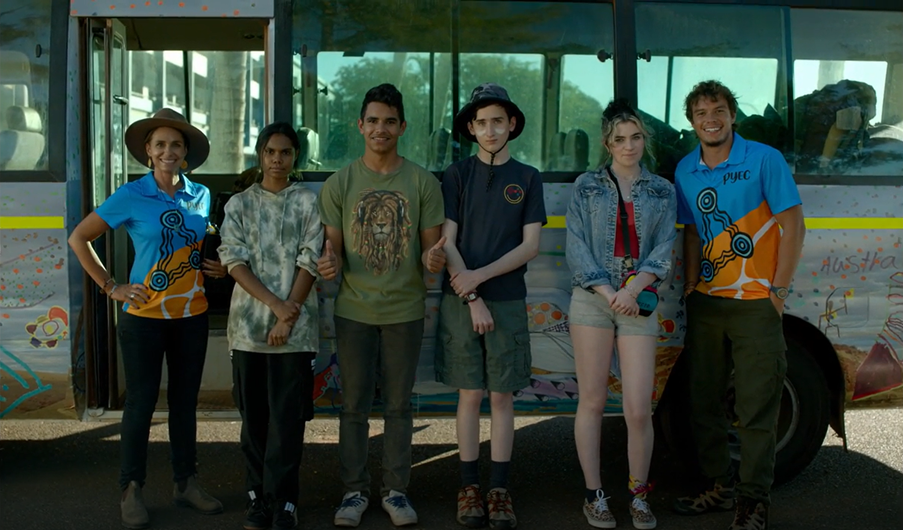
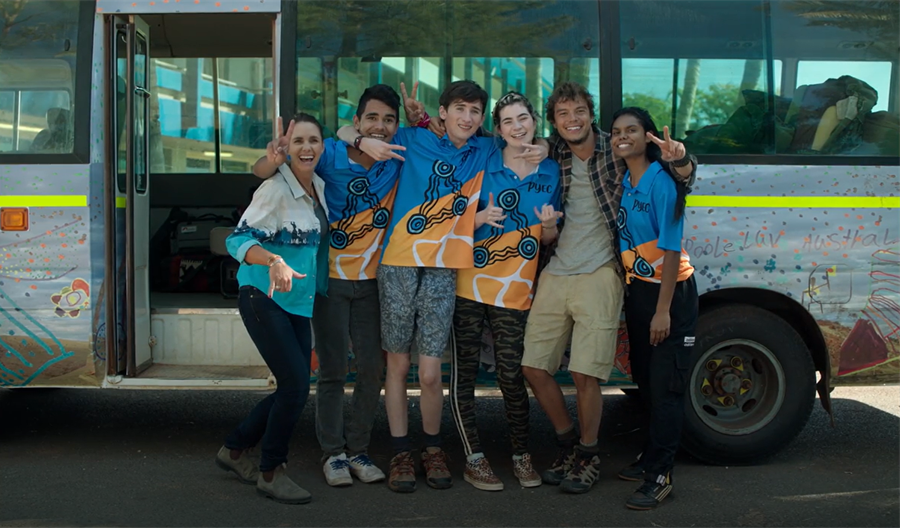
| 1. Annotate both images to highlight the similarities and differences shown in the representations of the characters, both individually and as a group. Think about the selections (what’s included) and omissions (what’s left out) in each image. |
| 2. Discuss what ideas these two images reflect about the development of characters and the progression of the narrative. |
Select one of the teenage characters (Murra, Kylie, Elvis or Sean) seen in the film and analyse their representation in detail:
- find three scenes or stills that feature this character - one from the beginning, one from the middle and one from the ending of the film.
- focus on the technical choices (codes such as acting, dialogue, costuming, camera angles etc.) that were made in each of your chosen scenes or stills and how these work to present the character in a particular way.
- consider what the portrayal reflects about their beliefs and values e.g. what’s important to them at the chosen moments in time?
- evaluate the transformation of the character over the course of the narrative – in what ways do they change and how much?
Revisit the scene (approx. 00:16:23) when Murra comes across Pop Jimmy on one of the tour’s first stops.
| 1. Describe the type of relationships that are evident among the First Nations characters in this scene and discuss what these highlight about their social and cultural connections. |
| 2. Did you find this scene relatable in any way? Explain why or why not. |
Consider the inclusion and significance of Mitch, the Aboriginal tour leader in the narrative. Explain and describe:
| 1. Her relationship to the other characters and the various roles she plays, personally and professionally during the tour |
| 2. What beliefs she represents and stands for (include some quotes from her dialogue to support your ideas) |
| 3. Why the inclusion and casting of First Nations characters and people is prioritised in this film |
As the narrative progresses, we see Murra feeling increasingly drawn to Fernando, one of the tour leaders.
Describe three moments or scenes from the film which build or reflect a connection between them. Examine the moral conflict in their relationship and how this is resolved.
| Scene / moment, conflict and resolution 1: | |
| Scene / moment conflict and resolution 2: | |
| Scene / moment conflict and resolution 3: |
Scene analysis: revisit the scene where the teen characters are left to fend for themselves and find food (approx. 01:01:47 - 01:03:58).
Analyse how camera framing, mise en scene, editing effects and the chosen soundtrack specifically work to convey the roles the characters take on in this sequence and the changes occurring in their relationships at this time.
| How roles of characters and relationships are shown to be changing | |
|---|---|
| Camera framing | |
| Mise en scene | |
| Editing & effects | |
| Soundtrack |
The resolution of Sweet As reflects the positive bonds forged between its teenage characters and a new-found appreciation for themselves, Country and each other.
Use the character table below to think about the above. After completing, discuss as a class how the portrayal of these ideas might seek to comment on or reflect contemporary First Nations perspectives and priorities.
| Describe positive bonds forged with another character | Describe new-found appreciation for themselves | |
| Murra | ||
| Kylie | ||
| Elvis | ||
| Sean |
Representation & place
Consider the following sequences and moments from the earlier part of the film.
In the opening sequence of the film, Murra is shown to have two bedrooms – one at her mum’s place and one at her uncle’s house.
Later, as a reluctant Murra boards the bus for her week-long trip, her uncle tells her to “Be safe, listen to Country and stay out of trouble”.
| 1. Create a collage of screen shots taken from the film that capture and compare the environments of Murra's two bedrooms |
| 2. Provide written or oral commentary to accompany these, exploring how the mise en scene of the shots present these two spaces differently and what this reflects about Murra’s position in each place; her mum's and her uncle's |
| 3. Draw on your earlier definition of Country and describe what Murra's Uncle's quote suggests about the position and importance of Country in the life of a First Nations person. |
Symbolism and significance of photography
“This camera has given me a story”
Films, including Sweet As, use various devices to construct meaning and deliver well-structured, thoughtful stories. These may include the use of motifs - recurring visual or audio elements that signify and convey deeper ideas to an audience.
Photography is part of the film’s story but it's also used as a symbolic device that brings deeper meaning to the film.
Symbolism in film can work in different ways; there are the associations and connotations we as audiences bring to these symbols, and the added layers of meaning filmmakers create within the world of the film using these symbols.
| 1. What connotations does photography and photographs hold for you? These could be emotional, personal, cultural or societal. |
| 2. Describe the significance of photographs or photography in your own life |
| 3. What does photography mean to the characters in this story? Pick one or more characters. |
Some of the photos the teens take while on tour appear onscreen as momentary stills in the action, with a personal handwritten caption overlay. Select two stills used in the film and discuss how these helped you gain a deeper understanding of the character’s inner thoughts or perspective on a particular situation.
| How it helped you better understand character's thoughts or perspective | |
| Still 1: | |
| Still 2: |
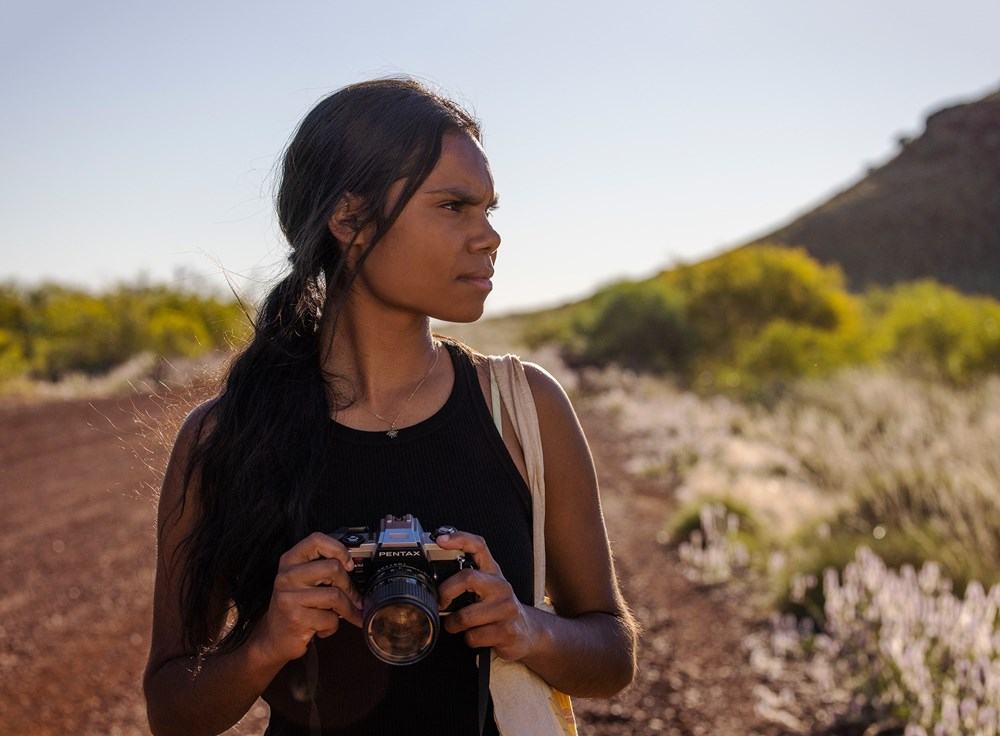
At the beginning of the film, tour leader Fernando provides each teenager with an older style ‘point and shoot’ film camera and states that they will be “embracing the old to re-examine (their) place in the constantly changing world which we live in”.
Discuss the following in a pair, group, or as a class:
| 1. How do forms of analogue technology differ from what is commonly used nowadays. |
| 2. What these older technologies offer and the social and ethical reasons why people may choose to embrace them. |
| 3. How are these ideas about analogue technology, in particular the film camera, highlighted in the film? Refer to specific scenes, moments or quotes. |
Sound & storytelling
Clerc chose to use a Jinda-Bidirbiddir or Willy Wagtail bird as a rhye or totem for the character of Murra and also as an audio motif in scenes where Murra is experiencing emotional turmoil.
| 1. Research what a rhye or totem is in Aboriginal Australian culture and describe why it may be relevant for a creator/actor to use when developing or presenting a character. |
| 2. Explore the cultural significance of the Jinda-Bidirbiddir or Willy Wagtail bird in Aboriginal culture. Note: the significance or meaning of flora and fauna differs between one Aboriginal Nation and another. Perhaps start with the Traditional Owners of the country you live or learn on with your research to see if the Willy Wagtail is culturally significant. |
| 3. Find an audio clip that shares the sound the Jinda-Bidirbiddir or Willy Wagtail bird makes. Can you locate this in the diegetic sound of particular scenes? What does it help to contribute for the audience? |
The Pilbara region of West Australia is presented to the audience through expansive and impressive landscape cinematography but also through the diegetic and non-diegetic soundtrack of the film.
Revisit this scene (approx. 00:39:38) or view it online here and create a table that notes how specific aspects of sound are applied to portray ideas about Country, its significance and magnificence:
| Your notes and thoughts | |
| Dialogue – what is spoken about and who leads the conversation? | |
| Atmospheric sound – what can be heard in the environment? Why does this add? | |
| Music – what is the name of the artist and track used? Research what the lyrics speak about. What does this track contribute to the meaning of the scene? |
Producing & distributing Australian stories
“Storytelling is the Indigenous tool, because we never had written words, so we danced and painted and sung everything. We are artists from the minute we draw our first breath.”
Media products play an important role in telling stories that contribute to culture. Whether fictional or non-fictional in nature, stories reflect the time and place of their making and the values of their creators, capturing and presenting the essence of who we are as humans and important moments in our history.
When making Sweet As in 2022, Clerc made history by being the first West Australian Aboriginal woman to have made a feature film.
You might be interested in reading this interview ACMI conducted with Clerc shortly after the release of Sweet As.
Watch the following behind the scenes video, which features writer/director Jub Clerc, and discuss as a class using the below prompts:
Here are a couple of significant points about the making of the film to consider, before responding to the prompts below:
When making Sweet As in 2022, Clerc made history by being the first West Australian Aboriginal woman to have made a feature film.
Producing a film involves securing locations for shooting – in this case, within the Pilbara region of North Western Australia.
| 1. Consider Clerc’s description of the film and its production process and describe the process of how this was done, listing particular constraints and sensitivities that existed and how these were overcome |
| 2. Discuss the significance of Clerc's achievement (being the first Western Australian female Aboriginal filmmaker) and why it had been so delayed. |
| 3. Produce an intention statement for Sweet As that outlines its inspirations, purpose and the desired outcome for audiences. |
| 4. Describe the process of how locations were secured for filming, listing particular constraints and sensitivities that existed and how these were overcome. |
Sweet As was produced by an Australian company called Arenamedia. Visit the launching page of their website and view the showreel of their past screen work.
- Do you recognise any of these productions? Name them and their creators or stars, if you can.
- What makes these productions feel distinctly Australian? List the things you notice in the sound and imagery (consider all aspects of the mise en scene, such as locations, colours, actors, costumes etc).
- Examine the elements you listed. How typical are these of other Australian-made media products?
Arenamedia describes itself as a “powerhouse of Australian production and talent”.
Visit their About Us section of their website and other pages to answer the following prompts, and write a summary of the company:
| what types of media products the company makes. How are these typically structured? Consider form, genre, style and characteristics. |
| how is the company is run, and by whom? |
| what is the company’s mission? |
| what support does the company offers to those in the industry? |
Funding Sweet As
Funding a film in Australia can take some doing. Read this article and list all the sources for the funding of Sweet As.
Then, explore the criteria in place for accessing Screen Australian’s First Nations Programs and funding.
Describe the purpose of this government funding and the reasons why it is important to our national identity.
| Describe the purpose of government funding (Screen Australia) and the reasons why it is important to our national identity. |
| Describe broadly, the different streams and sources of funding that were pulled together to produce Sweet As |
As seen in Sweet As, outback or rural locations are common settings for many Australian film productions.
Once a film is made, it will often gain initial exposure through the global film festival circuit, but a distribution deal must be acquired in order for the film to be shared commercially with audiences in cinemas (and beyond).
Read this article and prepare a timeline that charts how, where, when and by who Sweet As was distributed and shared with audiences.
Film reviews
Exploring film reviews from overseas helps to highlight how an Australian film like Sweet As may be read by international audiences.
Read this European review and this US review for Sweet As.
In a table, record both the positive and constructive comments mentioned by reviewers. Under 'your thoughts', reflect on whether you feel these are justifiable perspectives, or if there are any aspects of the film you feel weren't appreciated or read differently by non-Australian reviewers?
| Positives | Negatives | Your thoughts on the review | |
| ICS review | |||
| AWFJ review |
Evaluate what makes Sweet As an important Australian story.
Prepare a report, podcast episode or print article that explores and acknowledges:
| 1. The messaging and impact of the story – draw on your own opinions and those taken from a range of reviews |
| 2. The creative teams involved in the film’s development, production and distribution |
| 3. What audiences might come to understand or appreciate from engaging with the product. Use examples and particular scenes from the film. |
| 4. How the production supports the telling of Australian stories, especially those by First Nations people, and why this is important to Australia’s national identity |
| 5. How the film may be read by global audiences and the opportunities it offers for exploring and understanding Australian culture |