The Holdovers - Genre, setting & context

Genre and style
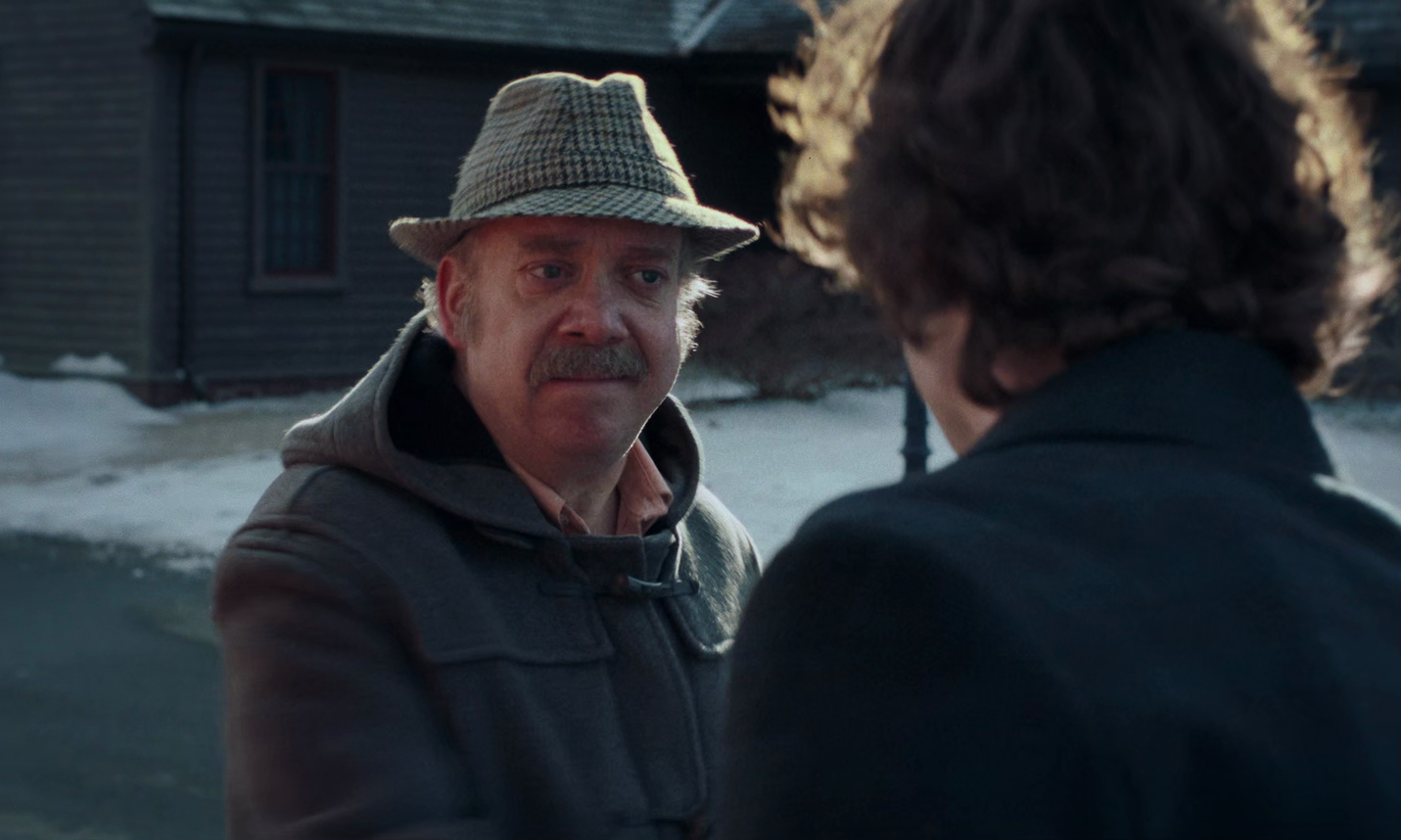
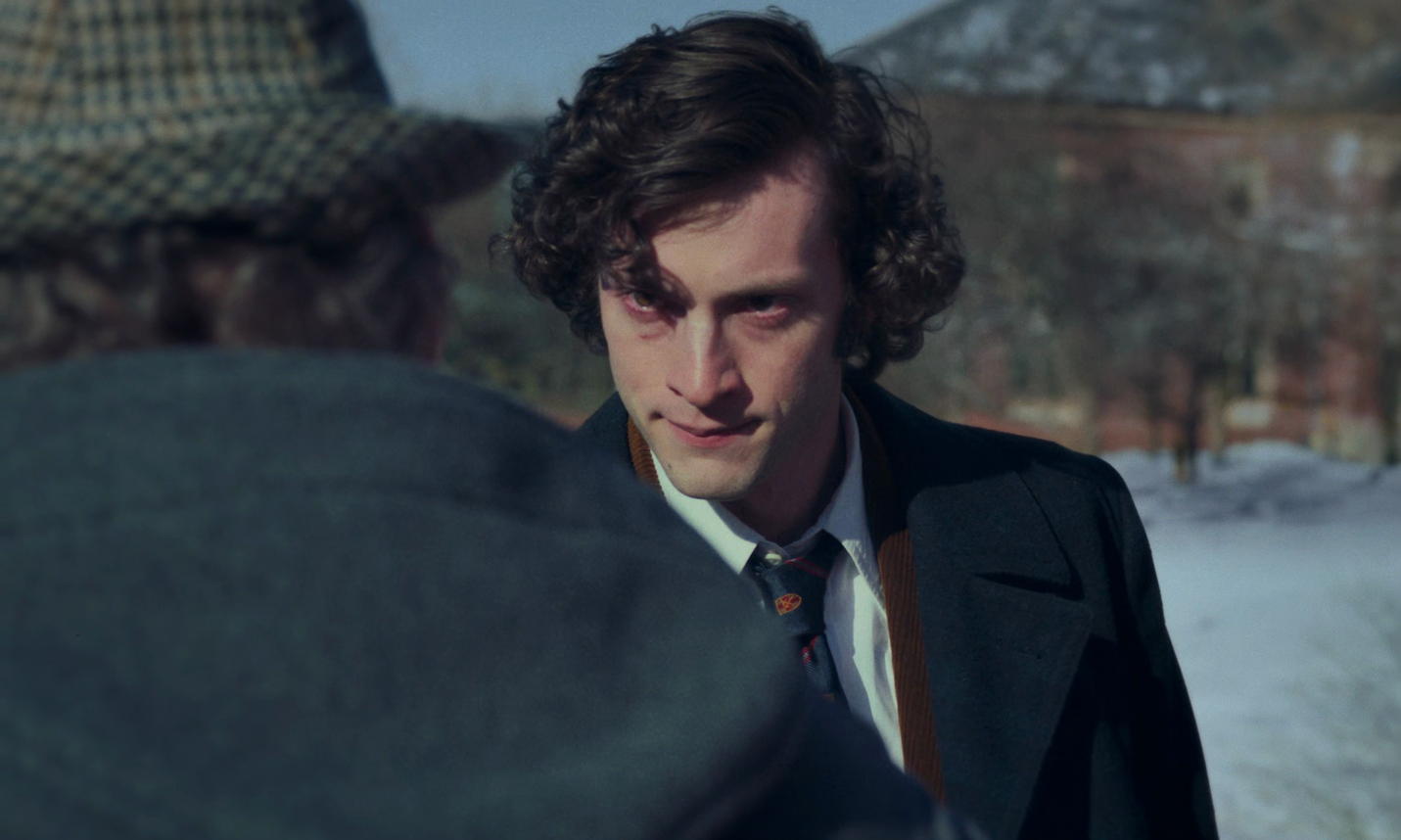
The Holdovers goes to lengths, extremes even, not just to set itself in 1970s America, but to look as if it was made in 1970s America. The film is distinctive not only for its rejection of a contemporary setting, but also for its rejection of a contemporary visual style, instead favouring a range of traditional filmmaking techniques, and an analogue ‘look’. It does not look or feel like a contemporary comedy drama.
The Holdovers is also distinctive in terms of its tone and the measured way that it portrays the developing respect and empathy between the three characters – particularly between Hunham and Angus. In drawing on the comedy-drama genre, it achieves a striking balance between the two, without becoming overwrought or excessively sentimental; blending warmth and humour with genuine pathos and emotional depth.
Many films that revolve around friendships between men and boys sit at either end of the tonal spectrum, either serious drama (Dead Poets Society) or broad comedy (Big Daddy, Role Models). In comparison, The Holdovers is much more restrained, focusing on staying true to the characters, rather than providing an overblown cathartic moment or foregrounding humour at the expense of emotional authenticity.
This is perhaps best exemplified at the film’s conclusion. As Hunham is about to leave and Angus jogs over to say goodbye, they share a heartfelt handshake. This moment is undoubtedly meaningful, and the handshake carries considerable emotional weight, but the fact they don’t hug and that the exchange takes place away from other students and teachers keeps the scene grounded and understated.
Sentimental filmmaking
Some critics have described the film as sentimental, a term applied to texts that place heightened emphasis on eliciting heartfelt emotion. While the term is often used pejoratively to imply emotional manipulation or excessive emotionality, it is important to interrogate critiques around sentimentality, and films that focus on human connection and relationships (romantic, friendships, familial), and that evoke feelings of nostalgia.
The sentimental tone of The Holdovers is complemented by its distinctly 1970s aesthetic and has led critics and audiences to compare it to the work of Hal Ashby, whose films helped define American cinema during this period. Films such as Harold and Maude and The Last Detail balanced pathos, comedy, and human tragedy in equal measure, presenting sentimental character studies centred on unlikely friendships and relationships against broader social and political backdrops. The Holdovers similarly places its characters within the context of 1970s socio-political issues and events, most notably the Vietnam War, but also amidst issues of race and class.
WATCH: Find out more about Ashby and his filmography via this short video essay from IndieWire
The deployment of nostalgia is central to The Holdovers, particularly in the way it evokes nostalgia detached from the viewer’s own lived experience. By setting the film in 1970, Payne is not primarily concerned with evoking nostalgia in audiences who directly experienced the period, but instead draws upon a broader form of cultural or mediated nostalgia for a time or place a viewer may never have personally experienced. (In his Dictionary of Obscure Sorrows, John Koenig coined the term ‘anemoia’ to give a label to this feeling.)
The Holdovers also evokes nostalgia for the cinema of the era itself, drawing upon the aesthetic and emotional associations contemporary audiences attach to American films of the 1970s.
Questions for analysis
| 1 | How successful is The Holdovers in balancing comedy and drama? |
| 2 | How does the ending (the handshake scene) show strong emotion without becoming overly dramatic? What effect does this have on the audience? |
| 3 | How does the 1970s setting impact the story and themes of the film? |
| 4 | What do you think about the idea of feeling nostalgia for something you have not personally experienced? Can you relate to this experience or feeling? |
Setting
The setting of The Holdovers – a New England all-boys boarding school during Christmas 1970 – is marked by a strong sense of isolation. The wintry weather reinforces this atmosphere, as Hunham, Mary, and Angus are effectively snowed in together, cut off from the outside world
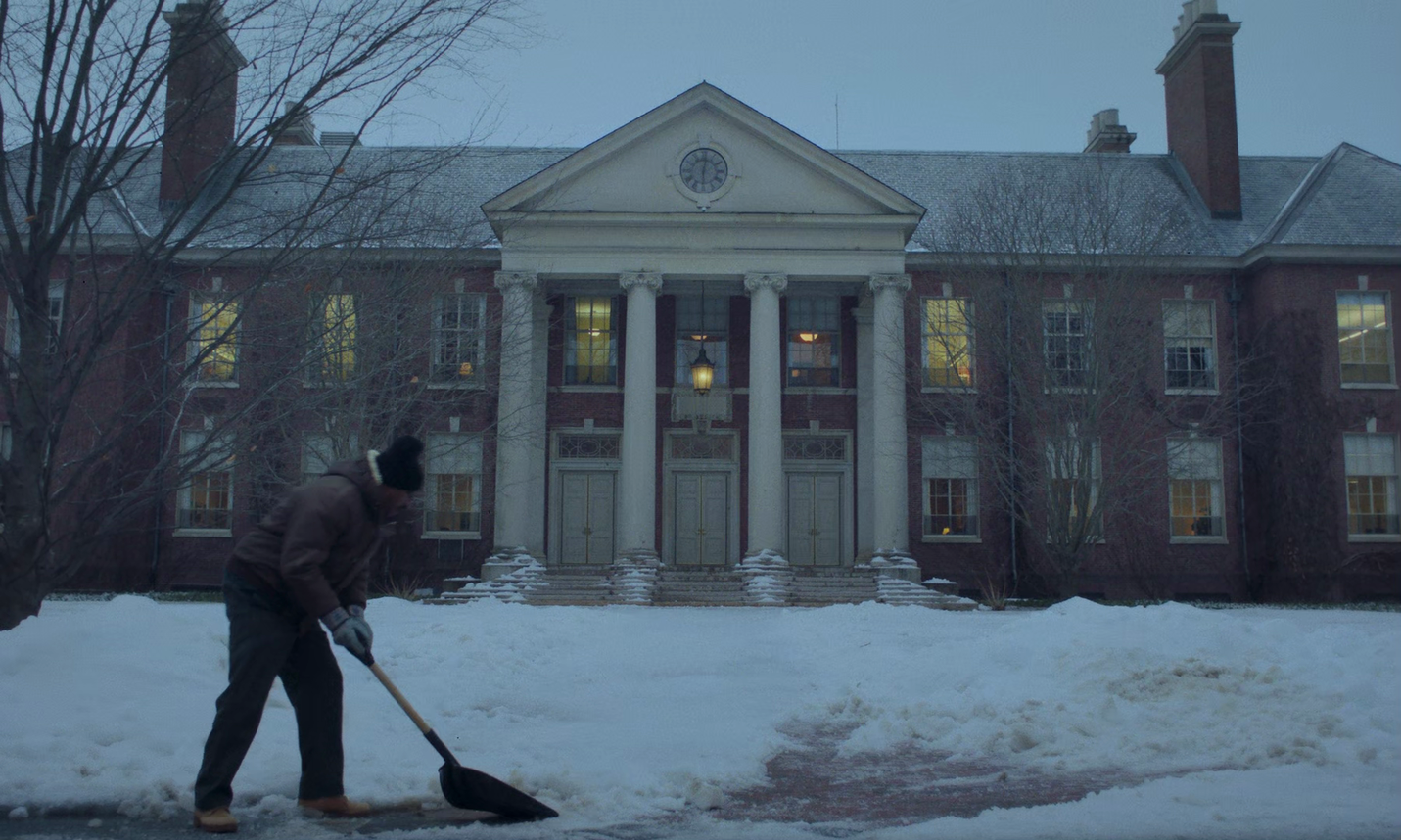
The school buildings are spread out, with many of the early establishing shots showing several disconnected buildings (church, main school building, staff and student residences) and snow-covered paths that staff and students must trudge through. We are introduced to the janitor Danny as he shovels snow from the footpath outside one of these buildings, highlighting the contrast between his labour and the more privileged lives of the school’s staff and students.
Once all but a handful of students have left for the holidays, the school grounds provide something of an escape for Angus and the others, especially after their access to the rest of the school and its buildings is restricted. Hunham and the boys are required to board together rather than stay in their individual rooms or residences because of heating costs creating a sense of confinement.
Late one night, after the other students have left, Angus explores the school on his own, including areas normally off-limits to students. In this scene, the empty school becomes a space of possibility for Angus. Despite his troubles, he experiences a sense of freedom as he explores the campus without the usual rules, routines, and social pressures of school life. Although the closing shot of this sequence (Angus smoking at the piano) suggests ultimately he feels lonely and isolated.
The Christmas setting is essential to the premise of the film, as it leaves Angus, Mary and Hunham as the only remaining characters on the school grounds. It also deepens these characters’ feelings of emotional isolation, intensifying Angus’s sense of abandonment, emphasising Hunham’s lack of meaningful family or social connections, and foregrounding Mary’s grief.
The transition to the New Year carries symbolic weight, as the characters welcome 1971 together and appear to begin a new chapter in their lives.
Questions for analysis
| 5 | How does the winter setting contribute to the film’s atmosphere of isolation? |
| 6 | How do the school grounds function as both a place of confinement and freedom for Angus? |
| 7 | Explain why the Christmas and New Year setting is important to the emotional journeys of Angus, Mary, and Hunham. |
| 8 | How does the setting help highlight differences in class and privilege within the school? |
Historical context
With the extended first act set within the grounds of Barton Academy, The Holdovers initially creates a sense of the school being insulated from the broader political and social upheavals of early 1970s America. As an elite institution, Barton functions as a protective barrier between its students and the realities of the outside world, particularly the Vietnam War. However, The Holdovers also suggests that this separation is ultimately unstable: political reality persists even within privileged spaces. This is most clearly embodied in Mary Lamb, whose son has been killed in Vietnam. Her grief anchors the film’s nostalgic tone in a concrete social reality, reminding that the consequences of the war, reach far.
The Vietnam War was one of the most divisive issues in the United States during this period and became central to the 1960s counterculture movement, particularly among younger Americans who opposed conscription and the country’s broader anti-communist foreign policy. Cultural tensions between generations are subtly reflected within the film, for example in Jason’s refusal to conform to his father’s expectations about his appearance. In the 1960s and 1970s, long hair had become associated with youth culture and anti-establishment attitudes, including hippie movements and rock music. (Note that upon his return, we see Jason has given in to his father's demands, and shaved his head).
At the same time, The Holdovers gestures toward the class dynamics underpinning the draft system. Hunham's remark that "Barton boys don't go to Vietnam" highlights that students at elite institutions were largely insulated from military service. In response, Angus notes that Curtis Lamb is the exception to the rule. Mary explains that although Curtis had the grades to attend college, even financial aid was insufficient to cover the cost. As a result, he viewed military service as a pathway to higher education through the G.I. Bill, a government program that provided educational benefits to veterans. Curtis therefore attempts to turn his conscription into an opportunity, hoping to attend college after completing his service. The tragedy, however, is that he is killed in Vietnam before he can realise this ambition.
Curtis’s story reflects a broader historical reality in which the draft disproportionately affected working-class and less privileged young men, while wealthier families were more likely to secure deferments through education, medical exemptions, or institutional connections (with most educational deferments phased out in 1971).
Social hierarchy therefore shapes who is protected and who is exposed to the risks and dangers of consription, with Curtis a clear example of the inequality that exists within the privileged world of Barton. The fact that Curtis and Mary are Black allows audiences to read their position within Barton as also inflected by race, even if the film does not explicitly foreground this dimension.
Seen in this light, the period setting is not simply a way of recreating the past for aesthetic effect, but a backdrop against which structural inequalities and political realities play out.
Further reading
Questions for analysis
| 9 | How does The Holdovers show that Barton Academy is both separate from and still affected by wider social and political events in the 1970s? |
| 10 | How does Mary Lamb’s character help connect the personal story of the film to the wider impact of the Vietnam War? |
| 11 | Discuss how the Vietnam War permeates The Holdovers without ever becoming the focus of the film. |
| 12 | How does the film encourage audiences to think about issues of race, class, and privilege, even when these issues are not always directly stated? |