Videogames industry and impact resource
Thanks for joining us for a 'Videogames: industry and impact' webinar. Teachers, if you've found your way here and haven't attended a webinar you can find more dates here.
In this resource you'll find further suggestions for reading, viewing, and playing, around topics discussed during the webinar.
An exciting new medium: the rise of videogames
Although there are videogames that predate the 1970s, it;s during this decade that they became really popular.
Think and discuss:
- What games do you know of from this era?
- Research where/on what one of the games you thought of, could be played on(arcade, Atari etc).
- What were the controls / controllers like to play that game on the platform (or one of) that you researched?
- What were the limitations of these games, in terms of graphics, audio, and gameplay? Be specific!
You can find out more about the history of videogames with this online museum story on the ACMI website:

Women in gaming
The videogames industry has a somewhat chequered relationship with women, as men dominated the industry as both makers, and players, in the early decades.
There were women within the industry making an impact, and you can find out more about these women from the 1980s era of videogames over at Google Arts:
artsandculture.google.com/story/a-brief-history-of-women-in-gaming-the-1980s-the-strong/
To give you an idea of how often videogames were advertised and marketed to males (particularly teenagers) check out this compilation of Game Boy commercials.
Make note of how often young teenage boys features in these ads - what does this still you about the marketing of videogames during this era?
Looking closer to home, back in 2016 ACMI hosted an exhibition called CodeBreakers which celebrated the creative careers of Australian and New Zealand women working in the games industry - as developers, producers, narrative designers, and more.
ACMI Code Breakers - Meet the Makers
On the Code Breakers 'meet the makers' page linked above, learn about the careers of the women featured in the exhibition. See which game trailers jump out at you, and find out more about these games.
Below you can watch an interview with Australian videogame maker Grace Bruxner. Bruxner is famous for being a solo creative, and is responsible for a fantastic (and hilarious) game trilogy called Frog Detective.
Find out more about Bruxner's creative approach:
Cosy games
It's hard to pinpoint exactly when the term 'cosy game' emerged, but what is clear is that the term was popularised in recent years, and that the genre emerged from life simulation games from the 90s and 2000s - games that weren't action-oriented, like cosy games.
It can be hard to define what exactly a cosy game is, but certainly they are less action-oriented, often feature cute and colourful characters and worlds, and usually involve wholesome gameplay and storylines. All this usually results in a relaxing, calm, or more mindful gaming experience.
Some famous 'cosy games' (and ones we love here at ACMI) include:
Animal Crossings: New Horizons
A Short Hike
Stardew Valley
Terra Nil
Unpacking (which we mentioned in the webinar)
Of course, not every 'cosy' game is going to tick all the boxes of things we think are particular to this style of game, but the definition above can be a helpful guide.
For example, we would argue that a game like Mario Kart is not cosy. Why not you might ask? After all, it features bright, colourful world and characters. It's cute! It's wholesome.
However, because of the competitive nature and the action-packed nature of the game (far from calm and mindful!) it probably discounts it from being a cosy game.
You might like to play this browser-based game made by an Australian game developer named Alexander Perrin.
It's called: A Short Trip
A Short Trip
Check out this Australian-made, browser-based game, and think about whether it's 'cosy' or not.
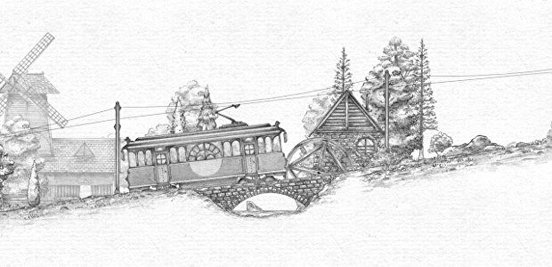
Play the game, and think about why (or why not) you think it could be considered a cosy game. Remember, a game doesn't have to tick all the boxes of the definition we had to be a cosy game, for example, this game is black and whtie, not colourful - but it's up to you whether that discounts it or not.
Game stories and narrative structures
As discussed in the webinar, we believe that videogames have come leaps and bounds in many ways, including in the strength of their storytelling.
Videogames often, but don't always, have branching paths that might result in alternative endings, or completely different story paths that hinge on decisions the player makes.
But linear-narrative games (so ones that don't have different endings, or other possible pathways through the game) can still be enjoyable, and still tell great stories.
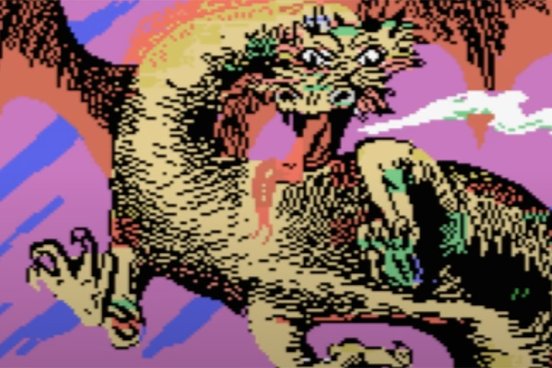
We mentioned in the webinar that the history of interactive game narratives had some Australian roots. 1983's The Hobbit was developed in Melbourne, Australia.
It was similar in some ways to Choose-Your-Own-Adventure type books, but of course offered digital interactivity and computer graphics.
You might like to play this original text-based adventure online. We do suggest finding out more about the game first on the ACMI website, and looking up what COMMANDS the game recognises here (otherwise you might be very lost as to what to do!)
The Hobbit
Check out one of the first interactive, text-based adventure games made right here, in Australia back in 1983.