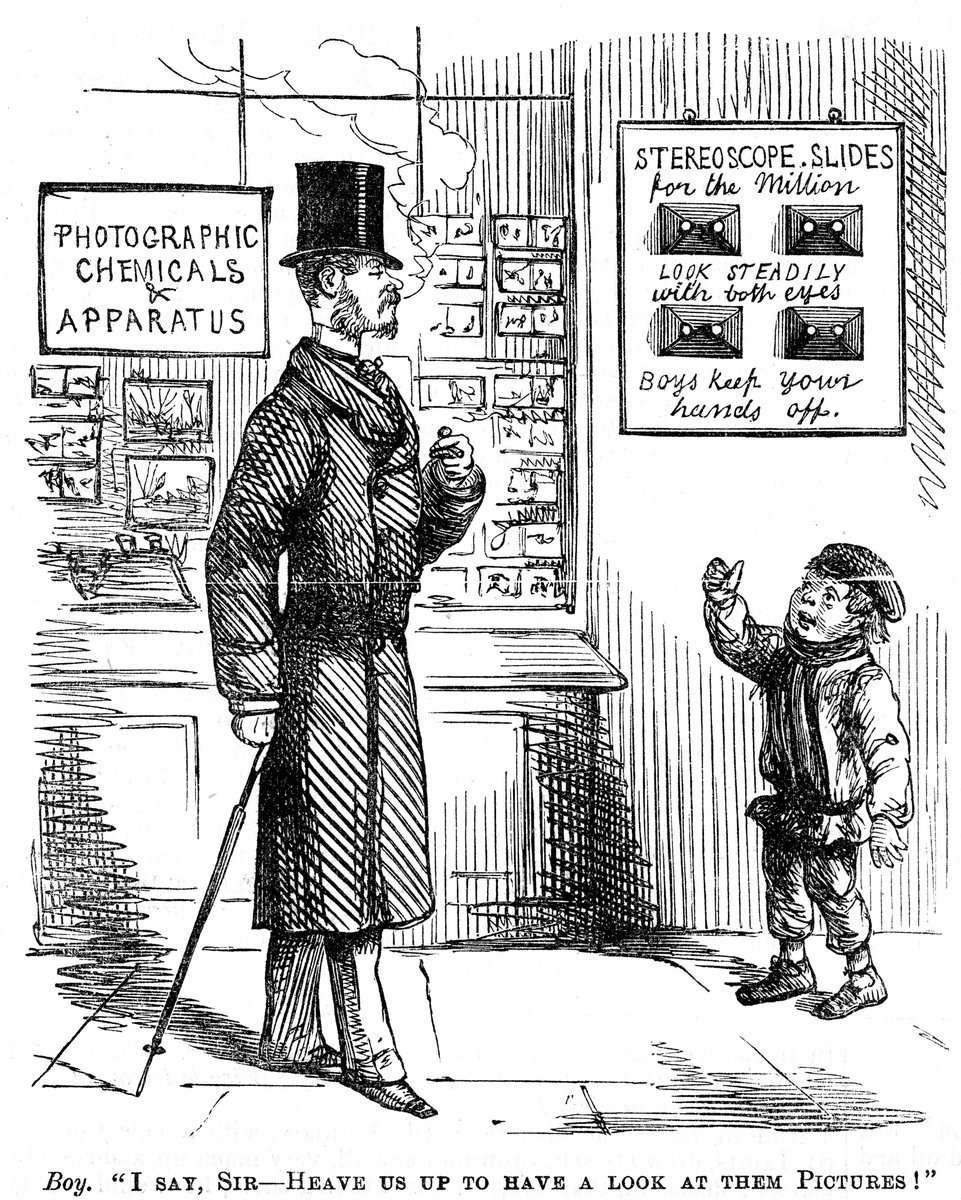
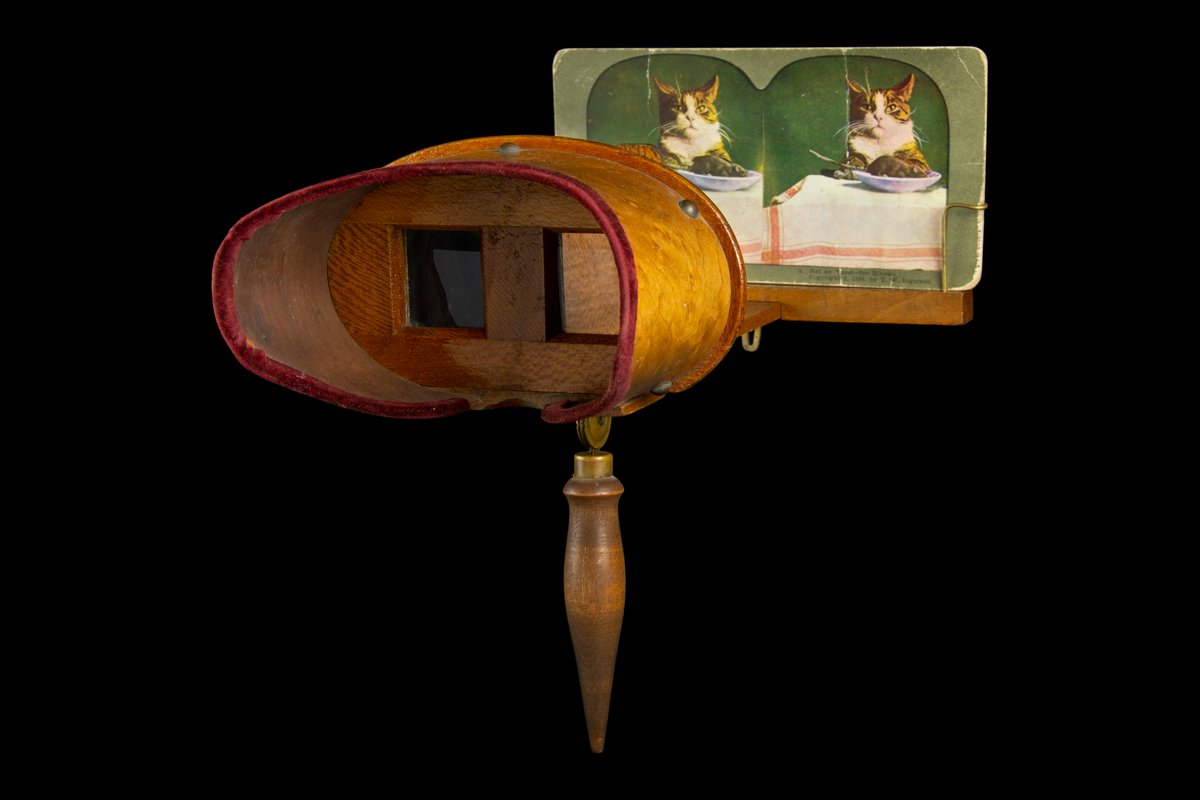
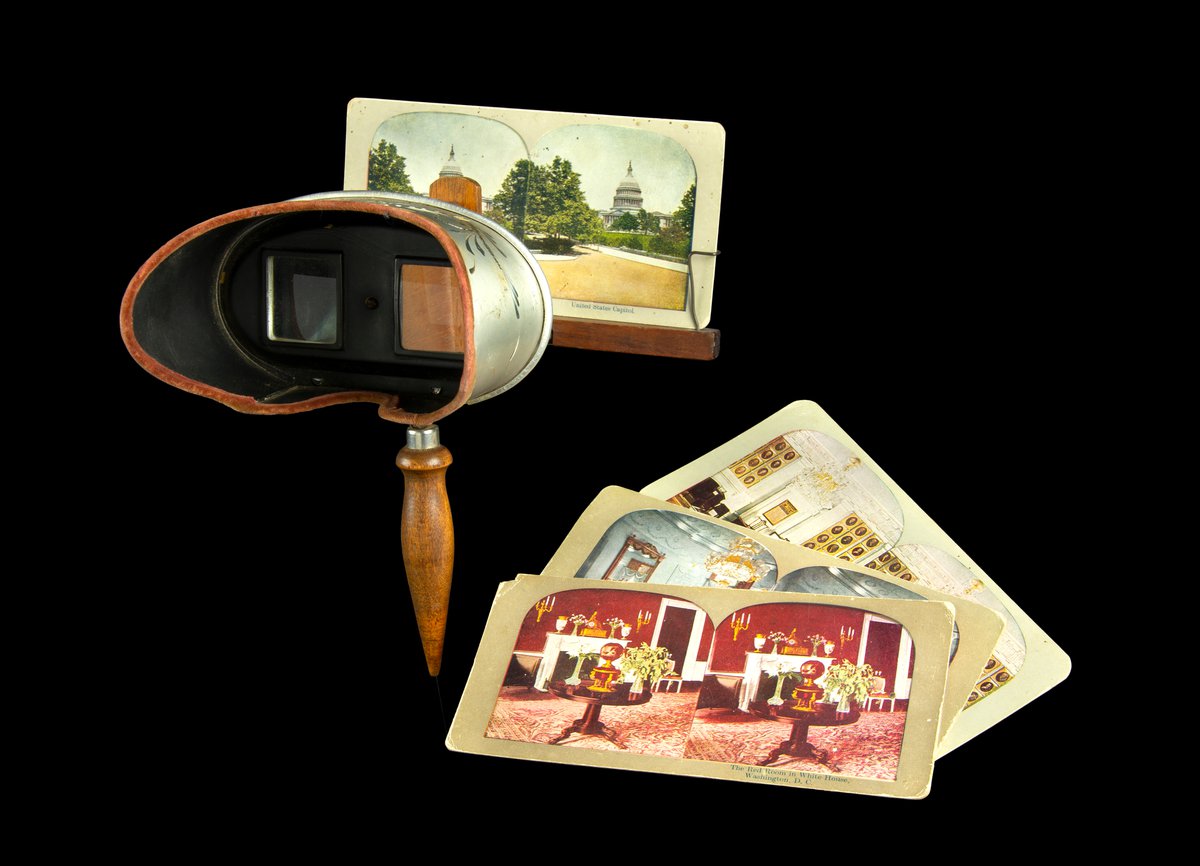
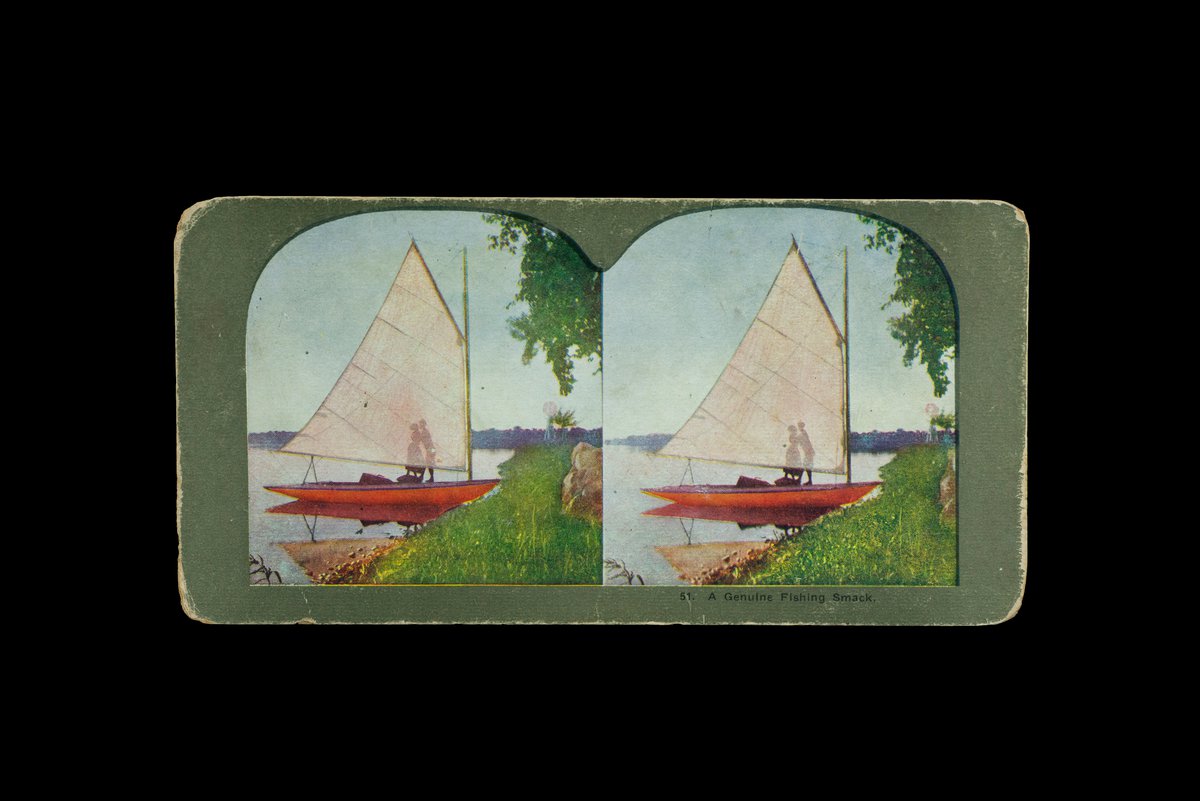
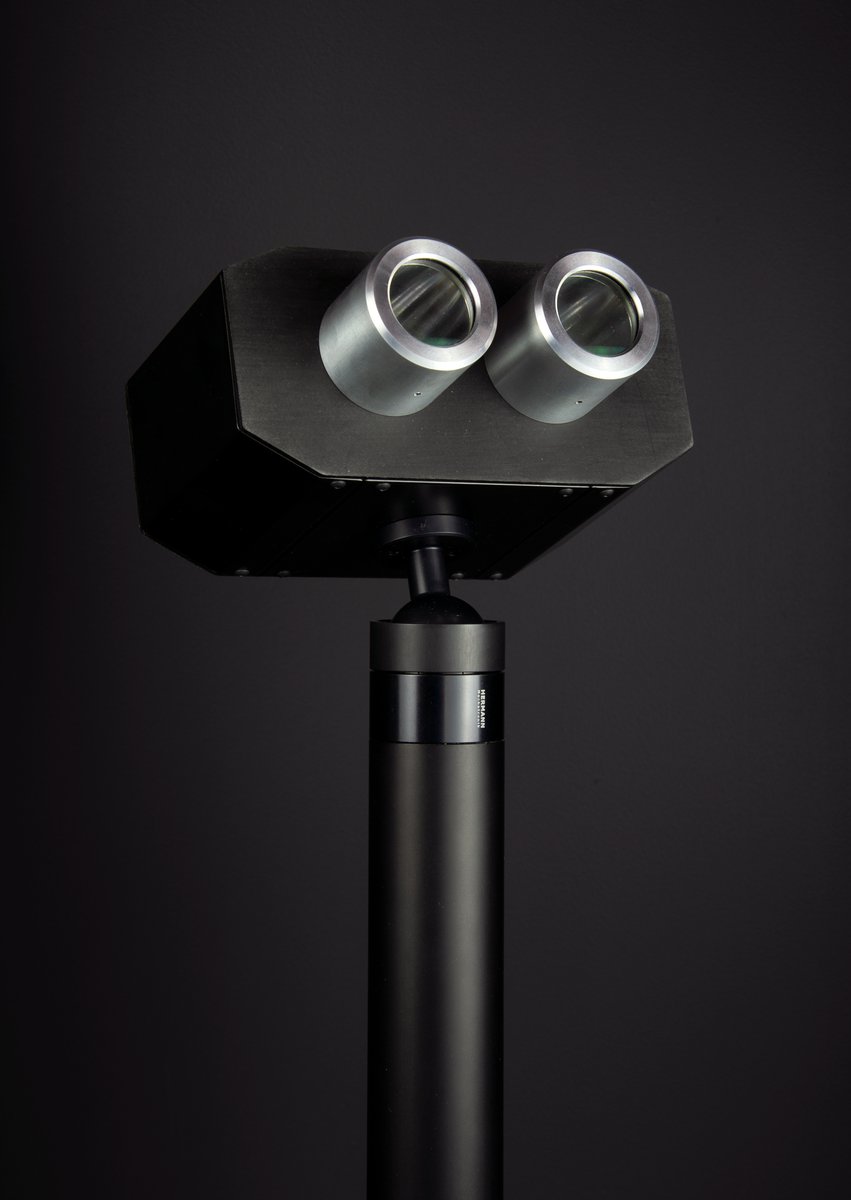
Three-dimensional images have been around for more than 180 years – they just weren’t called ‘3D’. Stereoscopic images are two separate pictures with slightly different perspectives. A stereoscopic viewer mimics how we see so that the two images converge into a single three-dimensional picture.
British inventor Charles Wheatstone discovered this process in 1838 and used a device as big as a table to make it work. Another British scientist, David Brewster, later simplified and shrank the viewer into a portable, hand-held device.
Stereoscopic viewers were popular home entertainment in the Victorian era. They let people see 3D engineering wonders, like new skyscrapers and railroads, as well as sightseeing slides from across the natural world.
Related works
Collection
Not in ACMI's collection
On display until
16 February 2031
ACMI: Gallery 1
Collection metadata
ACMI Identifier
Curatorial section
The Story of the Moving Image → Moving Pictures → MI-08. Immersive Innovations → MI-08-C01