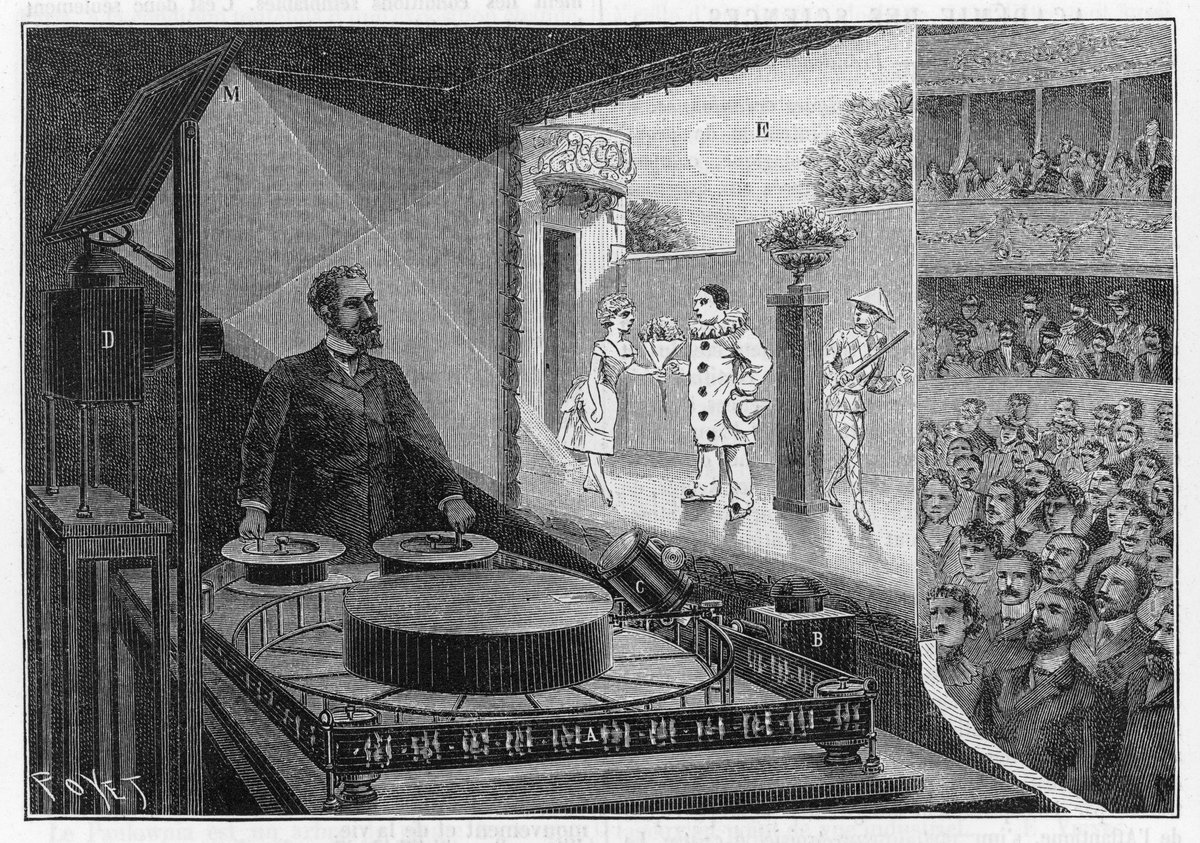
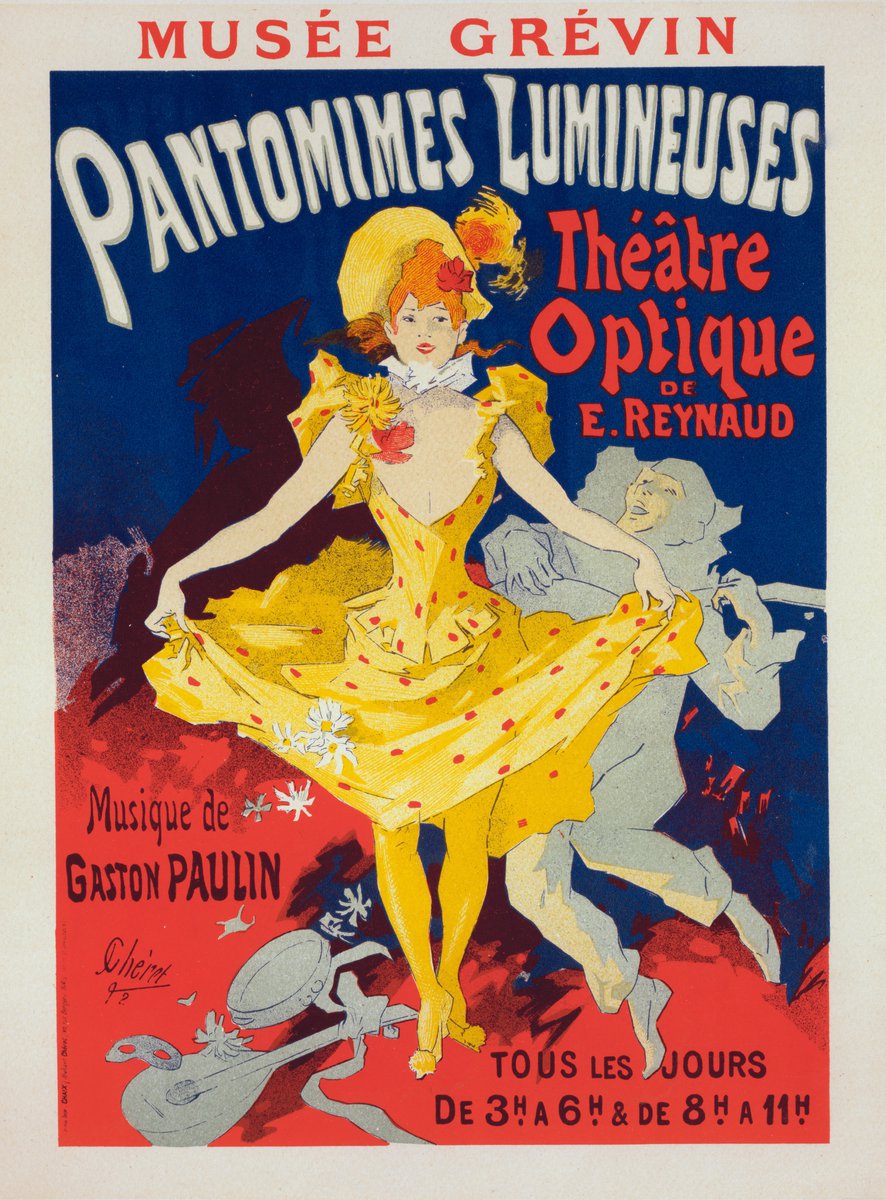
Charles-Émile Reynaud rarely sat still. In 1892, two years after developing the praxinoscope theatre, he debuted his grandest invention – the Théâtre Optique – in Paris. This device projected moving pictures that had been hand-painted onto flexible, coloured, regularly perforated strips of gelatine crystalloid, and it even featured synced sound via silver inlays, an electromagnet and an electric noise generator.
For its time, Reynaud’s device was the pinnacle of moving image projection and greatly influenced the Lumière brothers, who joined over 500,000 visitors to Reynaud’s performances. These 15-minute shows were predecessors to cartoons and let large gatherings watch projections together. They were some of the world’s first mass-viewing experiences.
Collection
Not in ACMI's collection
On display until
16 February 2031
ACMI: Gallery 1
Collection metadata
ACMI Identifier
Curatorial section
The Story of the Moving Image → Moving Pictures → MI-02. Play and Illusion → MI-02-C02