The world of Rockstar Games’ Red Dead Redemption 2 is meticulously crafted. Not only are its environments rendered in stunning detail, but it’s designed to keep players interested and engaged. Like a theme park, it has waypoints, landmarks, maps – design features that encourage the player to explore the game and its narrative without feeling lost.
By contrast, award-winning game designer, Ian MacLarty describes the vast expanses that exist out of bounds as feeling transgressive, surprising and impermanent – a piece of genuine digital wilderness, where the landscape responds unpredictably to player action. One wrong move could risk the player respawning within the map’s bounds and spending hours trying to break out again.
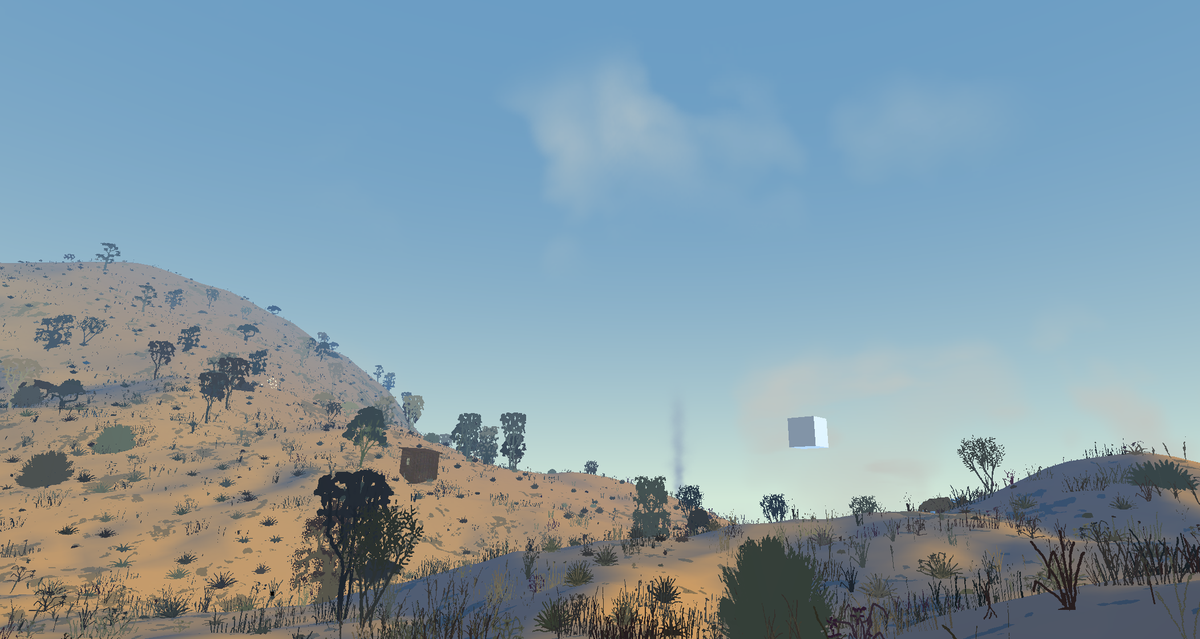
This was the experience MacLarty tried to replicate in Red Desert Render, a surreal open-world game that encourages curiosity and surprise. Its auto-generated landscapes are intentionally unstable – entering the ‘shop’ changes the shape of your avatar drastically, and swimming in a bath propels you into the sky, where you can swim through the air.
It represents a couple of turning points in MacLarty’s artistic practice: it’s his first open-world videogame and his first multiplayer online game. MacLarty has continued to refine the design principles we see in this work in the videogames he has made since, including his upcoming release Mars First Logistics.
Ian MacLarty & Kalonica Quigley - A Bushwalk in Red Desert Render (Freeplay '20)